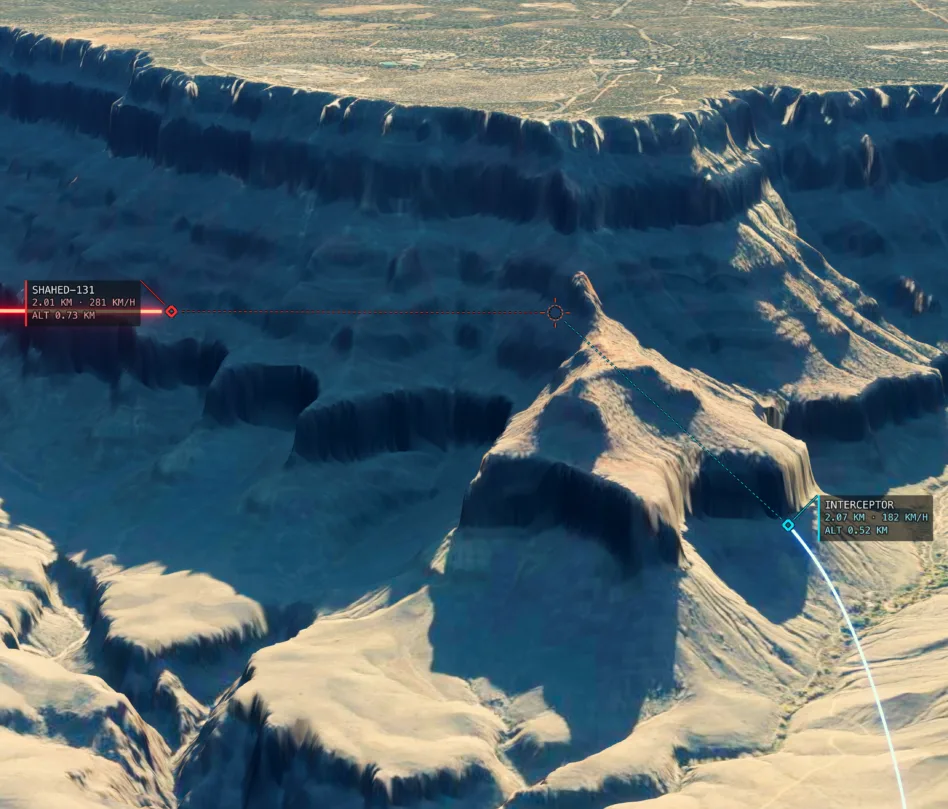
Agon, a London-based defense technology startup that builds simulation software for testing autonomous weapons, has raised $70 million in a Series A round that values the company at $450 million. The round includes participation from former Sequoia Capital leader Roelof Botha, according to Bloomberg, which reported the deal on November 23, 2026. Agon will use the capital to build AI models that test how autonomous drones, naval vessels and other robotic military systems behave in specific combat scenarios.
The company was founded in January 2026 by CEO Tristam Constant, a 13-year British Army veteran who later held senior European roles at Anduril and Applied Intuition, and co-founder Junaid Hussain, who previously built defense startup Cambridge Aerospace and the Google-backed gaming company Iconic. Agon emerged from stealth in July 2026 with $30 million split between a $7 million pre-seed from Lakestar, 201 Ventures and D3, and a $23 million seed led by XYZ Venture Capital, Lux Capital and Northzone.
What exactly does Agon's software do?
Agon builds what it calls a synthetic battle arena: a simulation environment where autonomous weapons, drones and uncrewed vessels can be tested and optimized against adversary behavior drawn from live conflict intelligence, rather than relying solely on expensive real-world trials. The company positions the platform as a horizontal infrastructure layer that drone and robotics manufacturers can build on top of, rather than a one-off testing tool for a single customer. Physics-accurate modeling is a particular focus for air-defense use cases, where real-world test flights are costly and slow to arrange.
Why is defense-AI simulation attracting capital so fast?
Agon's jump from a $30 million seed to a $70 million Series A, and from an undisclosed early valuation to $450 million, in roughly four months illustrates how quickly European defense-tech valuations are moving as governments push to field autonomous systems faster. The company sits in a lane adjacent to Anduril and Helsing, but rather than building hardware itself, it sells the testing infrastructure those hardware makers and militaries need to validate autonomy before deployment, a pick-and-shovel position that has drawn interest from investors who missed earlier rounds in the prime contractors.
What should observers track next?
Agon has not disclosed government or industry customers using its simulation platform, nor specific contract value. The next signals worth watching are whether European defense ministries or NATO-aligned drone makers adopt the platform at scale, and whether Agon's valuation trajectory continues at the same pace once early investor enthusiasm, including Botha's participation, is tested against actual deployment results.