
AI and Robotics Could Save Healthcare $8.4 Trillion by 2040, Study Reveals

New research shows AI, robotics, and quantum technologies could prevent healthcare spending from doubling to $23.1 trillion by 2040. Strategic productivity improvements offer unprecedented cost savings.

Key Takeaways

  • AI, robotics, and quantum technologies could save healthcare $8.4 trillion by 2040, preventing global spending from nearly doubling from $11.8 trillion to $23.1 trillion, according to Oliver Wyman analysis.
  • About three-quarters of the projected $11.3 trillion spending increase stems from systemic inefficiencies and workforce shortages, not unavoidable demographic pressures.
  • Surgical robotics and hospital automation are already reducing procedure times, minimizing complications, and optimizing resource use in healthcare facilities.
  • AI diagnostics and telemedicine extend specialist expertise to underserved regions, multiplying healthcare capacity without proportional cost increases.
  • Without intervention, healthcare's share of GDP in advanced economies could rise from 9% to nearly 12% by 2040.

AI and Robotics Could Save Healthcare $8.4 Trillion by 2040, Study Reveals

Healthcare systems worldwide are approaching a critical inflection point where transformative technologies could reshape the entire industry's economic landscape. According to new analysis from Oliver Wyman, strategic implementation of artificial intelligence, robotics, and quantum computing technologies could prevent global healthcare spending from nearly doubling over the next two decades.

The Healthcare Cost Crisis

Without intervention, global healthcare expenditure is projected to surge from the current $11.8 trillion to an staggering $23.1 trillion by 2040. This dramatic increase stems from converging pressures including rapidly aging populations, escalating chronic disease rates, persistent labor shortages, and administrative inefficiencies that plague healthcare systems globally. Across advanced economies, healthcare's share of GDP could climb from 9% to nearly 12% within two decades.

Healthcare spending projections and technology impact visualization

Technology as the Solution

The research identifies that approximately three-quarters of the anticipated $11.3 trillion spending increase reflects systemic inefficiencies and workforce shortages rather than unavoidable demographic pressures. This presents a unique opportunity for AI-powered diagnostics, surgical robotics, and quantum-enhanced drug discovery to fundamentally reset healthcare productivity metrics. These technologies promise to deliver superior patient outcomes while utilizing existing or reduced resource allocations.

Robotics Leading the Transformation

Surgical robotics and hospital automation represent particularly promising areas for immediate impact. Advanced robotic systems are already demonstrating their ability to reduce procedure times, minimize complications, and optimize resource utilization across healthcare facilities. Meanwhile, AI-driven diagnostic tools and telemedicine platforms are extending specialist expertise to underserved regions, effectively multiplying healthcare capacity without proportional cost increases.
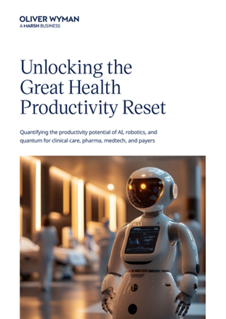
AI and robotics applications in healthcare productivity enhancement

The implications extend beyond cost containment to fundamentally reimagining healthcare delivery models. As these technologies mature and integrate across care continuum, they offer the potential to create more accessible, efficient, and effective healthcare systems capable of meeting 21st century demographic challenges without compromising quality or bankrupting national budgets.

Category: Healthcare

Related Articles

Frequently Asked Questions

How much could AI and robotics save healthcare by 2040?

According to Oliver Wyman research, strategic implementation of AI, robotics, and quantum technologies could save $8.4 trillion by preventing global healthcare spending from rising from $11.8 trillion to a projected $23.1 trillion by 2040.

What is driving the projected surge in healthcare costs?

Aging populations, rising chronic disease rates, labor shortages, and administrative inefficiencies. Notably, about three-quarters of the projected $11.3 trillion increase reflects systemic inefficiencies and workforce shortages rather than demographics.

Which technologies offer the biggest healthcare productivity gains?

AI-powered diagnostics, surgical robotics, hospital automation, telemedicine platforms, and quantum-enhanced drug discovery, which together promise better patient outcomes with existing or reduced resources.

How are surgical robotics already improving healthcare efficiency?

Advanced robotic systems are reducing procedure times, minimizing complications, and optimizing resource utilization across healthcare facilities, making them a promising area for immediate cost impact.