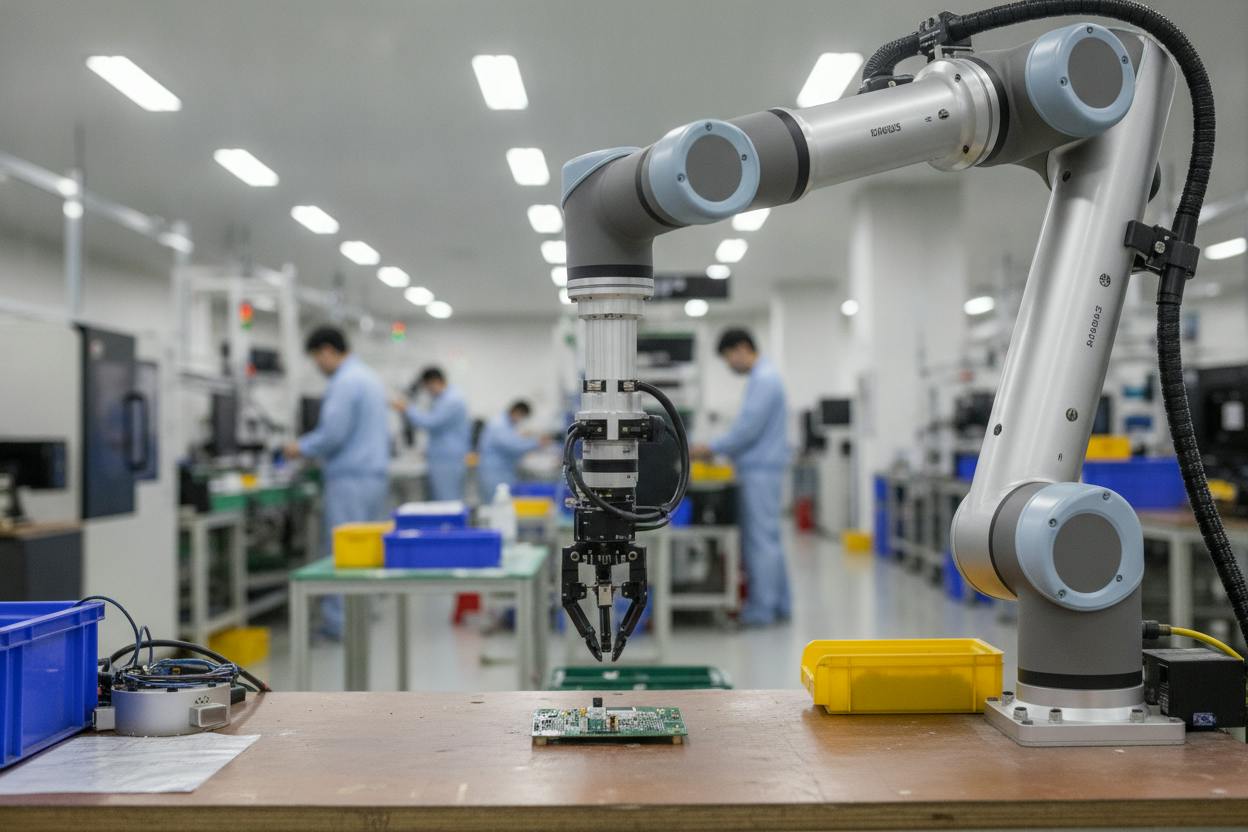
AL.Robot, a South Korean maker of force and torque sensors for robots, opened retail subscriptions on November 6 for a Kosdaq initial public offering targeting roughly $35.4 million, pricing 2.4 million new shares at the top of its range. Institutional bookbuilding drew an 871.74-to-1 subscription rate from 2,227 institutions, with 98.24% of bids landing at the top of the price band, according to Dealroom. Retail subscriptions close November 9, with listing set for November 18 and Daishin Securities as lead manager. Founded in 2017, AL.Robot makes joint torque sensors for collaborative robots and six-axis force sensors for robotic end-effectors, and plans to put roughly $20 million of IPO proceeds into R&D through 2029.
Why Investors Are Chasing the Picks and Shovels
Every robot that grips, lifts, or walks needs to know how much force it's applying — that's what torque and force sensors measure, and it's a component layer that scales with unit volume regardless of which humanoid or cobot brand wins. An 871-to-1 subscription rate is an extreme number for a $35 million raise, and it signals that Korean institutional money sees less risk in betting on a sensor supplier than on a specific robot maker. AL.Robot doesn't need Rainbow Robotics or Hyundai's humanoid bets to individually succeed — it just needs the category to keep growing.
That is a meaningfully different risk profile than the one facing the humanoid makers themselves, several of which have posted steep losses while scaling production. Component suppliers capture demand across competitors simultaneously, which is part of why chip maker D-Robotics and sensor firms have drawn outsized investor interest even as headline humanoid valuations swing wildly on execution risk.
A Crowded, Fast-Moving Supplier Market
AL.Robot isn't alone in this layer. Nvidia's robot-hand supply chain runs heavily through Chinese actuator and sensor makers, and Korean rivals are racing to localize components as Seoul pushes domestic content in humanoid programs — KIST's KAPEX humanoid, for instance, was built with 90% domestic parts specifically to cut dependence on imported sensors and actuators. AL.Robot's pitch to investors leans on breaking into Japan and eyeing China next, per comments from CEO Kang Daehee, positioning the company against both domestic rivals and larger international sensor houses.
The trade-off for AL.Robot is concentration risk in the other direction: its fortunes rise and fall with overall robot capital spending, not with any single winner. If the broader humanoid and cobot market cools — as China's robot funding, down 67% from its peak, suggests could happen regionally — sensor suppliers feel it just as hard as robot makers, just with less company-specific news to explain why. For now, Kosdaq investors are betting the category keeps expanding faster than any single player can dominate it.