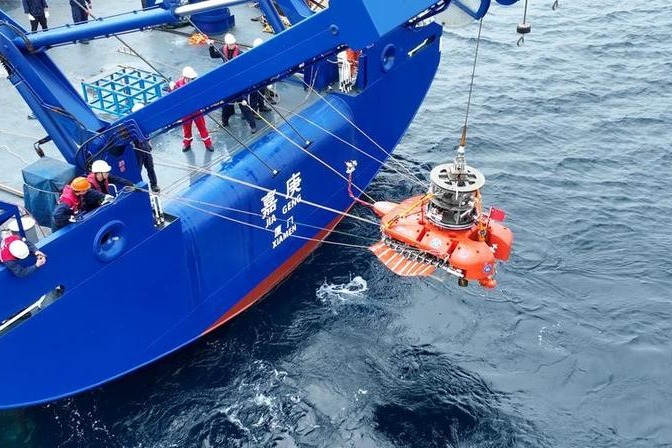
Chinese marine ranching operations are deploying underwater robots to overcome deep-sea operational challenges and increase aquaculture productivity. These autonomous underwater vehicles (AUVs) operate in conditions where human divers cannot safely reach, monitoring fish farms and sea-based cultivation systems at depths exceeding traditional diving limits.
Robotic Solutions for Marine Agriculture
The underwater robots withstand crushing deep-sea pressure while navigating in zero-visibility conditions. They collect real-time data on water quality, fish health, and feeding patterns from marine ranching facilities located thousands of meters underwater.
These AUVs perform precision tasks including equipment maintenance, environmental monitoring, and automated feeding systems. Real-time communication capabilities allow surface operators to receive immediate data updates and control robotic functions remotely.
Market Impact and Expansion
China's marine ranching industry covers over 1.5 million hectares of sea areas, producing approximately 50 million tons of aquaculture products annually. The integration of underwater robotics addresses labor shortages and safety concerns while reducing operational costs by 30-40% compared to traditional diving operations.
With less than 5% of ocean depths explored globally, these robotic systems are expanding China's marine agriculture capabilities into previously inaccessible areas. The technology enables 24/7 monitoring and automated responses to environmental changes, significantly improving yield consistency and resource management in deep-water aquaculture operations.