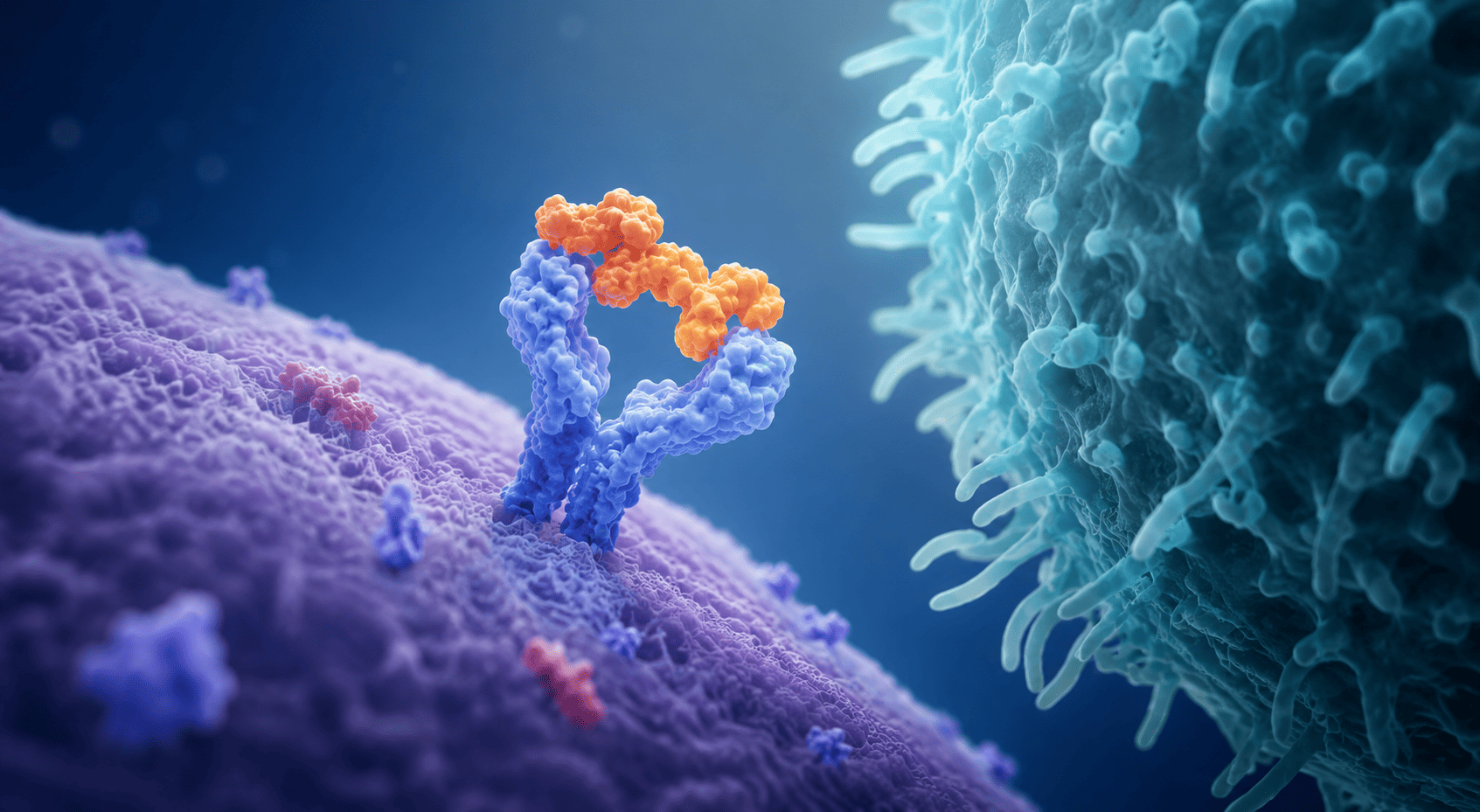
Cleveland Clinic and IBM researchers have unveiled Q-CHIPP, a quantum machine-learning framework that outperforms classical models at predicting which cancer neoantigens will trigger an immune response — a critical bottleneck in the design of personalized cancer vaccines and immunotherapies. The work, published in Science Advances on July 24 and profiled by IBM and Cleveland Clinic on August 1, 2026, is one of the first quantum ML systems to show a data-scarce advantage on real oncology data.
What Q-CHIPP does
The team fused two quantum convolutional neural networks — one modeling peptide-MHC binding and another modeling T-cell receptor recognition — into a single Quantum Convolutional HLA Immunogenic Peptide Prediction pipeline. That combined stack learned meaningful biological patterns from training sets as small as 150 samples and, in tests, identified immunogenic peptides that classical models missed. Under matched parameter budgets, Q-CHIPP beat conventional baselines and generalized better on out-of-distribution patient data.

Scaling to real hardware
The researchers also cleared a hardware milestone, running the full-length peptide model on IBM quantum processors using 46 qubits — one of the largest life-sciences workloads publicly demonstrated on gate-based quantum hardware. Senior author Tyler Alban, PhD, called it "team science," crediting the mix of cancer biologists, computational scientists and IBM quantum researchers with turning immune-system features into circuits that stay faithful to the underlying biology.
Why it matters for oncology
A single tumor can carry thousands of candidate neoantigens; only a handful will actually be recognized by the immune system, and those are the ones that make or break a cancer vaccine. Better predictors mean better vaccine targets and better patient stratification. In a clinical proof point, Q-CHIPP was able to separate lung-cancer patients by predicted neoantigen burden with a statistically significant difference in overall survival — the sort of signal that could sharpen enrollment for immunotherapy trials.
What comes next
Cleveland Clinic and IBM plan to keep enhancing the model to identify therapeutic targets and support next-generation cancer vaccines. The partnership builds on years of joint work through the Discovery Accelerator, which put the first on-premise IBM Quantum System One in a healthcare setting. It also joins a run of recent Cleveland Clinic quantum work spanning the quantum optimization benchmarking ecosystem and trapped-ion reservoirs.
Reporting based on Science Advances, The Quantum Insider, the ASCO Post and Cleveland Clinic communications.