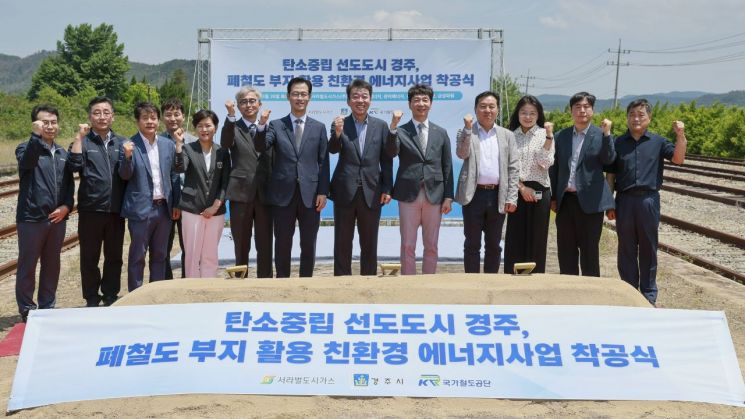
The South Korean city of Gyeongju has broken ground on a new hydrogen fuel cell power plant, marking the full-scale start of a clean-energy project aimed at supplying eco-friendly electricity to the region. City officials said they attended the groundbreaking ceremony for the Nawon Hydrogen Fuel Cell Power Generation Project, held in Nawon-ri, Hyeon-gok-myeon, on the 26th. The move signals South Korea's continued push to weave hydrogen into its local power mix.
9.13 MW from clean fuel cells
The project is being led by Seorabeol City Gas with a total investment of about 30 billion won. Spread across 11 locations near 725-1 Nawon-ri and covering roughly 7,125 square meters, the facility will use generation units rated at 0.44 MW each for a combined capacity of 9.13 MW. Completion is targeted for the end of this year. The relatively compact footprint reflects the modular nature of fuel cell installations, which can be sited in smaller plots than conventional thermal plants.
Hydrogen from reformed natural gas
The plant produces electricity through the electrochemical reaction of hydrogen and oxygen, with the hydrogen itself generated by reforming natural gas rather than burned in a combustion process. That distinction is what allows fuel cells to generate power with higher efficiency and far lower pollutant emissions than traditional generation. Officials described the units as eco-friendly distributed power sources, a category that has gained traction as cities look for cleaner ways to add local capacity.
Power for 21,400 households
Once operational, the plant is expected to supply electricity to roughly 21,400 households annually, based on four people per household. Because the units are installed close to the point of consumption, the city said they can reduce transmission losses and carbon dioxide emissions while strengthening local energy self-sufficiency — a distributed-generation logic also driving projects like offshore renewable-powered infrastructure.
Tied to city gas expansion
Gyeongju framed the plant as a "win-win" regional model that expands clean energy while reinforcing the infrastructure for city gas supply. The city and Seorabeol City Gas have cooperated on the effort for some time, including leasing city-owned land and supporting the permitting process. The groundbreaking adds to a broad global push into low-carbon power, from rising renewable generation to record-scale battery energy storage deployments.
Reporting based on coverage from The Asia Business Daily.