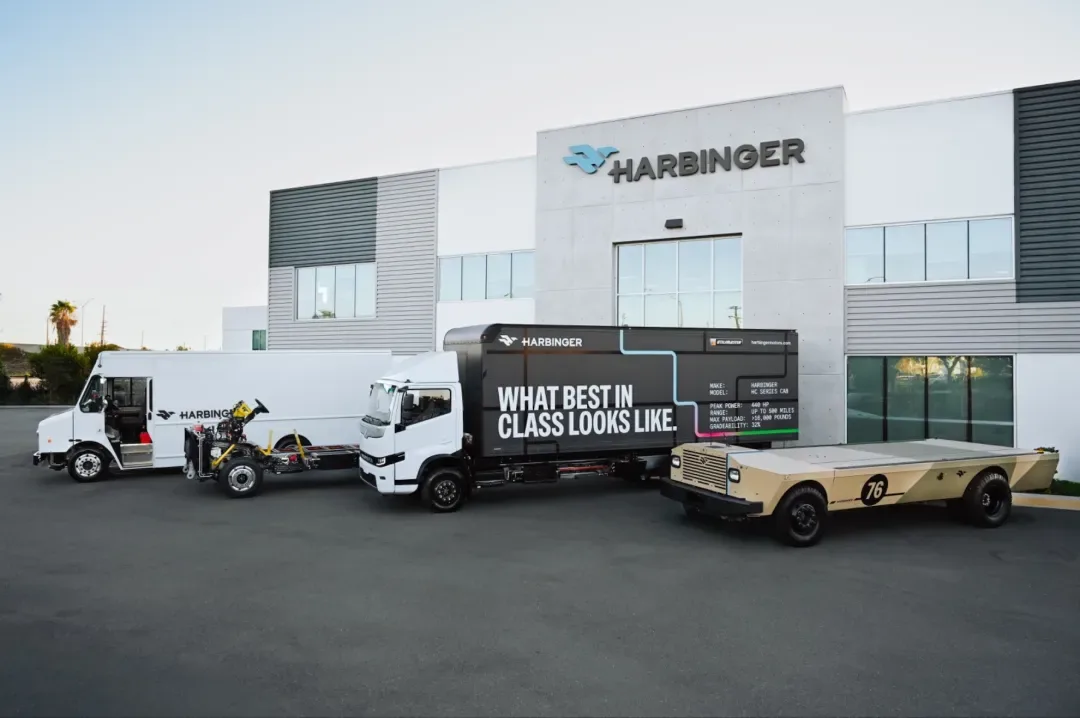
Harbinger has secured more than $100 million in debt financing, with senior debt from Erebor Bank — the institution launched by Oculus founder Palmer Luckey in February 2026 — and a convertible note from Pinegrove Venture Partners, the Los Angeles electric truck startup confirmed on November 24, 2026. CEO John Harris said the capital will fund "ramping up production and delivering vehicles to customers."
The debt round arrives less than three weeks after Harbinger closed a $240 million Series D on November 5, 2026, led by Tiger Global, Capricorn's Technology Impact Fund and Ridgeline. FedEx participated in that equity round after committing to purchase 2,000 Harbinger trucks, giving the startup one of the largest disclosed order books in the electric commercial vehicle segment.
Why Debt, Not Just Equity
Stacking a nine-figure debt facility on top of a fresh equity round less than a month later signals Harbinger is moving from prototype-and-pilot mode into volume manufacturing, where working capital needs scale faster than equity checks can comfortably cover. Harris framed the approach as following the playbook of established vehicle and aerospace manufacturers, which routinely use debt to finance inventory, tooling and plant capacity rather than diluting equity holders further for every production ramp.
Erebor Bank's involvement is notable in itself. Founded by Palmer Luckey alongside other Silicon Valley figures, the bank has positioned itself as a lender willing to underwrite capital-intensive hardware and defense-adjacent startups that traditional banks often avoid. Backing Harbinger's production ramp just months after launching fits that stated mission, and gives Erebor an early, high-profile deal in the electric commercial vehicle space.
A Crowded Medium-Duty Truck Market
Harbinger builds electric chassis and powertrain platforms for medium-duty trucks — delivery vans, box trucks and similar vehicles — and has said it is expanding into autonomous vehicles, energy storage and defense applications. It competes most directly with Motiv Power Systems, Xos and legacy manufacturers like Daimler Truck and Navistar that are electrifying their own medium-duty lineups, as well as Tesla's Semi program at the heavier end of the market.
The FedEx order gives Harbinger a credibility marker that smaller EV truck startups lack: a committed, named customer ordering at meaningful volume rather than a letter of intent. Whether Harbinger can convert that order and its now roughly $340 million in combined debt and equity financing raised within a month into actual delivered trucks at scale is the test that will determine whether it joins the small group of EV truck makers that survive the capital-intensive transition from startup to manufacturer.
What Comes Next
Harbinger has not disclosed a production timeline for the FedEx fleet or specified how the new debt facility will be drawn down. Investors in capital-intensive hardware startups will be watching delivery numbers over the next two quarters as the real test of whether this financing stack converts into trucks on the road.