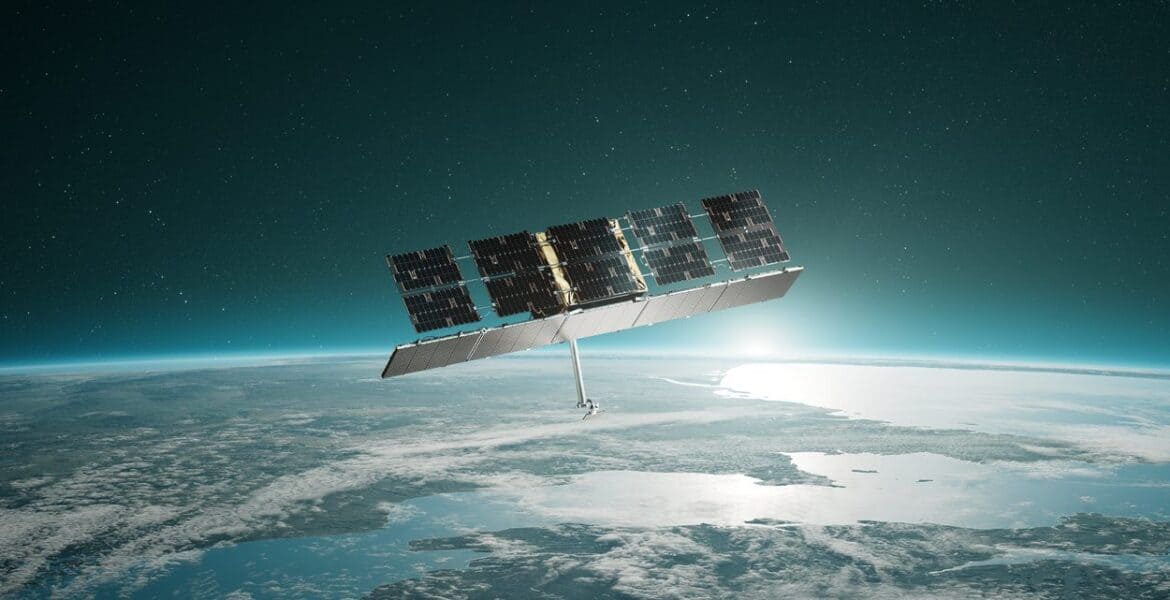
Greece is about to host a satellite factory capable of building up to 150 radar satellites a year, and the money securing it came with a flag attached. ICEYE, the Finnish synthetic aperture radar (SAR) satellite company, announced on November 12, 2026, that the Hellenic Innovation and Infrastructure Fund (HIIF) has invested €35 million, about $37.7 million, as part of ICEYE's broader €485 million primary funding round, according to Greek City Times.
The HIIF deal, HIIF's first disclosed investment, was signed on September 30, 2026 and completed in October. It sits inside a round that also includes General Atlantic, the European Commission-backed Scaleup Europe Fund through EQT, the Qatar Investment Authority, Solidium and Tesi. ICEYE has separately reported raising €450 million earlier in 2026 at a roughly €10 billion valuation, a figure likely tied to the same financing cycle.
The world's largest SAR constellation gets a European manufacturing base
Founded in 2014 in Espoo by Rafał Modrzewski and Pekka Laurila, ICEYE operates what it calls the world's largest synthetic aperture radar satellite constellation, with 84 SAR satellites in orbit as of October 2026. SAR imaging lets ICEYE's satellites capture ground imagery through cloud cover and at night, a capability used for flood monitoring, defense surveillance and insurance claims assessment.
The Greek investment funds a new plant in Attica with capacity for up to 150 satellites a year, which ICEYE says would be its largest manufacturing site in Europe. The facility builds on an existing ICEYE subsystem production line already running in Neo Psychiko, Athens, and is projected to create more than 250 skilled jobs by 2028. Greece's government has framed the deal as part of a national microsatellite program and a push to build domestic satellites for defense, civil protection and mapping.
Why a state fund wants a seat in a satellite round
HIIF's investment is unusual for a funding round: it is tied directly to a manufacturing commitment inside Greece's borders rather than a pure financial stake. That pattern echoes how several European governments have used sovereign or innovation funds to pull advanced manufacturing onto their own soil, trading capital for jobs and strategic capacity rather than just equity upside.
ICEYE's main rivals in commercial SAR imagery, Capella Space and Umbra in the US and Synspective in Japan, have smaller constellations and have not announced manufacturing plants of comparable scale in Europe. ICEYE's 84-satellite fleet and now a dedicated 150-unit-a-year factory give it a production lead that is harder for smaller SAR operators to match quickly, especially ones without a European government co-investor underwriting local manufacturing.
What happens next
The Attica facility's build-out and hiring through 2028 are the near-term markers to watch, along with whether ICEYE's broader €485 million round closes with additional disclosed participants. ICEYE's September 2026 memorandum of understanding with Arianespace to explore Ariane 6 launches for its sovereign SAR missions suggests the company is also lining up European launch capacity to match its new European manufacturing footprint.