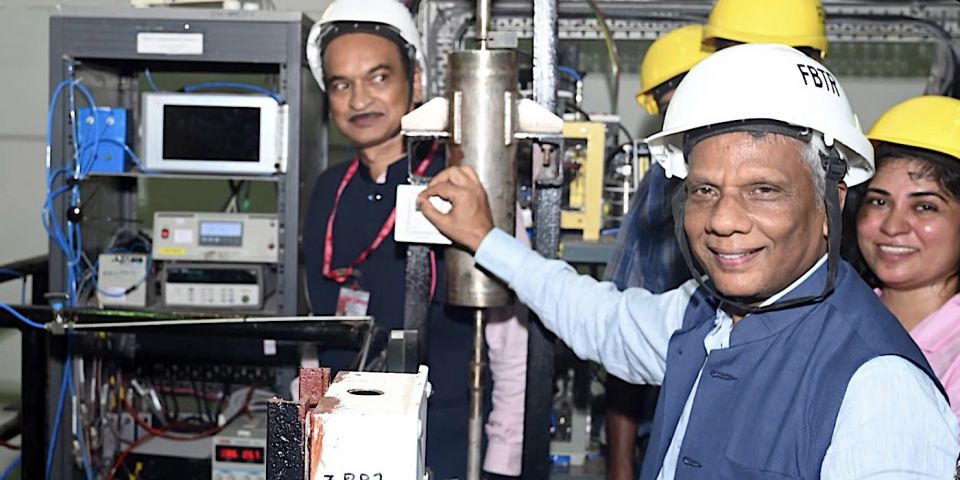
India has inaugurated what its government describes as the world's first hydrogen production facility driven by nuclear process heat, opening a demonstration plant at the Indira Gandhi Centre for Atomic Research (IGCAR) in Kalpakkam that couples a copper-chlorine (Cu-Cl) thermochemical cycle to the country's Fast Breeder Test Reactor.
How the Cu-Cl thermochemical cycle works
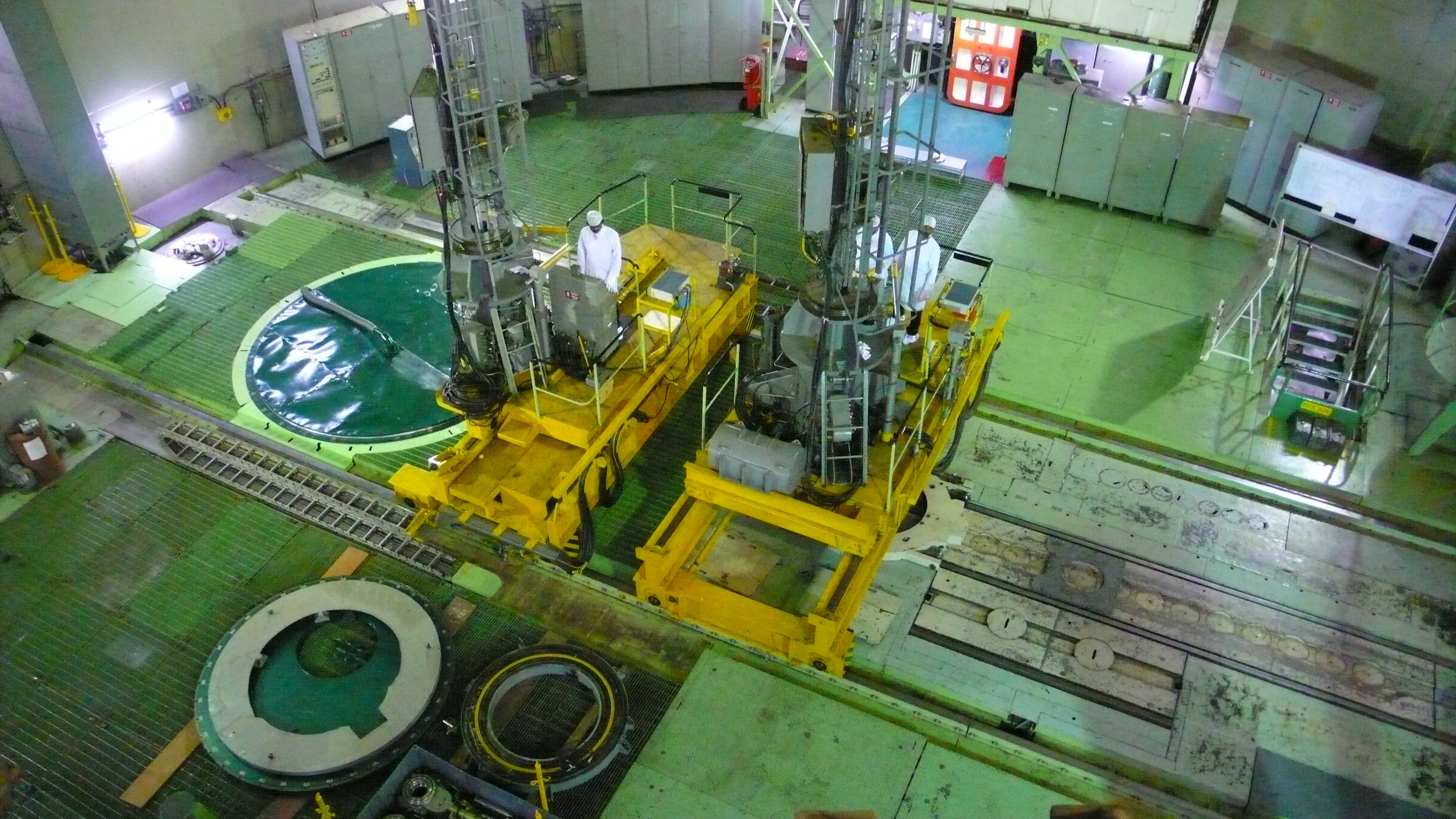
Rather than splitting water with electricity, the Kalpakkam plant uses high-temperature heat drawn directly from the sodium-cooled 40-MWt Fast Breeder Test Reactor (FBTR) to run a series of chemical reactions that shuttle copper and chlorine compounds. The process, developed at the Bhabha Atomic Research Centre in Mumbai, has relatively low operating temperatures compared with pure-thermal water splitting and higher thermodynamic efficiency, according to the Department of Atomic Energy (DAE).
Why nuclear-driven hydrogen matters
Most industrial hydrogen today is stripped from fossil methane. Producing it with nuclear heat instead would decarbonize ammonia, methanol, steel and long-haul transport fuels — sectors that account for a significant slice of global emissions. IGCAR director Shri Sreekumar G. Pillai said the demonstration "builds upon more than four decades of operational experience" from the FBTR programme, while DAE secretary Ajit Kumar Mohanty framed the plant as "a strategic pathway toward a sustainable energy future."
Global context: from Nine Mile Point to Kalpakkam
The launch puts India ahead of several U.S. and European projects that have targeted the same reactor-to-hydrogen concept. In 2023 Constellation Energy began operating a nuclear-powered hydrogen production facility at its Nine Mile Point plant near Oswego, New York, using 1.25 MW of electricity per hour to produce roughly 560 kilograms of hydrogen per day. Kalpakkam's Cu-Cl approach is different: it draws thermal energy directly from the reactor, bypassing the electricity conversion step altogether.
The Kalpakkam plant will now focus on refining the Cu-Cl process and scaling it toward commercial deployment. It arrives on the heels of related Indian milestones covered by The Robotics Media, including the Skyroot Vikram-1 launch and WAIC 2026's push into physical AI, and complements ongoing investment in Western fusion projects such as Xcimer Energy's Athena plant.
Reporting based on coverage from American Nuclear Society, World Nuclear News, The Print, The Statesman and Hydrogen Fuel News.