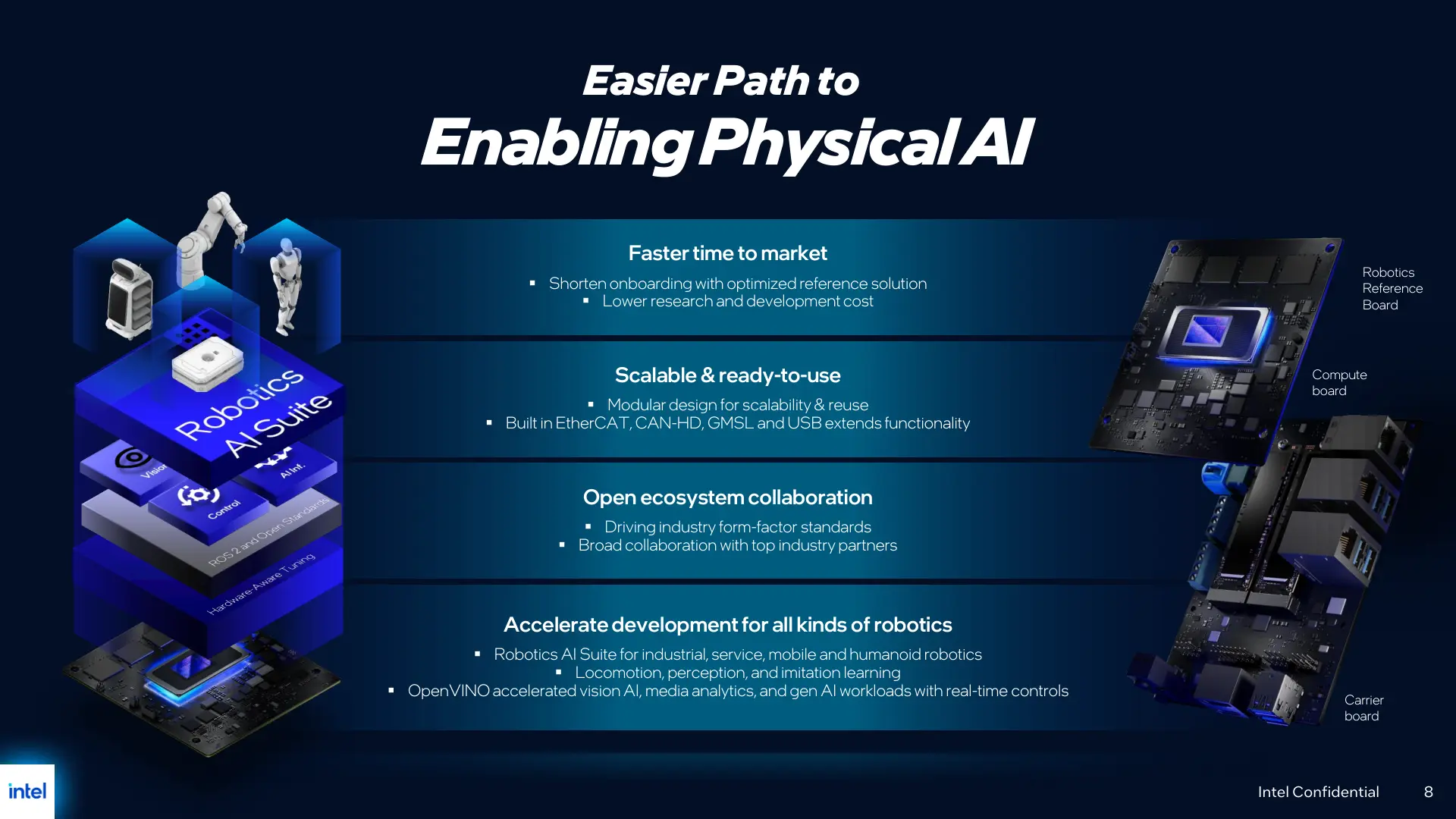
Intel used Computex 2026 in Taipei to launch OpenVINO Physical AI, a new open-source robotics framework with a silicon-optimized inference runtime that the company calls a first for the industry.

Alongside the launch, Intel said 130 companies are now testing or deploying applications on its Intel Core Ultra Series 3 processors, the edge-focused part first introduced at CES in January. Together the disclosures are Intel's most aggressive push yet to position itself as the silicon and software layer for embodied AI.
What OpenVINO Physical AI does
The library targets robots, drones, industrial automation systems and other autonomous machines that need fast local AI processing without leaning on the cloud. Intel says it solves a real pain point: today, deploying a physical AI model on a robot typically means rewriting the inference stack for each hardware target, fragmenting developer effort.
Customer momentum
Among the 130 disclosed design wins is Sensory AI, whose Ella robot barista is being upgraded to Core Ultra Series 3 hardware, making it what Intel calls the first multi-agent physical AI store running in public commercial service. Many of the other adoptions remain unnamed but span industrial controllers, robotics modules and autonomous mobile robots.
Strategic stakes
The release puts Intel in direct competition with NVIDIA's Isaac and Cosmos stacks and Qualcomm's Dragonwing edge AI family. Where NVIDIA leans on the dominance of CUDA, Intel is betting that the open-source, multi-target nature of OpenVINO will appeal to vendors who don't want to be locked into a single silicon supplier.
Availability
OpenVINO Physical AI will be available initially as a preview on GitHub, with general availability scheduled for the second half of 2026. Intel's accompanying Physical AI Studio is available now. The company also said it is working with Tier 1 system integrators to package Core Ultra Series 3-based robotics development kits.
Outlook
Whether OpenVINO Physical AI gains traction will depend on whether Intel's silicon can meaningfully outperform NVIDIA's edge offerings on perception and planning workloads, and on how aggressively the company can sign up tier-one robot makers. The fact that Intel can already point to 130 design wins for Series 3 is the most encouraging data point it has given investors in months.
Reporting based on coverage from Fierce Sensors, SiliconANGLE and Neowin.