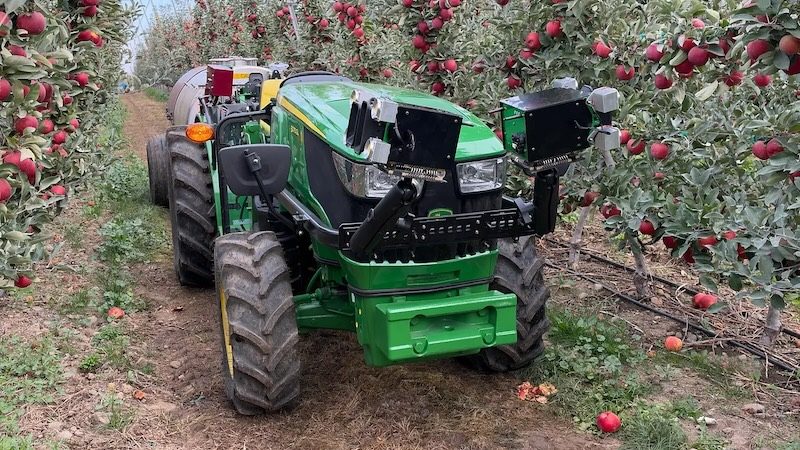
John Deere announced on November 19, 2026 that it is acquiring Orchard Robotics, the San Francisco startup known as Orchard AI, which builds camera-based crop-scanning technology for high-value specialty crops like grapes and tree fruit. Financial terms were not disclosed, and Orchard AI's FruitScope platform and CEO Charlie Wu will continue inside Deere, according to Robotics & Automation News.
Orchard AI mounts AI-powered cameras on farm vehicles that capture hundreds of images per tree or vine on every pass through a field. The system turns that imagery into yield estimates, fruit counts, size and color data, and canopy measurements, then feeds recommendations on spraying, fertilizing and harvest timing back to growers through its FruitScope software. Early customers include Redwood Empire Vineyard Management.
Why is Deere buying a crop-scanning startup instead of building one in-house?
Deere already sells the tractors, sprayers and combines that act on field data, but it has lacked granular, plant-by-plant intelligence about which vines or trees actually need attention versus which can be skipped. "This acquisition connects crop-level intel with our tech that can precisely execute fieldwork," said Deere's Tim Marquis. Buying Orchard AI gets Deere that capability immediately instead of building comparable computer-vision models from the ground up, and keeps a promising sensing company from landing with a rival equipment maker.
Why does this matter beyond one acquisition?
Specialty crops like wine grapes, apples and citrus are higher-value and more labor-intensive than row crops, which makes them an attractive target for automation but harder to serve with generic sensors built for corn and soybeans. Orchard AI's per-plant approach is a narrower, more precise version of the satellite and drone-based crop monitoring that companies like Climate Corporation and various agtech startups have offered for years. Folding that into Deere's existing precision-ag stack, which already includes See & Spray and automated guidance systems, pushes the company further into fruit and vine operations where it has historically had less reach than row-crop farming.
What happens to Orchard AI's existing customers and technology?
Deere said the FruitScope product and team will keep operating, with CEO Charlie Wu staying on. "Joining John Deere lets us accelerate our mission to give growers the intelligence they need," Wu said. Deere executive Justin Rose said the company wants to help Orchard AI "reach more growers while preserving their innovation speed," suggesting the startup will function similarly to past Deere acquisitions like Blue River Technology, which became the engine behind See & Spray rather than being absorbed and shut down.
What should growers and competitors expect next?
Expect Deere to start bundling FruitScope-style plant-level scanning into its equipment lineup for orchard and vineyard customers, likely as a software subscription layered on top of existing machinery rather than a standalone product. Competing precision-ag and equipment companies serving specialty crops, including smaller startups focused on orchard and vineyard robotics, now face a well-capitalized rival with direct access to the hardware that acts on the data. Deere has not given a timeline for integrating Orchard AI's technology into commercial products.