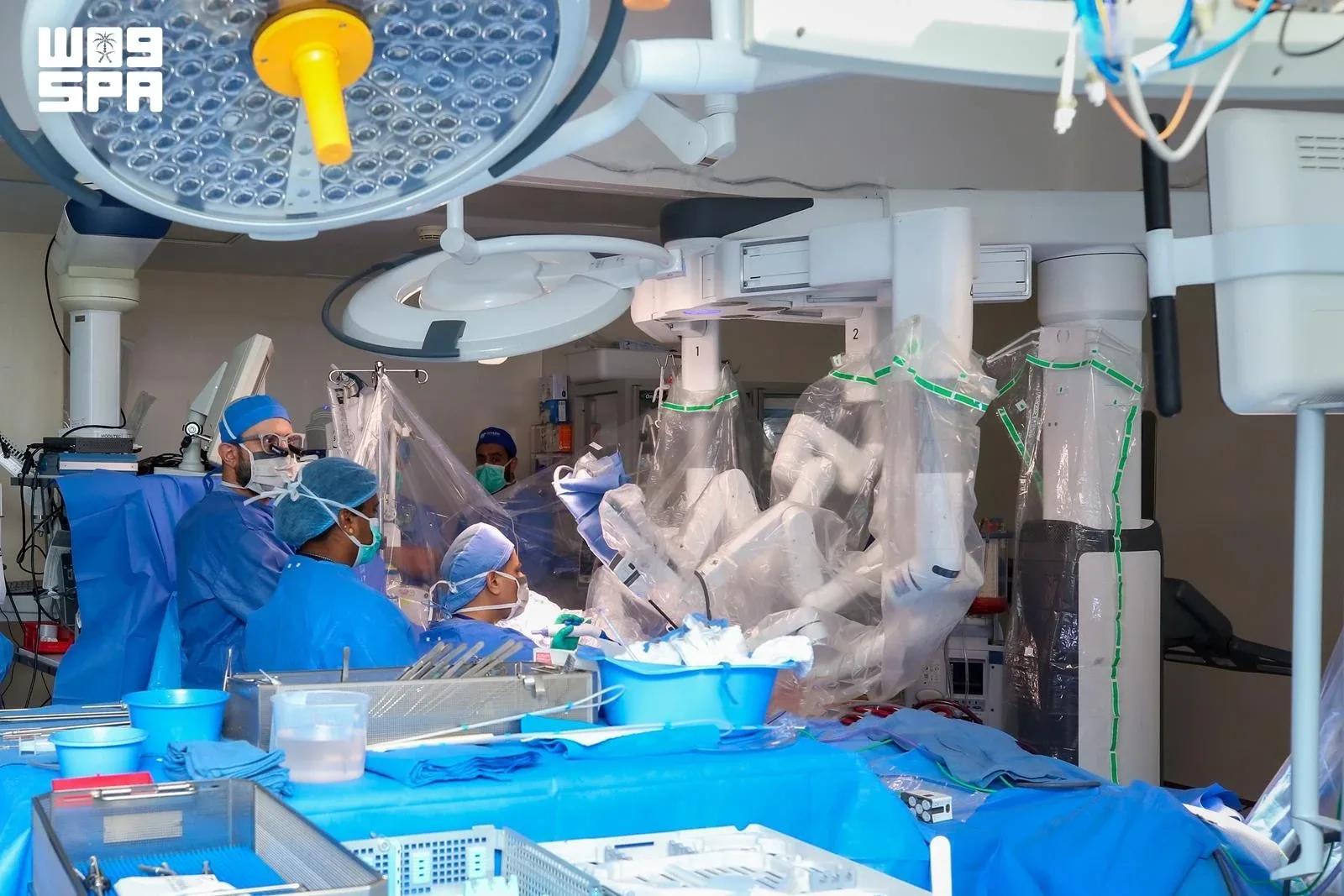
King Faisal Specialist Hospital and Research Centre in Riyadh has grown its robotic surgery caseload from 771 procedures in 2022 to 1,685 in 2025, a 118% rise that includes fully robotic liver and heart transplants. The hospital says it now ranks first in the Middle East and Africa for robotic surgery volume and 12th globally among top academic medical centers in 2026.
What kinds of surgeries are actually being done robotically?
The case list goes well beyond routine laparoscopic procedures. Surgeons at King Faisal perform fully robotic liver transplants, heart transplants without opening the chest, and robotic removal of skull tumors. The hospital also reports the world's first series of single-port robotic living donor liver resections, where a single incision replaces the multiple ports typically required, a technique the hospital carried out 109 times in the first nine months of 2026 alone.
Are the outcomes actually better, or just more numerous?
The hospital's own figures point to both. Robotic cardiac surgery posted a 98% patient survival rate across 400 procedures performed between 2019 and mid-2024. On the transplant side, robotic kidney donors were discharged within 24 hours in 96% of cases, a faster recovery window than open donor surgery typically allows. King Faisal says it has now performed more than 1,600 robotic living-donor transplant procedures, which it describes as the highest total of any center worldwide.
Why is growth accelerating specifically in 2024-2025?
Year-over-year growth between 2024 and 2025 was 23%, slower than the compounding effect of the full three-year window but still substantial, suggesting the hospital's robotic program has moved past an early adoption phase into routine scaling. Procedure volume climbed from 1,370 cases in 2024 to 1,685 in 2025, with single-port procedures in particular expanding fast enough to post 109 cases in just nine months of 2026.
How does this fit the broader robotic surgery market?
King Faisal's numbers land in a year when robotic surgery platforms are pushing into new procedure categories worldwide, from Medtronic's Hugo system winning FDA clearance for general surgery to newly authorized single-incision devices for bladder tumor removal. What sets King Faisal's figures apart is the complexity ceiling: fully robotic organ transplantation remains rare even at major transplant centers, and a 1,600-case living-donor track record is a volume claim few hospitals outside Saudi Arabia can match. For a regional health system competing for medical tourism and international accreditation, that volume is as much a marketing asset as a clinical one.