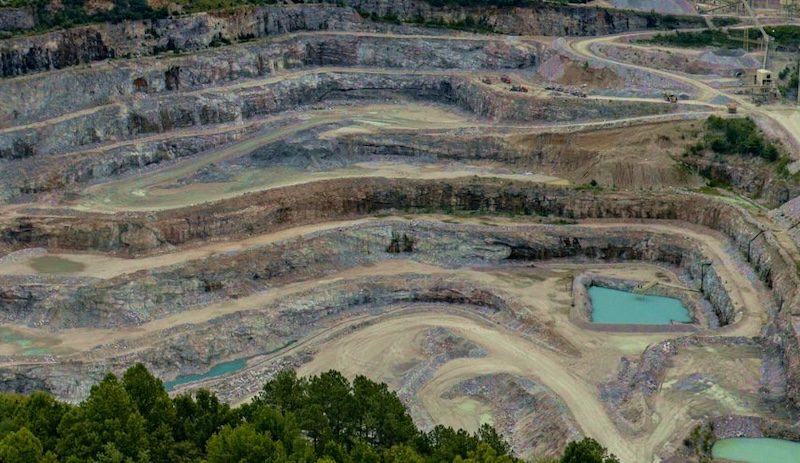
At Bull Run Quarry in Northern Virginia, a 100-ton Cat 775 haul truck rumbles down a haul road with nobody behind the wheel — and has been doing so since November 2024, racking up 3.5 million tons of hauled rock in the process. Luck Stone, the country's largest family-owned crushed stone producer, is now betting on that track record: the company announced on November 10 that it is expanding autonomous hauling to two more Virginia sites, Boscobel and Bealeton, in partnership with Caterpillar and local equipment dealer Carter Machinery.
The expansion marks one of Caterpillar's first deployments of its autonomous Command system on the 775 truck model specifically for aggregates quarry operations, after years of running the technology primarily at large-scale metals and coal mines. Robotics and Automation News reported that the rollout follows 18 months of driverless operation at Bull Run without a reported safety incident involving the autonomous trucks.
From mega-mines to mid-size quarries
Caterpillar's autonomous haulage has mostly lived at massive open-pit copper and iron-ore mines, where fleets of dozens of trucks run pre-mapped routes around the clock on relatively stable haul roads. Aggregates quarries are smaller and messier: haul routes shift as rock faces move, weather swings are more frequent at surface-level sites, and margins per ton of crushed stone are thinner than at a major metals mine. Proving the technology at Bull Run — a single-pit operation running a handful of trucks by mining-industry standards — gave Luck Stone the operational data to justify spreading it to two more sites rather than treating it as a one-off pilot.
Caterpillar says its autonomous trucks have now hauled more than 13 billion tonnes of material and covered over 455 million kilometers worldwide with zero reported injuries tied to the technology, a figure the company leans on heavily when pitching nervous operators on safety liability. Denise Johnson, Caterpillar's group president, called the Luck Stone relationship an example of "strong customer collaborations... helping us accelerate innovation," while Luck Stone's vice president of engineering and operations, Travis Chewning, credited the technology with "creating a safer workplace that improves consistency for our customers."
What it means for the aggregates industry
Quarry and aggregates operators have historically lagged behind metals miners in adopting autonomous trucks, partly because the economics looked better at a 300-truck copper mine than a handful of trucks moving crushed stone. Removing a driver also removes a human exposed to dust, fatigue and blind-spot collisions on a haul road shared with loaders and dump sites — the kind of incident that drives up insurance costs at any quarry. Luck Stone's expansion to three sites signals that the calculus may be shifting as driver shortages persist in construction materials.
Competitors aren't standing still: Komatsu and TIER IV are pursuing autonomous dump trucks for quarry use on a similar timeline, and Chinese haul-truck automation from firms like EACON has already reached full operation at high-altitude copper mines. For Caterpillar, landing a repeat, multi-site customer in aggregates — rather than a single showcase pit — is the kind of proof point that could pull other mid-size quarry operators off the sidelines and toward their first autonomous truck order.