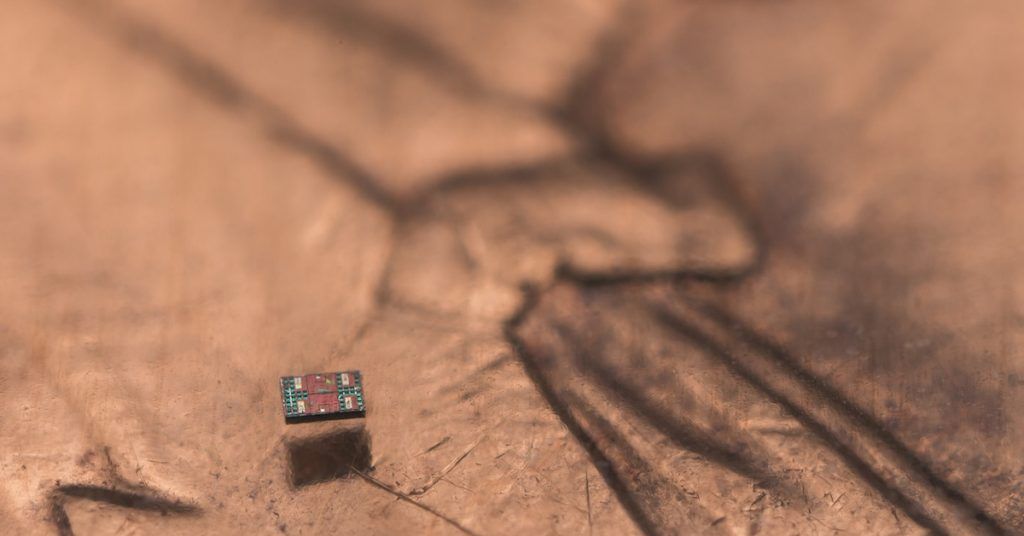
Researchers have created autonomous aquatic robots smaller than grains of salt, measuring less than 0.5 millimeters in diameter. These microrobots can navigate independently through liquid environments using magnetic field propulsion.
Technical Specifications and Capabilities
The microrobots contain embedded circuits and sensors despite their microscopic size. They operate without external power sources by harvesting energy from surrounding magnetic fields generated by external coils.
Each robot weighs approximately 10 micrograms and can travel at speeds up to 3 millimeters per second. The devices maintain directional control through programmed magnetic responses and can operate continuously for over 30 minutes.
Applications in Medicine and Research
These microrobots target medical applications including targeted drug delivery and minimally invasive procedures. They can navigate through blood vessels and reach specific organs without damaging surrounding tissue.
Research teams are testing the robots for environmental monitoring in water systems and biological sample analysis. The technology could enable real-time health monitoring from inside the human body within the next 5-7 years.
Manufacturing costs currently reach $50 per microrobot, but researchers expect mass production to reduce costs to under $1 per unit by 2027.