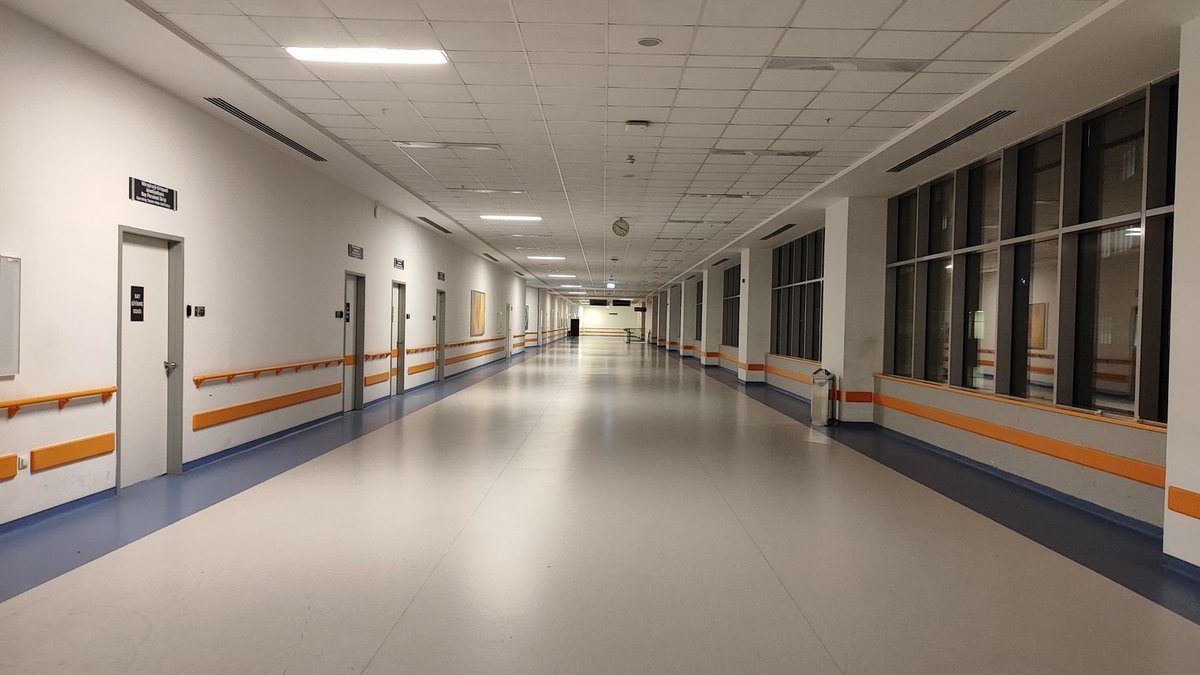
Two boxy robots began quietly rolling medicine, returned drugs and blood products between the pharmacy, wards and transfusion department at St. Marianna University Hospital on November 9, 2026. What made the moment notable wasn't the robots themselves but how fast they got there: Mitsubishi Electric says a new internal software framework called RoboPivot cut the development time for the robots' control software by an estimated 30%, the company announced November 10, 2026.
Ending Years of Reinventing the Same Robot Software
The robots, called MELDY, are multipurpose transport units built by subsidiary Mitsubishi Electric Mobility. They navigate hospital corridors autonomously, call and board elevators, open automatic doors, and use electronic cargo locks, 3D cameras and lidar sensors to avoid obstacles while carrying sensitive medical cargo between departments. Mitsubishi Electric Mobility designed the robots specifically for environments where safety is non-negotiable, building in redundant sensing so a robot stops rather than guesses when something blocks its path.
Until recently, each robotics team within Mitsubishi Electric built its software largely from scratch, even when different teams — working on transport robots, factory automation arms, quadrupeds and humanoids — were solving overlapping problems like folder structure, configuration management or automated testing. That duplication caused repeated work and inconsistent quality across product lines, prompting the company to set up an inner-source office in April 2025 to apply open-source-style collaboration inside the company.
RoboPivot is the first broad output of that effort: a shared framework that standardizes how robot software projects are organized, configured, started up and tested, plus a code-free web interface that lets engineers combine shared modules without writing integration code from scratch. MELDY is the first commercial product built using it, and Mitsubishi Electric is targeting a 50% cut in product development lead times company-wide by 2030.
Why Software Speed Matters More Than Hardware Specs
Hospital transport robots aren't a new idea — delivery and transport robots already move supplies through hospital corridors in multiple countries. What slows deployment isn't usually the hardware; it's the months of custom software integration needed to handle a specific building's elevators, door systems and safety requirements for carrying items like blood products.
By cutting that integration time by roughly a third, Mitsubishi Electric is betting it can move faster than competitors building hospital robots on a case-by-case basis, and apply the same framework across its other robot lines, including industrial arms and quadrupeds, where it says RoboPivot contributors are already working. That positions the framework less as a single product feature and more as internal infrastructure meant to speed up every robot the company ships going forward.
For hospitals weighing robot deployments, the practical upshot is a potentially shorter timeline between signing a contract and having a working robot on the floor — a gap that has historically made hospital administrators cautious about automation investments. St. Marianna University Hospital's two MELDY units are now the proof point Mitsubishi Electric will likely point to as it pitches the next hospital, and the next robot line, on RoboPivot's speed advantage. The company has not disclosed the cost difference between RoboPivot-based development and its earlier custom-built process, but it frames the savings as compounding — each additional robot line that adopts the shared framework should get faster to build than the last.