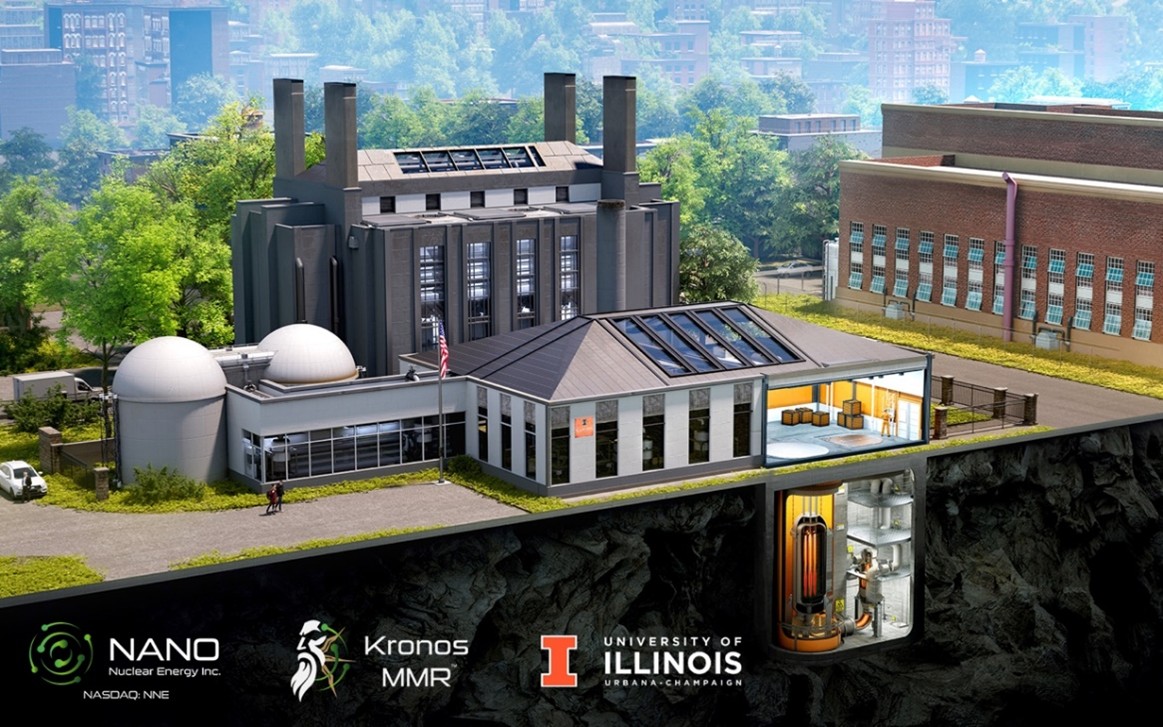
NANO Nuclear Energy (NASDAQ: NNE) said on May 20, 2026 that the U.S. Nuclear Regulatory Commission has formally accepted the construction permit application (CPA) for its KRONOS MMR microreactor planned at the University of Illinois Urbana-Champaign, clearing the way for the agency's formal safety, environmental and technical review.
What the NRC's acceptance means
The CPA was submitted to the NRC on March 31, 2026 by the University of Illinois, NANO Nuclear's partner for the planned full-scale KRONOS MMR reactor. Acceptance signals that the application contains enough information for the commission to begin its detailed review. NANO Nuclear says KRONOS MMR is now among a small group of Generation IV advanced reactors — and, the company believes, the first commercially ready microreactor to reach the CPA stage of the NRC's formal licensing process.
"Acceptance of the Construction Permit Application for review confirms that the NRC has determined the submission contains the information necessary to begin detailed technical evaluation," said Florent Heidet, chief technical officer of NANO Nuclear Energy. "Entering the NRC review process is an important progression for the KRONOS MMR program."
A path toward construction by 2027
The company estimates the formal NRC review will be completed in 2027, opening the door to begin nuclear construction activities at the university in the second half of that year. Founder and chairman Jay Yu said NANO Nuclear's teams are increasingly focused on deployment readiness, including supply-chain engagement and procurement for long-lead components, while engineers build a reduced-scale, non-nuclear KRONOS demonstration unit at a renovated facility in Oak Brook, Illinois.
Built for data centers and remote sites
KRONOS MMR is a stationary, high-temperature gas-cooled microreactor designed to supply clean, reliable power and process heat for data centers facing surging energy demand from AI, as well as industrial facilities, remote communities, mining projects and military bases. Caleb Brooks, a nuclear engineering professor at the university's Grainger College of Engineering, said universities "play a vital role in accelerating innovation" and demonstrating technologies that address critical energy needs.
Part of a broader nuclear push
The milestone lands amid renewed momentum for advanced reactors in the United States, where another 600-MW advanced reactor project is moving forward with U.S. firms, and as low-carbon energy efforts expand on multiple fronts, including cheaper clean hydrogen production.
Reporting based on coverage from NANO Nuclear Energy and GlobeNewswire.