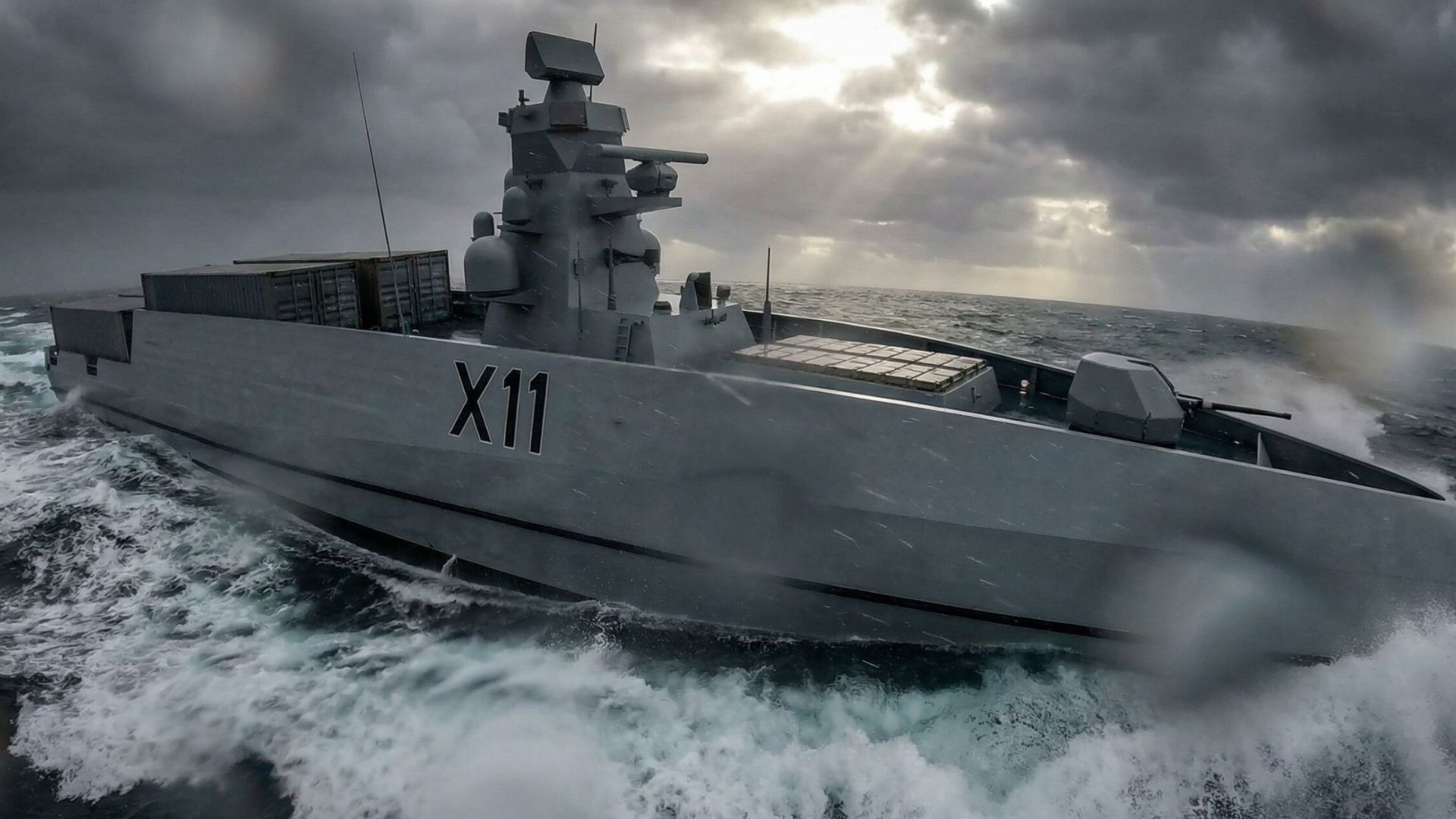
Spanish shipbuilder Navantia has unveiled a large autonomous surface vessel concept designed for future navies that mix crewed and uncrewed platforms. The design, called LASV75, was presented at the Combined Naval Event (CNE) in Farnborough and reflects the company's vision of a "hybrid navy" in which traditional warships operate alongside autonomous escorts, drones and other uncrewed systems.
A 1,000-tonne uncrewed platform
Designed in the UK by Navantia's Bristol-based team, the LASV75 is built around a 246-foot (75-meter) modular hull displacing more than 1,000 tonnes and configured from the outset as an uncrewed platform. It is intended to operate independently or as part of larger naval task groups, supporting roles such as surveillance, escort missions, electronic warfare and strike-related operations depending on payload.
By eliminating crew accommodation and the associated support systems, the design frees space for mission payloads and increases endurance. The displayed model featured a configurable payload deck, modular sensor arrangements and interchangeable mast configurations, with Navantia UK also exploring containerized "NavyPOD"-style mission packages and NATO-standard interfaces to improve interoperability with allied navies.
Built for persistence in harsh seas
Navantia UK says LASV75 was developed with an emphasis on persistence, modularity and scalability, particularly for demanding environments such as the North Atlantic. Speaking at CNE 2026, Navantia UK Product Development Director Simon Jones said a vessel of this size is needed to maintain credible long-endurance operations in harsh maritime conditions. The modular hull would allow multiple configurations, from sensor-focused variants to mixed-role layouts, simplifying manufacturing and enabling faster adaptation.
The concept lands amid a broader shift toward large uncrewed surface vessels, echoing recent showcases such as HII's ROMULUS autonomous warship and new mine-hunting systems like the Klein MANTIS underwater drone.
Part of a wider UK shipyard push
The vessel arrives amid broader investment by Navantia UK following its acquisition of Harland & Wolff assets and modernization across four UK shipyards at Appledore, Arnish, Belfast and Methil. The company says it is investing £157 million in upgrades, including digital shipbuilding tools, automation and advanced manufacturing, and expects to cut design and construction timelines for large naval vessels by up to 30 percent.
Early production of the autonomous vessels would likely begin at Appledore in Devon, which can accommodate ships up to 393 feet in length. The unveiling also comes as Navantia UK advances the UK's £1.6 billion Fleet Solid Support program, having cut first steel for the lead ship at Appledore in late 2025 and launched an 85-meter transport barge from Methil earlier this year.
Reporting based on coverage from Interesting Engineering, Naval News and Navantia.