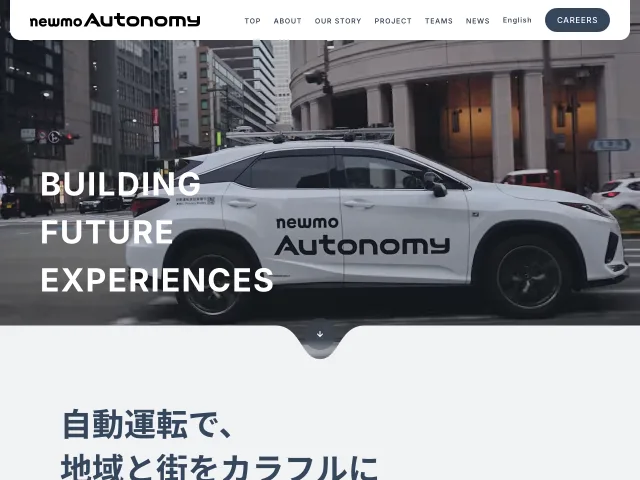
newmo, the two-year-old Tokyo taxi and ride-hailing operator, has raised 20.8 billion yen (about $131.7 million) in a Series B round led by telecom operator KDDI, the company announced on November 9, 2026. The round lifts newmo's total funding since its January 2024 founding to 40.7 billion yen, or roughly $257 million, and follows a capital-and-business alliance the two companies signed on November 6 to commercialize autonomous taxis across Japan.
How much did newmo raise, and who's behind it?
The Series B totals 20.8 billion yen, or about $131.7 million at current exchange rates, raised through a third-party share allotment with KDDI as lead investor. Existing backers including ANRI, Eight Roads Ventures Japan, Globis Capital Partners, GMO VenturePartners, JAFCO and SBI Investment also took part, according to BRIDGE. No valuation was disclosed. The deal follows a separate capital-and-business alliance newmo signed with KDDI and its mobility subsidiary KDDI SmartMobility on November 6, which set the terms for the investment.
What does newmo actually run today?
newmo isn't pitching a future robotaxi fleet from a standing start. It already operates roughly 1,900 taxis under nine operator brands across six regions — Tokyo, Osaka, Kanagawa, Aichi, Hokkaido and Okinawa — with more than 2,800 employees, making it one of Japan's ten largest taxi businesses by fleet size less than two years after launch. CEO Naoki Aoyagi has paired that human-driven fleet with an in-house autonomous-driving AI stack, which newmo describes as the only model in Japan vertically integrating both under one company.
The stated target is 10,000 manned taxis and 1,000 autonomous taxis. The new capital is earmarked for both halves: expanding the manned fleet nationally while pushing autonomous pilots out of closed testing and into limited commercial service.
What does KDDI bring beyond cash?
KDDI is supplying the communications backbone the autonomous side needs: cellular links between self-driving vehicles and remote-monitoring centers, AI computing capacity for training and running the driving models, remote-supervision tooling, and high-precision positioning. The two companies have already stood up the Sakai City Autonomous Taxi Implementation Consortium, with KDDI SmartMobility as a founding partner, to run a live pilot in Osaka prefecture.
How does this compare to other robotaxi bets?
newmo's model — buying and running conventional taxi fleets, then layering autonomy on top — differs from Waymo's approach of building standalone robotaxi networks from scratch, or Baidu's Apollo Go, which has scaled across Chinese cities without owning the underlying taxi licenses. Starting from an operating, regulator-approved fleet gives newmo a faster route to revenue-generating autonomous rides than a foreign entrant negotiating new permits city by city. At roughly $257 million raised in under two years, newmo is now one of the best-funded mobility startups in Japan. The next milestone to watch is how many of its 1,900 vehicles get an autonomous pilot running under the Sakai consortium before the end of 2027.