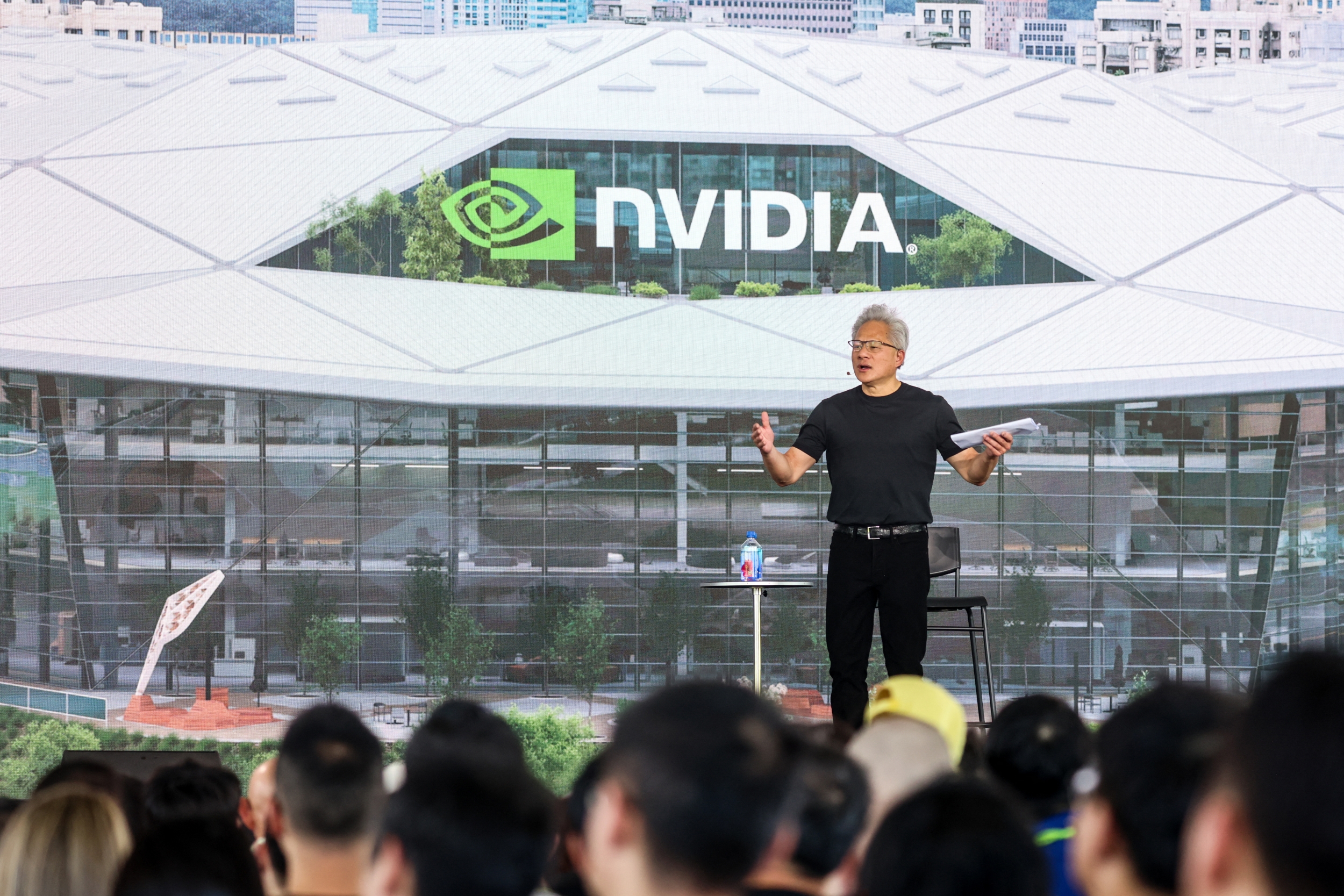
Nvidia broke ground on its first overseas headquarters in Taipei this week, with CEO Jensen Huang telling roughly 1,000 employees at the Beitou-Shilin Technology Park that the company's annual spending in Taiwan is on a path from $100 billion today to $150 billion. The May 27 announcement, paired with a 50-year land lease for the new Constellation campus, marks one of the largest single-country commitments in the history of the semiconductor industry.
Constellation Becomes Nvidia's Permanent Taipei Anchor
Under the lease signed with the Taipei city government in February 2026, Nvidia secured plots T17 and T18 of the Beitou-Shilin Technology Park for a campus investment exceeding NT$40 billion (about $1.27 billion). The lease can be extended by another 20 years. Construction is scheduled to begin in June or July 2026, and the site is targeted to be fully operational by 2030, housing roughly 4,000 direct Nvidia employees and generating more than 10,000 total jobs.
"Taiwan is the epicenter of the AI revolution," Huang said at the launch ceremony. "This is where the chips come, packaging comes. This is where the systems are made. This is where AI supercomputers were created." Taipei Mayor Chiang Wan-an attended the event and presented Huang with a key to the city.
Why Taiwan, and Why Now
Nvidia's commitment is inseparable from the geography of advanced semiconductor manufacturing. TSMC, headquartered in Taiwan, controls roughly 72% of the global pure-play foundry market according to Counterpoint Research and is the sole company capable of producing Nvidia's most advanced processors at scale. The island also hosts the server assemblers Foxconn, Wistron, and Quanta Computer, plus advanced packaging firms whose chip-interconnect technology makes high-performance AI accelerators possible.
During the trip, Huang met with TSMC Chairman C.C. Wei to discuss production commitments for Nvidia's next-generation Vera Rubin platform, which Huang has described as "the largest product launch, probably in the history of Taiwan." He is scheduled to deliver the opening keynote at Computex Taipei 2026 on June 1.
Filling a $4.6 Billion China Hole
The scale of the commitment is striking against Nvidia's revenue picture. The company's latest quarterly guidance of about $91 billion for Q2 fiscal 2027 assumes zero data-center compute revenue from mainland China after U.S. export restrictions eliminated shipments of Hopper-class chips, wiping out a segment worth $4.6 billion a year earlier. Taiwan revenue surged more than 50% year-over-year in the most recent quarter, and Taiwan's Taiex index closed 1.7% higher at a record on Wednesday in response to the announcement.
The Industry Concentrates on One Island
Nvidia is not alone in concentrating resources on Taiwan. AMD announced on May 21 that it would invest more than $10 billion in Taiwan's AI sector to expand advanced packaging for its upcoming Helios server platform. The combined commitments deepen what supply-chain analysts have flagged as the industry's most consequential unresolved risk: TSMC's geographic diversification into Arizona, Japan, and Germany is real but not expected to reach leading-edge scale before 2028.
Industrial Context
The Taipei push lands alongside a broader semiconductor geography reshuffle. Tata Electronics and ASML signed an MoU this week to build India's first 300mm chip fab in Dholera, and Huawei unveiled its LogicFolding technique to narrow the chip gap with TSMC. Smaller AI silicon deals are also accelerating, as illustrated by Mythic's acquisition of Germany's Videantis to forge a hybrid AI chip platform.
When Constellation opens in 2030, it will stand as the most visible symbol yet of an AI supply chain that has no credible alternative geography, and of the concentration risk that comes with that reality.
Reporting based on coverage from Tech Times, CNBC, and Focus Taiwan.