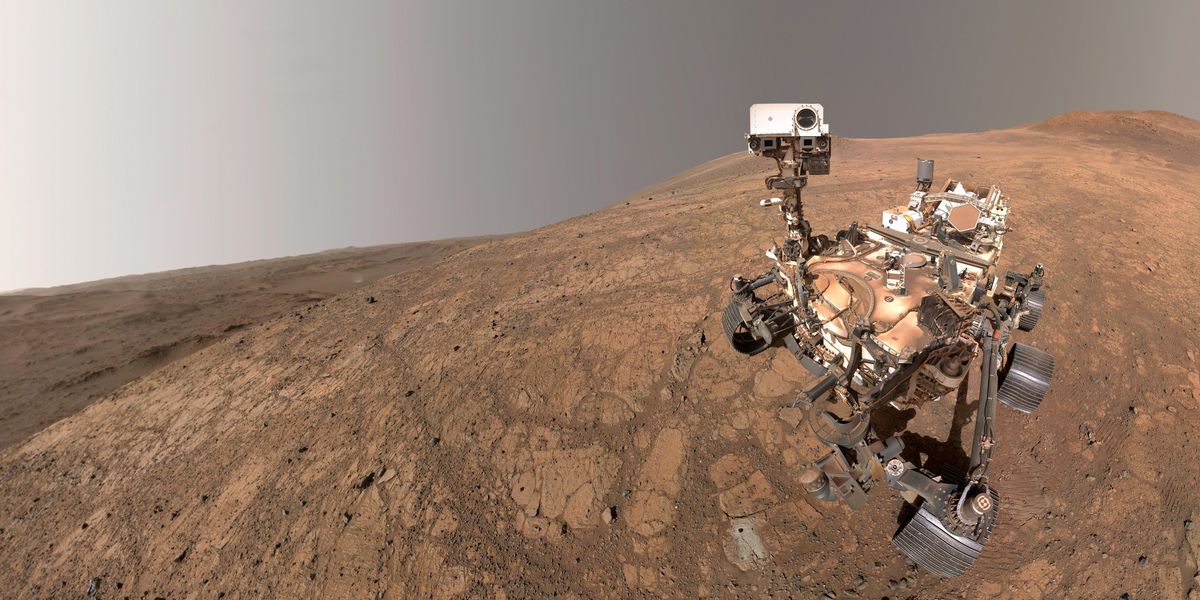
NASA's Perseverance Rover Achieves New Autonomous Driving Milestone on Mars
NASA's Perseverance rover has set a new autonomous driving record on Mars, demonstrating advanced AI navigation capabilities with minimal Earth-based guidance.
Key Takeaways
NASA's Perseverance rover set a new autonomous driving record on Mars using advanced AI navigation with minimal Earth-based guidance.
The rover combines stereo imaging, computer vision, and hazard avoidance algorithms to plot safe routes and make split-second path-planning decisions independently.
Autonomy offsets Earth-Mars communication delays, which can reach up to 24 minutes each way depending on planetary positions.
Greater autonomous driving distance per Martian sol boosts the efficiency of Perseverance's sample collection mission in Jezero Crater.
The breakthrough could inform future Mars missions and autonomous vehicle development on Earth.
The Robotics Media Editorial
NASA's Perseverance rover has achieved a new autonomous driving record on Mars, showcasing the effectiveness of its advanced AI navigation algorithms that enable exploration with minimal human intervention from Earth.
Advanced Autonomous Navigation System
The rover's autonomous driving algorithm processes real-time terrain data through computer vision systems, allowing it to navigate Mars' rocky landscape independently. This capability significantly reduces the communication delays between Earth and Mars, which can extend up to 24 minutes each way depending on planetary positions.
Perseverance's navigation system combines stereo imaging with hazard avoidance algorithms to plot safe routes across the Martian surface. The technology enables the rover to make split-second decisions about path planning without waiting for instructions from mission control.
Scientific Mission Impact
The enhanced autonomous capabilities allow Perseverance to cover greater distances during each Martian sol (day), increasing the efficiency of its sample collection mission in Jezero Crater. The rover can now identify and approach scientifically interesting targets more quickly than previous Mars missions.
This autonomous driving breakthrough represents a significant advancement in planetary exploration robotics, potentially informing future Mars missions and autonomous vehicle development on Earth. The technology demonstrates how AI-powered navigation systems can operate effectively in extreme environments with limited communication infrastructure.
Its navigation system processes real-time terrain data through computer vision, combining stereo imaging with hazard avoidance algorithms to plot safe routes and make split-second path-planning decisions without waiting for instructions from mission control.
Why is autonomous navigation important for Mars rovers?
Communication delays between Earth and Mars can extend up to 24 minutes each way, so autonomy lets the rover navigate independently instead of waiting for commands, greatly reducing the impact of those delays.
How does this milestone benefit Perseverance's science mission?
The rover can cover greater distances each Martian sol and identify and approach scientifically interesting targets faster, increasing the efficiency of its sample collection mission in Jezero Crater.
Could this technology be used beyond Mars exploration?
Yes. The article notes the breakthrough could inform future Mars missions and autonomous vehicle development on Earth, showing AI navigation can work in extreme environments with limited communication infrastructure.