Ramon.Space, an Israeli space-computing company, said on November 17, 2026, that it raised $124 million in a Series B round led by growth equity firm PSG. Micron Technology, Senvest and Phoenix Financial also joined. The company did not disclose a valuation, but the round brings its total funding to $180 million.
What does Ramon.Space build?
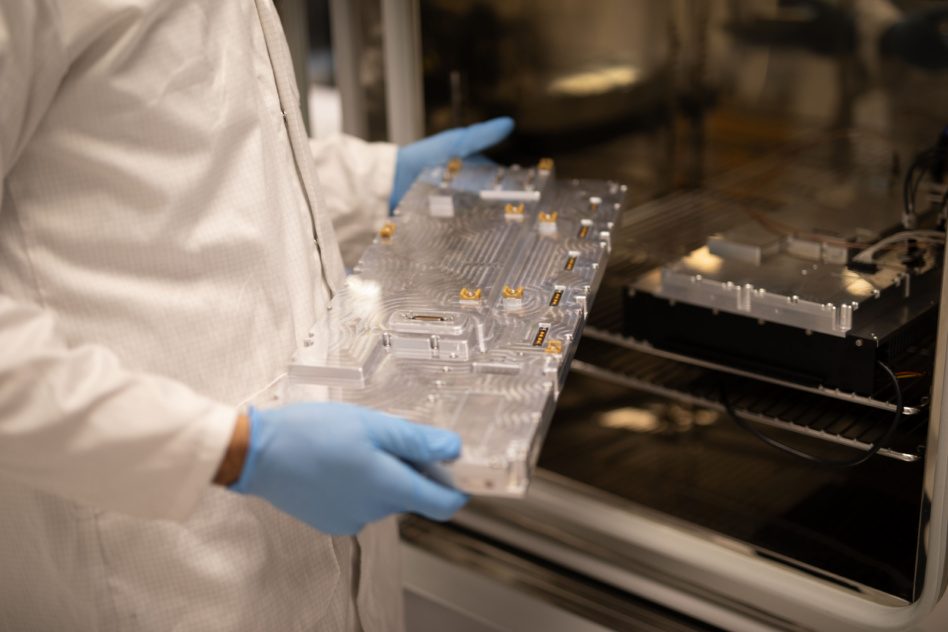
Ramon.Space makes onboard computing systems for satellites, designed to deliver ground-based computer performance while surviving the radiation, extreme temperatures and tight power budgets of orbit. The company's radiation-hardened computers carry roughly a decade of flight heritage across hundreds of satellites, serving satcom constellation operators and Earth observation providers, according to Payload.
Chief executive Avi Shabtai said the company is "paving the way for a new industry" as customer demand grows quickly, framing the raise as fuel for a computing foundation meant to serve an accelerating space economy.
How will Ramon.Space use the $124 million?
The company plans to scale manufacturing from thousands of units a year to tens of thousands and beyond, accelerate customer deliveries, and expand into new markets. It is also developing an orbital data center prototype, in collaboration with Ingrasys, scheduled to launch in 2027, a step toward processing satellite data in orbit rather than only on the ground.
Who else is competing for satellite computing contracts?
Ramon.Space competes with established radiation-hardened electronics suppliers, including legacy aerospace and defense contractors that have long supplied flight-grade processors, as well as newer entrants building edge AI compute for small satellites and constellations. Its decade of flight heritage across hundreds of satellites is a differentiator against startups still proving reliability in orbit, while its new orbital data center ambitions put it in competition with companies exploring in-space data processing as constellations grow larger and generate more data than ground links can efficiently downlink.
What's next for Ramon.Space?
The clearest milestone ahead is the 2027 launch of its orbital data center prototype with Ingrasys. Beyond that, the company's stated goal of scaling output by an order of magnitude will be tested against real customer deliveries as satcom and Earth observation operators expand their constellations and demand more onboard processing power per spacecraft.