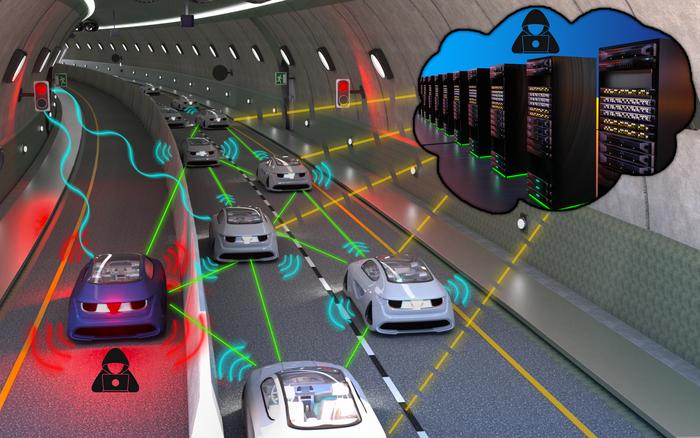
A new safety framework addresses critical vulnerabilities in connected autonomous vehicle and robot networks, focusing on vehicle-to-vehicle (V2V) communication systems that enable real-time data exchange between machines and cloud infrastructure.
The framework targets four core safety areas: collision avoidance systems, dynamic route optimization, traffic pattern prediction algorithms, and emergency response coordination protocols. Connected vehicles currently exchange over 2,000 data points per second through V2V networks.
Security Challenges in Connected Systems
Current autonomous vehicle networks face significant cybersecurity risks when multiple robots and vehicles communicate simultaneously. The framework addresses potential system failures that could affect entire transportation networks rather than individual vehicles.
Connected autonomous systems require constant data flow between vehicles, traffic infrastructure, and cloud computing platforms. This creates multiple attack vectors that traditional vehicle safety systems cannot address.
Implementation and Industry Impact
The safety framework includes predictive analytics for traffic flow optimization and standardized protocols for emergency situations. Companies like Waymo and Tesla are already implementing similar V2V communication systems in their autonomous vehicle fleets.
Industry experts estimate that comprehensive safety frameworks could reduce autonomous vehicle accidents by 40% once fully deployed across connected transportation networks. The framework also applies to industrial robot networks and drone coordination systems.