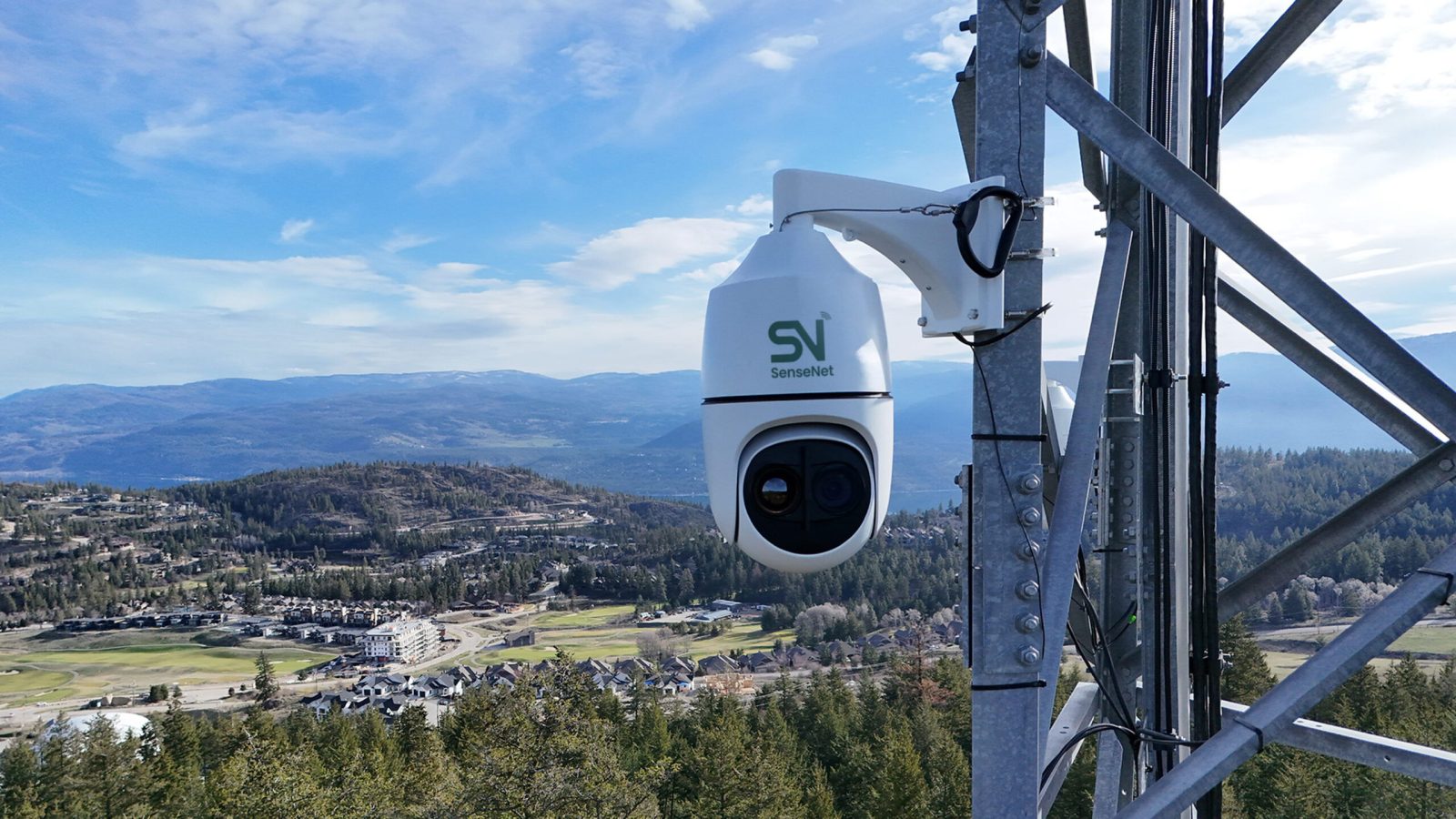
SenseNet, a North Vancouver-based wildfire detection company, has raised $43 million in Series B funding led by Idealist Capital, with participation from Fusion Fund, Stormbreaker Ventures, Thin Line Capital, National Bank of Canada and the Sitka Foundation. The round, announced November 24, 2026, will fund expansion of SenseNet's US and international sales teams and further development of its fire-risk and spread prediction tools, according to Techcouver.
A sensor network spanning 450 million acres
SenseNet combines ground sensors, AI-enabled cameras, satellite data and drone imagery into a single detection network. The company says it now operates more than 5,300 ground sensors and cameras across 12 countries, covering over 450 million acres of land. That scale makes SenseNet one of the larger private wildfire-monitoring operators serving both government agencies and private infrastructure owners.
Growing through acquisition and US contracts
SenseNet expanded into the United States partly by acquiring the wildfire detection division of N5 Sensors, a deal that brought more than 30 federal and enterprise customers into its fold. Current US clients include the Palo Alto Fire Department, San Jose Water and the City of Colorado Springs, giving the company a mix of municipal fire agencies and utilities as anchor customers.
Why investors are betting on fire-detection networks
Wildfire seasons have grown longer and more destructive across the western US, Canada and parts of Europe and Australia, pushing utilities and municipalities to look for early-detection systems that catch ignition before it spreads. SenseNet's pitch blends hardware deployed in the field with AI models that process camera and sensor feeds to flag smoke or heat signatures faster than human lookouts or satellite passes alone, and the addition of drone data lets the company verify alerts without waiting for a crew to drive out.
Competitors and how this raise compares
SenseNet competes with other AI-camera wildfire detection networks and with traditional satellite-based fire monitoring services, many of which have also raised large rounds in the past two years as climate-driven fire risk has become a bigger line item for insurers and utilities. A $43 million Series B, with a bank among its backers, suggests SenseNet is positioning itself as infrastructure that utilities and municipalities budget for annually rather than a one-off pilot purchase.
What to watch next
The key signal to track is how fast SenseNet converts its US federal and enterprise customer base, gained largely through the N5 Sensors acquisition, into renewed, multi-year contracts, and whether its spread-prediction tools get adopted by state-level fire agencies beyond its current municipal client list.