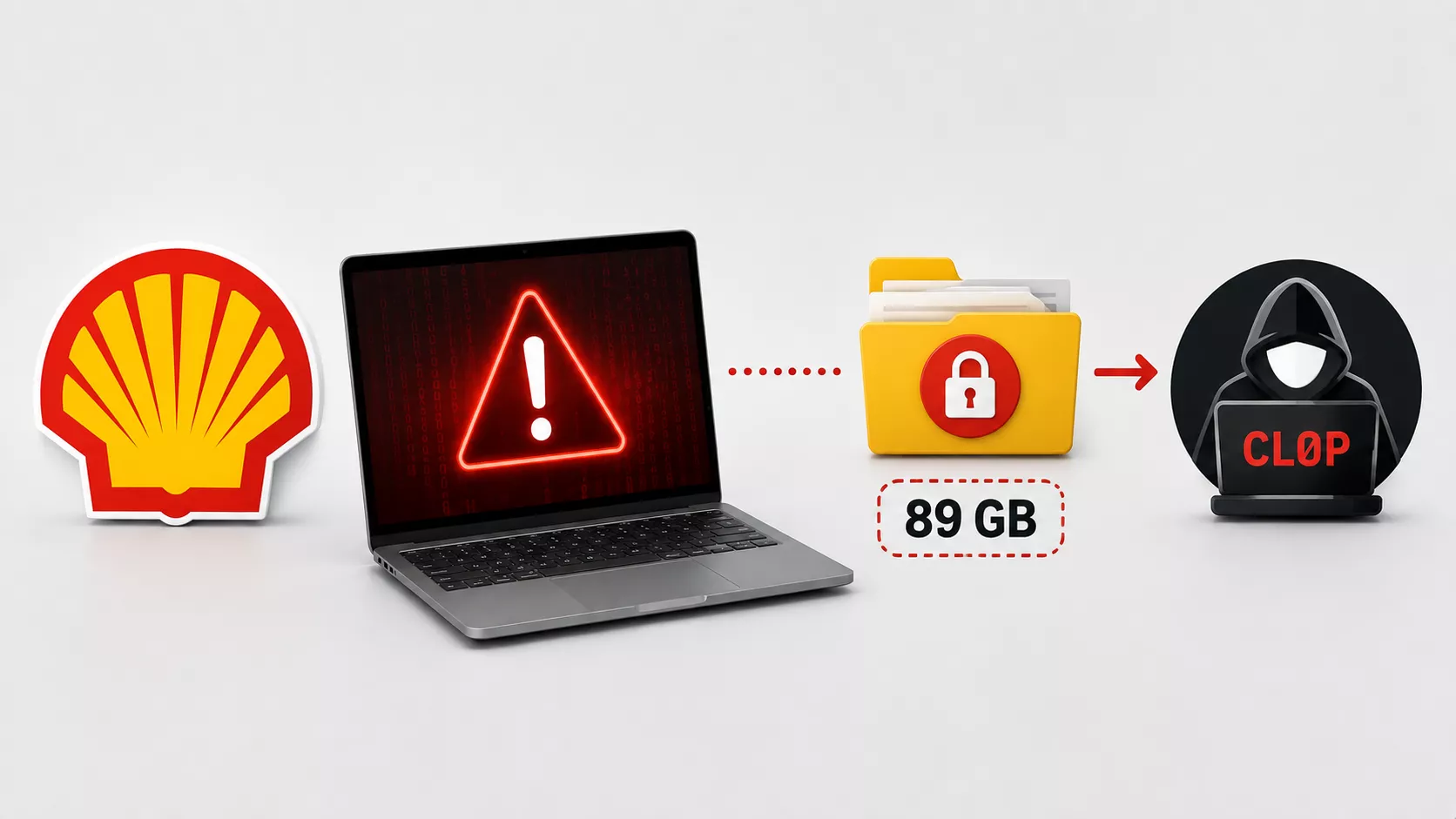
Shell has activated its internal cyber incident-response procedures after the Cl0p ransomware group added the British oil major to its dark-web leak portal and claimed to have exfiltrated approximately 89 GB of sensitive corporate information, including engineering drawings, facility photographs, project roadmaps and testing reports. Shell said it is working with security specialists to assess the claims and has not confirmed a breach, nor reported any interruption to refinery operations, drilling activity, production networks or core IT services.
How Cl0p Says It Got In
Cl0p — the same crew behind the 2023 MOVEit and GoAnywhere mass-exploitation campaigns — spent late July and early August quietly working through a fresh victim list after weaponizing CVE-2026-12569, a CVSS 9.8 improper-input-validation bug in PTC's Windchill PDMLink and FlexPLM product lifecycle management platforms that allows remote, unauthenticated arbitrary code execution. Windchill is used by more than 30,000 manufacturers in aerospace, defense, automotive, heavy machinery and energy to manage CAD data, bills of materials and engineering change, giving the flaw an unusually broad enterprise blast radius.
A Growing Target List

Starting August 12, Cl0p began publicly naming victims, and the roster is striking: Shell, Philips, Fiserv, Zebra Technologies, Ingersoll Rand, Toast, Mindray, Largan Precision and more than 30 additional enterprises. The group's leak-site postings are designed to increase ransom pressure by publishing selective samples of stolen data, but security researchers caution that the volume of allegedly stolen material and Cl0p's descriptions should not be treated as verified until confirmed by the victims or independent investigators.
Why Extortion-Only Attacks Still Hurt
Even without encryption, exfiltration of engineering drawings, site imagery or facility testing reports could give malicious actors valuable insight into infrastructure layouts, project timelines, maintenance processes and supplier relationships — and enable targeted social-engineering campaigns against employees, contractors and business partners. That is a particular concern for energy companies, whose technology ecosystems span enterprise IT, cloud, remote access, engineering platforms, operational technology and a long tail of third-party suppliers.
Where It Fits In A Busy August For Cyber
The Shell disclosure lands in a month already loaded with breaches and critical patches. ShinyHunters leaked 7.1 million Baxter International records via Salesforce extortion the same week, while Microsoft rolled out one of its largest Patch Tuesdays ever, patching 421 CVEs including an Entra ID max-severity flaw. Enterprises running Windchill or FlexPLM should treat CVE-2026-12569 as a top-priority patch, enforce multi-factor authentication for administrative services and monitor outbound traffic for suspicious data transfers.
Reporting based on coverage from Cyber Press, Cybersecurity News, BleepingComputer and Computer Weekly.