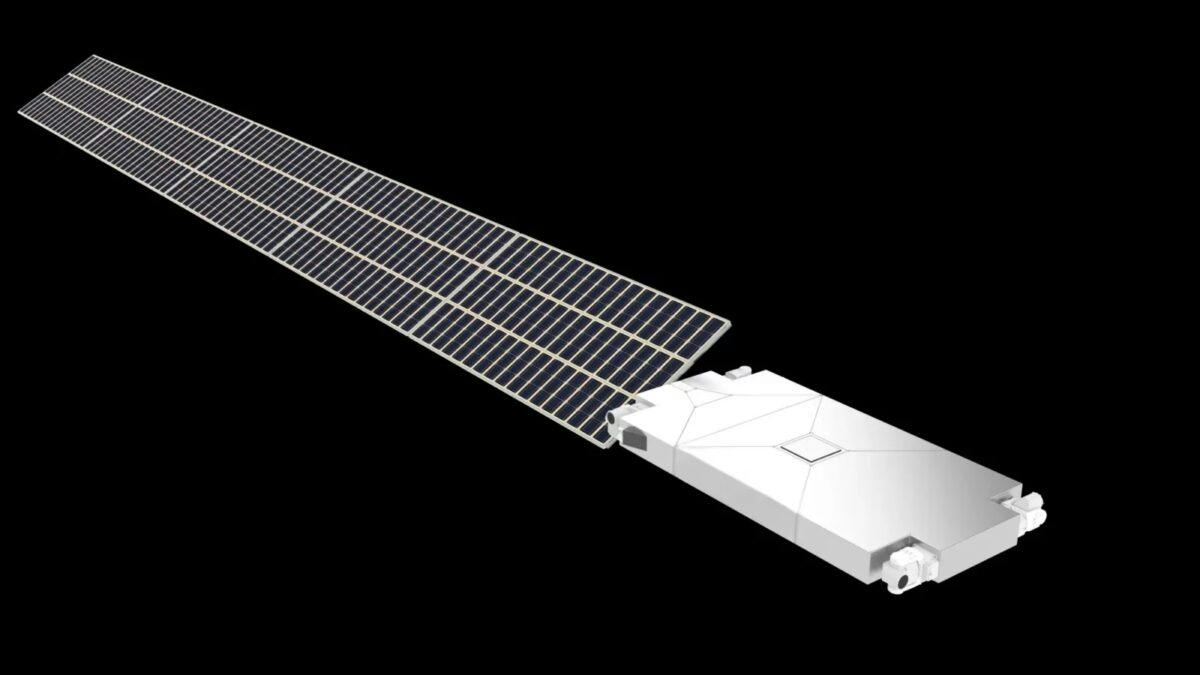
Paris-based space-tech startup Univity has secured up to €12.5 million (about $13.9 million) from the European Innovation Council's Accelerator program to develop technology that connects ordinary smartphones directly to satellites, no telecom carrier network required. The award, announced November 26, 2026, splits into a €2.5 million non-dilutive grant plus up to €10 million in equity financing through the EIC Fund, according to Dealroom.
What exactly is Univity building?
Univity is developing direct-to-device satellite connectivity: technology that lets a standard smartphone link straight to a satellite in very low Earth orbit without special hardware or a carrier network sitting in between. Flying satellites closer to Earth shortens the transmission path, and Univity says it has already achieved a bidirectional 5G link between space and the ground with processing done onboard the satellite itself. The company plans to launch two demonstration satellites, called uniShape, in the first half of 2028 to prove the concept in orbit.
How does this compare to Starlink and other satellite-to-phone efforts?
SpaceX's Starlink already offers a direct-to-cell service, AST SpaceMobile has partnered with carriers including Vodafone, and the EU's own IRIS² satellite constellation is targeting full operation by the end of the decade. Univity is positioning itself differently from Starlink's carrier-bypassing model: according to the company's institutional partnerships lead, the goal is to build what they call a neutral satellite layer that mobile operators can integrate using their own 5G spectrum, letting carriers keep their customer relationships instead of competing against a satellite operator for them.
How much has Univity raised in total, and who's backing it?
This EIC award follows a €31 million grant from French space agency CNES in 2025 and a €27 million Series A round in April 2026. Dealroom's funding tracker separately lists Univity's total raised at around $40 million prior to this latest award. That funding mix, public space-agency money, EU innovation financing, and private Series A capital, stands out because it's built more on government and institutional backing than a single marquee venture lead.
What should be watched next?
The clearest milestone ahead is whether the two uniShape satellites actually launch on schedule in the first half of 2028, since Univity's entire pitch depends on proving the technology works in orbit rather than in the lab. Beyond that, it's worth watching whether Univity lands a telecom carrier willing to test its neutral-layer model, and how European regulators allocate 5G spectrum for space-to-phone links as they weigh competing approaches from IRIS², Starlink, and AST SpaceMobile.