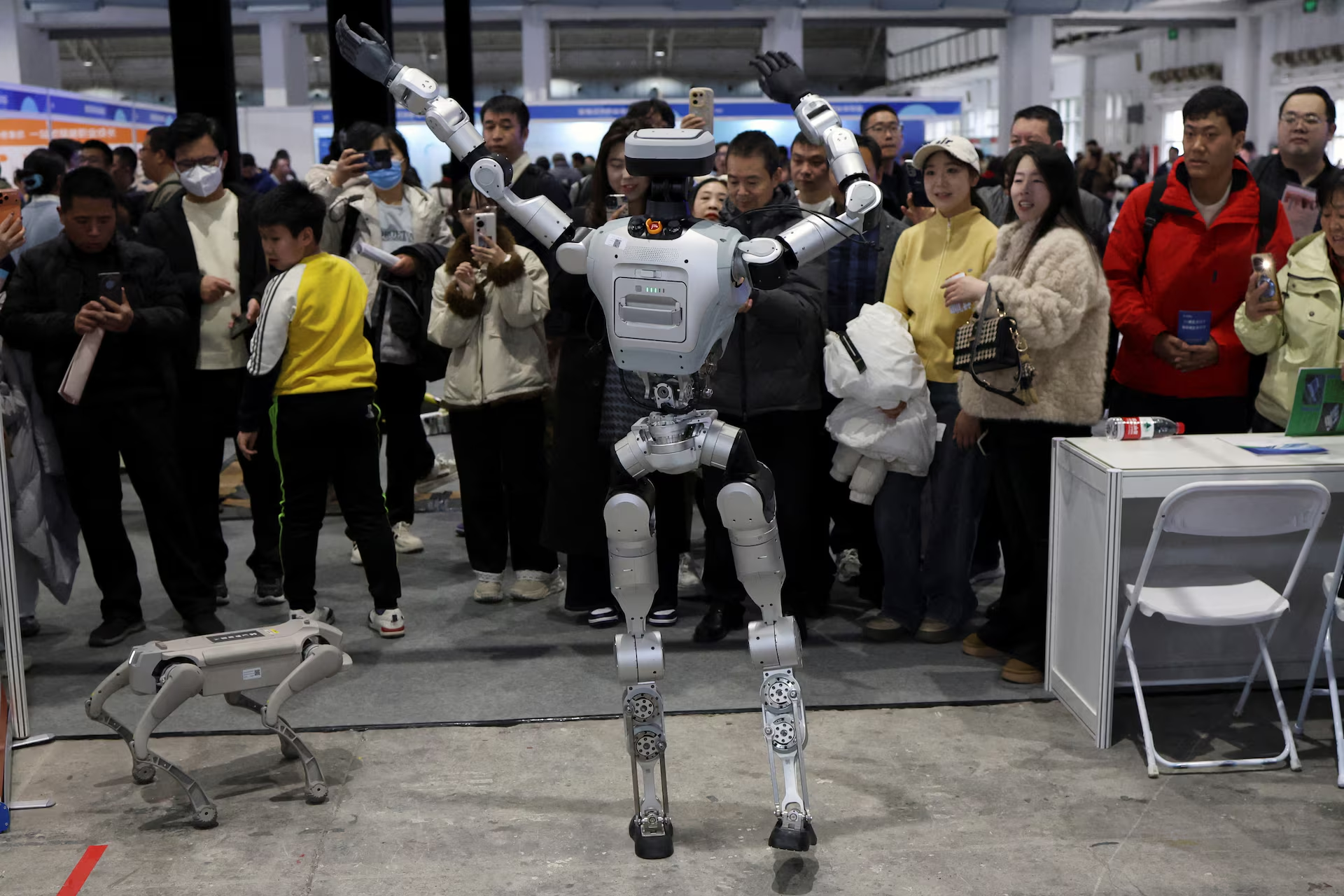
US Lawmakers Push Bill to Ban Chinese Robotics in Government Operations by 2026
New bipartisan legislation aims to prohibit federal agencies from procuring Chinese-manufactured robotic systems. The bill reflects growing national security concerns over foreign technology in critical infrastructure.
Key Takeaways
Bipartisan US legislation would ban federal agencies from purchasing or deploying Chinese-manufactured robotic systems, with an expected effective date of March 2026.
The bill is driven by national security concerns over cybersecurity vulnerabilities and data collection capabilities in foreign-made robots used for surveillance, logistics, maintenance, and security operations.
American and allied robotics firms, including Boston Dynamics and Lockheed Martin, may see increased demand as agencies seek alternative suppliers.
Experts warn the transition timeline may be challenging given Chinese market dominance in industrial automation and commercial drones.
The measure follows earlier restrictions on Chinese telecom equipment and signals a broader push for technology sovereignty and supply chain transparency in critical infrastructure.
The Robotics Media Editorial
United States lawmakers have introduced comprehensive legislation that would prohibit federal government agencies from purchasing or deploying robotic systems manufactured by Chinese companies, marking a significant escalation in technology-focused national security measures. The bipartisan bill, expected to take effect by March 2026, represents the latest effort to reduce American dependence on Chinese technology infrastructure.
National Security Implications for Robotics Industry
The proposed legislation stems from mounting concerns about potential cybersecurity vulnerabilities and data collection capabilities embedded in foreign-manufactured robotic systems. Federal agencies currently utilize various robotic platforms for surveillance, logistics, maintenance, and security operations, making this ban particularly impactful for government contractors and technology suppliers.
Industry Impact and Market Restructuring
This legislative move is expected to create substantial opportunities for American and allied robotics manufacturers while forcing a complete restructuring of federal procurement processes. Companies like Boston Dynamics, Lockheed Martin, and other domestic robotics firms may see increased demand as government agencies seek alternative suppliers for their automation needs.
Implementation Timeline and Challenges
The 2026 implementation date provides government agencies with a transition period to identify existing Chinese robotic systems and develop replacement strategies. However, industry experts warn that the timeline may prove challenging given the current market dominance of Chinese manufacturers in certain robotics sectors, particularly industrial automation and commercial drones.
This legislation follows similar restrictions on Chinese telecommunications equipment and reflects a broader trend toward technology sovereignty in critical infrastructure sectors. The robotics industry will likely need to demonstrate enhanced supply chain transparency and security protocols to meet evolving government requirements.
It would prohibit US federal government agencies from purchasing or deploying robotic systems manufactured by Chinese companies, with implementation expected by March 2026.
Why are lawmakers pushing for this ban?
The bill responds to national security concerns about potential cybersecurity vulnerabilities and data collection capabilities in foreign-manufactured robots used in federal surveillance, logistics, maintenance, and security operations.
Which companies could benefit from the legislation?
Domestic and allied robotics manufacturers such as Boston Dynamics and Lockheed Martin may see increased demand as agencies replace Chinese systems.
What challenges could complicate implementation?
Experts warn the 2026 timeline may be difficult due to Chinese manufacturers' current dominance in sectors like industrial automation and commercial drones, requiring agencies to identify existing systems and develop replacement strategies.