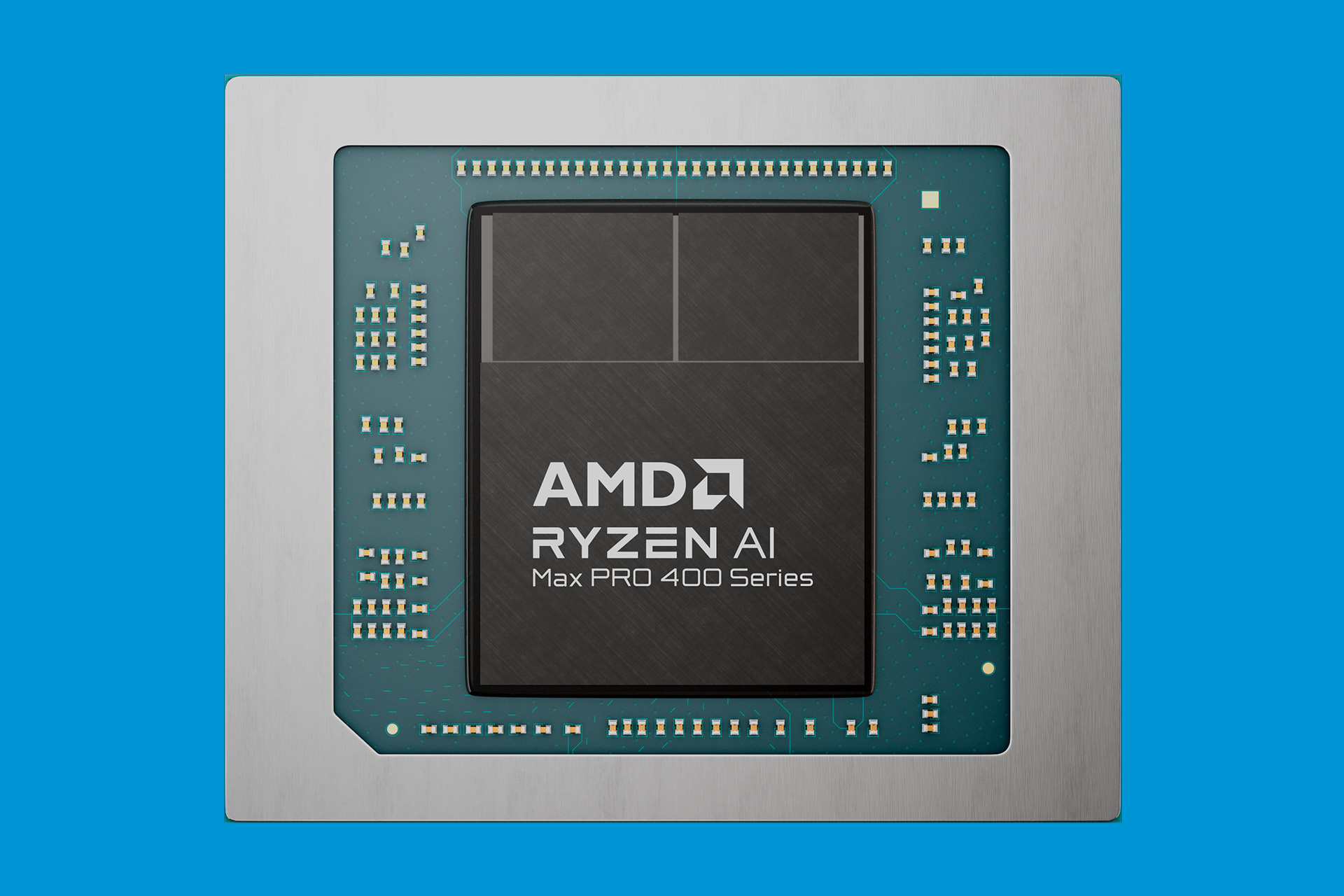
AMD has revealed the Ryzen AI Max PRO 400 series, a mid-generation refresh of its Strix Halo silicon — internally branded Gorgon Halo — that boosts supported memory by 50 percent and is squarely aimed at local large-model inference on AI PCs and small-form-factor workstations. Systems based on the new chips will begin shipping in the third quarter of 2026 from launch partners HP, Lenovo and ASUS.
Three SKUs, 16 Zen 5 Cores And A 40 CU iGPU
The PRO 400 family includes three SKUs. The flagship Ryzen AI Max+ PRO 495 keeps the 16-core Zen 5 + 40 CU RDNA 3.5 configuration of the existing Max+ 395 but pushes CPU clocks to 5.2 GHz, ships with the new Radeon 8065S iGPU and rates its NPU at 55 TOPS. The Ryzen AI Max PRO 490 drops to 12 cores and a 32 CU iGPU, while the PRO 485 brings the same 32 CU GPU into an 8-core configuration. All three chips share a 256-bit LPDDR5X memory bus and a 45-120 W cTDP window aimed at high-end laptops, mobile workstations and small-form-factor desktops.
192GB Memory Unlocks 300B Models On A Single SoC
The headline change is memory. The PRO 400 chips support up to 192 GB of LPDDR5X-8533, up 50 percent from the 300 series' 128 GB cap, with bandwidth rising about 7 percent to 273 GB/s thanks to new 24 GB (192 Gbit) LPDDR5X chips. AMD says systems can allocate up to 160 GB of that pool to the GPU, leaving 32 GB for the CPU. The headroom is enough to load a 300-billion-parameter model at FP4 quantisation on a single SoC — a first outside of Apple's Mac Studio and a clear signal that AMD is leaning hard on memory capacity as its main weapon against NVIDIA's RTX Spark superchip.
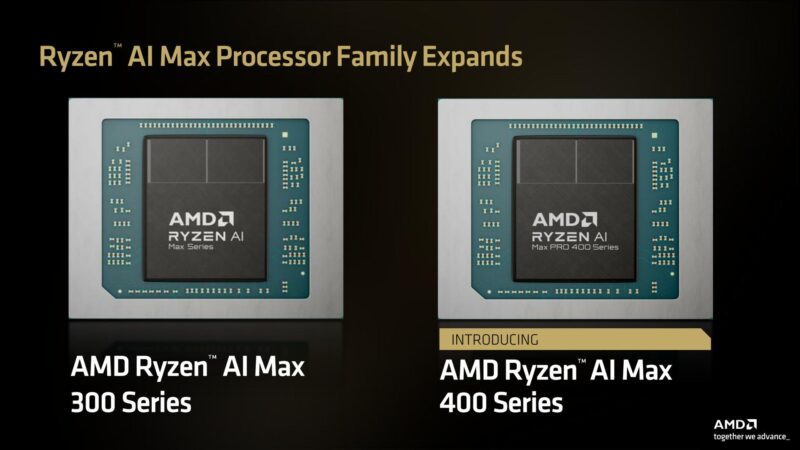
PRO Only, And All-In On AI
For now AMD is only launching PRO SKUs, meaning every PRO 400 system ships with AMD's enterprise management stack — and the price premium that comes with it. There is no confirmed timeline for non-PRO 400 chips. The decision underlines AMD's pitch that, unlike the 300 series which was sold for gaming, creator and AI use, the 400 series is positioned almost entirely as an on-device AI platform. AMD's own Ryzen AI Halo developer mini-PC is expected to get a 400-series refresh later in 2026, complementing other Computex 2026 AI silicon launches including Qualcomm's Dragonwing edge stack and Intel's Crescent Island GPU.
Reporting based on coverage from ServeTheHome, Tom's Hardware and AMD's own briefing materials.