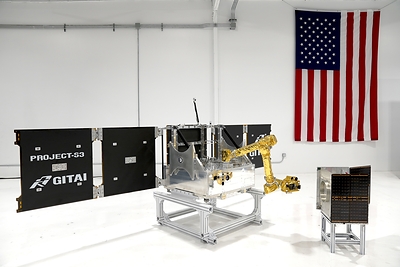
Space robotics company GITAI has completed the flight model of its S3 robotic satellite, a technology demonstration mission built to validate advanced on-orbit servicing and the company's modular spacecraft architecture for future defense-focused low Earth orbit (LEO) constellation services.
A launch-ready servicing demonstrator
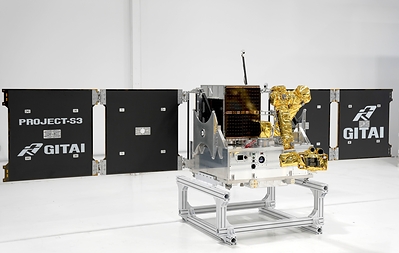
According to the U.S.-headquartered company, the S3 flight model has completed manufacturing, assembly and integration and is substantially in a launch-ready configuration, with solar panels already completed separately. The mission is manifested on SpaceX's Transporter-18 rideshare and was originally planned to launch in October 2026.
What S3 will prove in orbit
The demonstrator is designed to show autonomous rendezvous and proximity operations, autonomous docking with non-cooperative satellites, robotic servicing tasks and controlled de-orbit. GITAI develops its spacecraft and robotic arms in-house, an approach it says lowers cost and de-risks the path to routine satellite life extension and inspection.
Positioning for defense and commercial demand
On-orbit servicing has become one of the most active corners of the space economy, with rivals racing to demonstrate life extension, refueling and debris removal. GITAI's push follows growing investor interest in the segment, seen in deals such as Starfish Space's $100M Series B for its Otter servicing vehicle and NewOrbit's Series A for very low Earth orbit platforms. Defense customers are also driving payload partnerships like MDA Space's work with Mitsubishi on defence satellite payloads.
Reporting based on coverage from GITAI and PR Newswire.