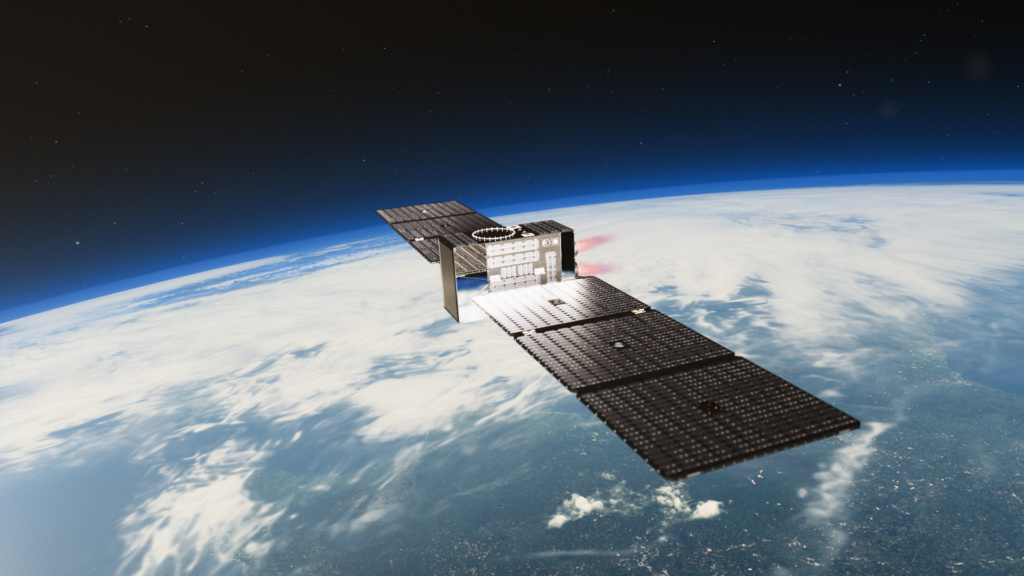
British space-technology startup NewOrbit Space has raised a $18.5 million Series A to commercialise very-low Earth orbit (VLEO), the band roughly 200 to 300 kilometres above the planet that has long been the preserve of spy satellites and the International Space Station. The oversubscribed round was led by Voyager Ventures, with participation from existing backers Atlantic, Lifeline Ventures, LGF and Illusian, alongside angel investors including former NVIDIA chief scientist David Kirk and TIER Mobility co-founder Lawrence Leuschner.
Engineering a satellite for the orbit no one could use
Flying below 300 kilometres has historically been considered impractical: the thicker atmosphere drags satellites down within weeks, atomic oxygen corrodes their surfaces, and even small geometric asymmetries generate destabilising aerodynamic torque. NewOrbit's flagship spacecraft, NEO-1, is designed to overcome all three. The Reading-based company, founded in 2021, says NEO-1 is the first and only satellite engineered to operate sustainably at 200 to 300 km for up to five years, hosting up to 50 kg of Earth observation, telecommunications, GNSS and RF payloads.
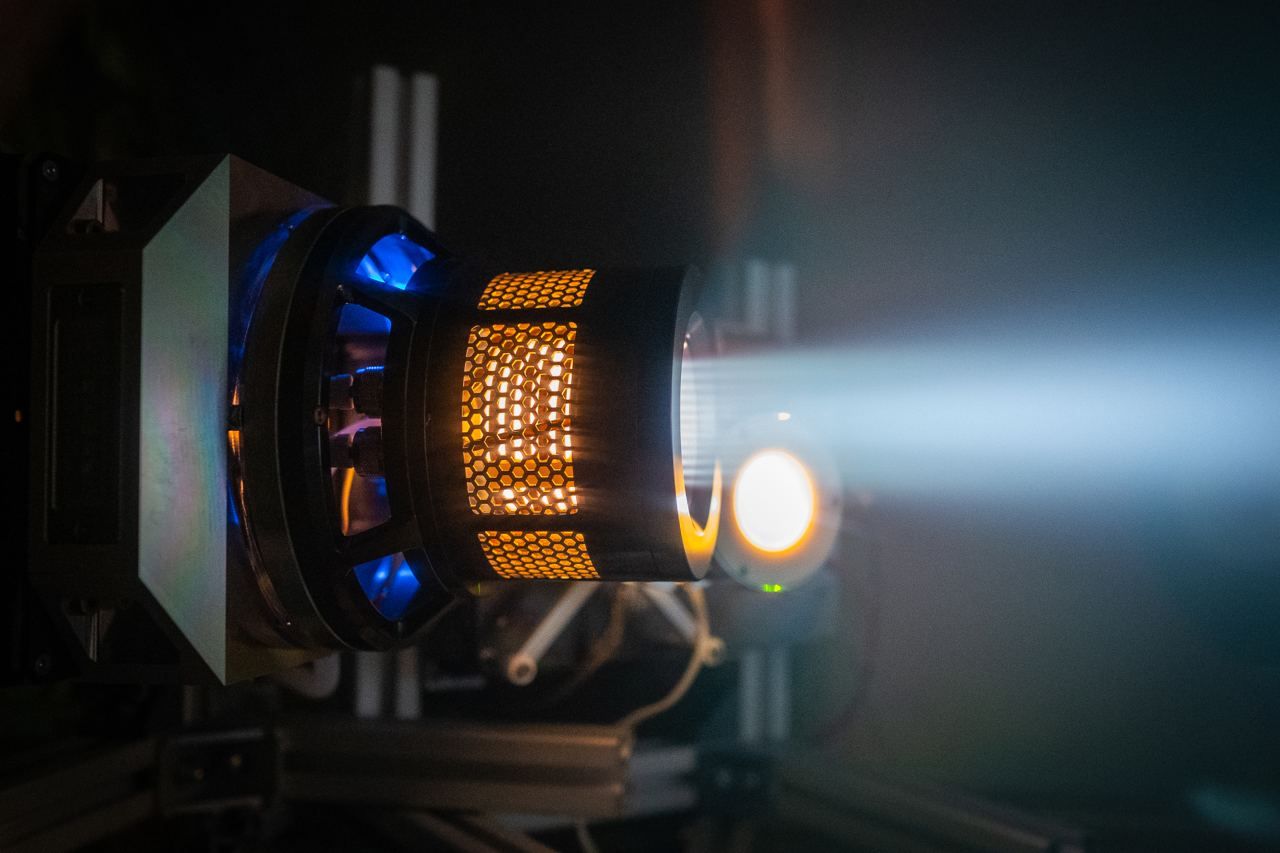
At the heart of the platform is AURA, an in-house xenon-fuelled electric thruster now in its seventh generation. NewOrbit claims it delivers four times the specific impulse of conventional electric propulsion, meaning the same orbit-keeping with a quarter of the propellant.
Why proximity changes the economics
Operating closer to Earth turns altitude into resolution. Optical and infrared instruments resolve detail that higher orbits cannot reach, synthetic aperture radar operators can shrink their apertures and power budgets, and direct-to-device telecom payloads can close links to ordinary handsets at roughly one-third the usual altitude. NewOrbit says the approach can deliver imagery up to 20 times cheaper than conventional satellites while leaving no long-lived debris, since VLEO craft naturally de-orbit at end of life. The funding case echoes the cost-down thesis driving other recent rounds such as Apex's $200 million raise for standardised satellite buses.
From first flight to factory
NewOrbit is targeting a first flight of NEO-1 in 2028. The mission is staged: the satellite will first deploy in low Earth orbit near 600 km to validate in vacuum, then use its air-breathing ion propulsion to descend below 300 km and prove a five-year VLEO lifetime. The Series A will also fund the NEO Production Complex, a facility able to build up to 10 satellites a year initially and scale toward 100-plus annually for high-cadence constellations.
The company is advised by former leaders of the European Space Agency and NASA's Jet Propulsion Laboratory and is working with ESA, the UK Space Agency and Germany's SPRIND. Its push adds to a busy stretch for European and Earth-observation space ventures, from Open Cosmos's Atlantic Constellation to stealth-mode entrants like Eclipse Space and orbital-infrastructure efforts such as SpaceX's orbital data-centre constellation.
"VLEO is the next foundational shift in the global space industry," said Matthew Blain, partner at Voyager Ventures, framing the orbit as an order-of-magnitude improvement in Earth observation economics.
Reporting based on coverage from Payload, SpaceNews and NewOrbit Space.