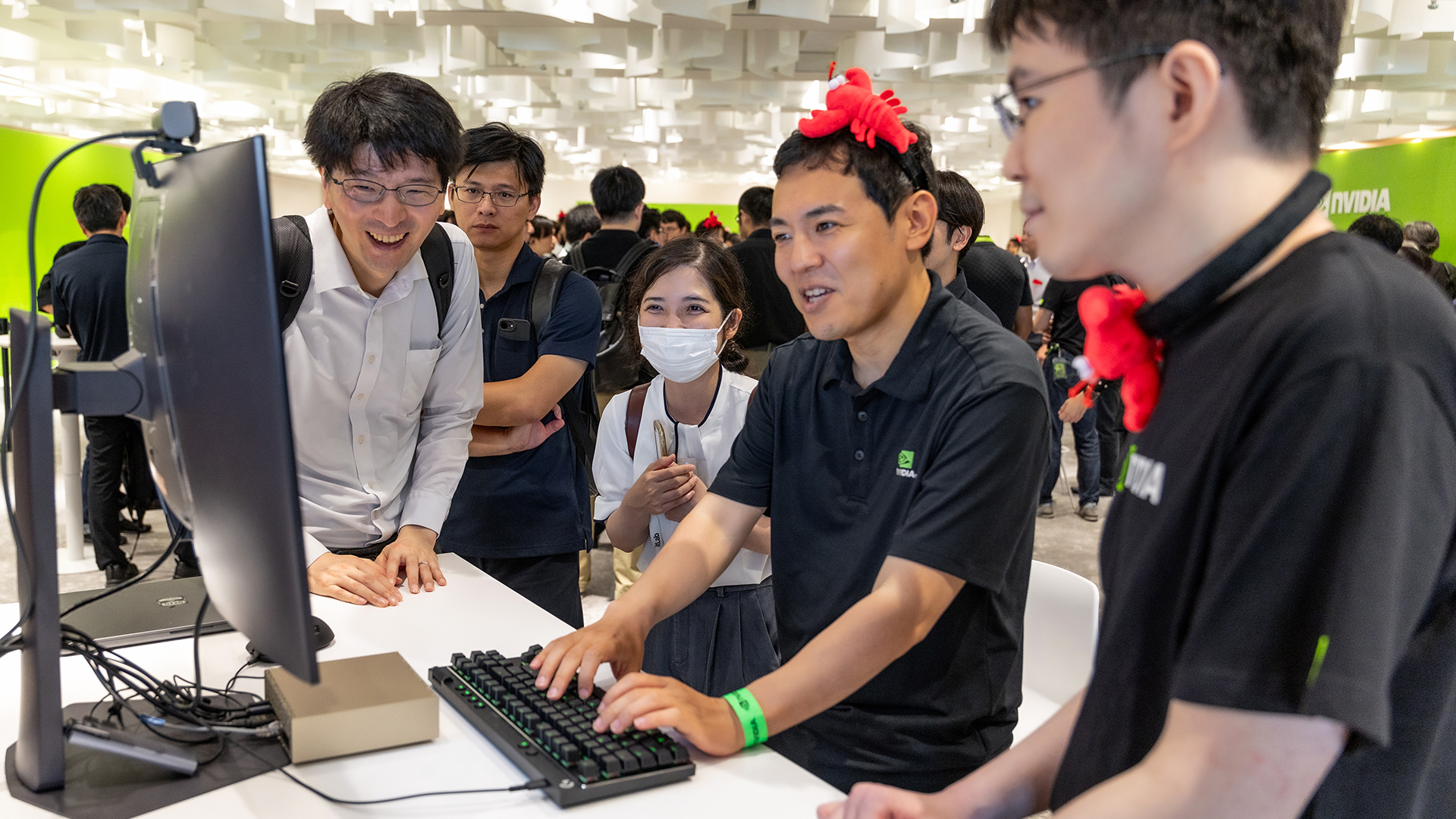
NVIDIA and Japan's flagship research institute RIKEN are bringing two new Blackwell-class supercomputers online in a partnership CEO Jensen Huang framed this week as Japan's first-of-kind role in the U.S. Genesis Mission for AI-driven science. Together the two systems will deploy 2,140 NVIDIA Blackwell GPUs across the GB200 NVL4 platform and NVIDIA Quantum-X800 InfiniBand fabric, anchoring Japan's sovereign AI push and its hybrid quantum-classical computing roadmap.
RIKYU: 1,600 Blackwell GPUs for AI-for-Science
RIKYU is the AI-for-science machine. It deploys 1,600 NVIDIA Blackwell GPUs on GB200 NVL4 with Quantum-X800 networking, and is tasked with underwriting RIKEN's development of open foundation models for life sciences, materials science, climate and weather forecasting, manufacturing and laboratory automation. It becomes, by GPU count, one of the largest AI-for-science machines in Japan and slots into the country's broader physical-AI push.
ROQUO: A Quantum-HPC Machine Built Around 540 Blackwell GPUs
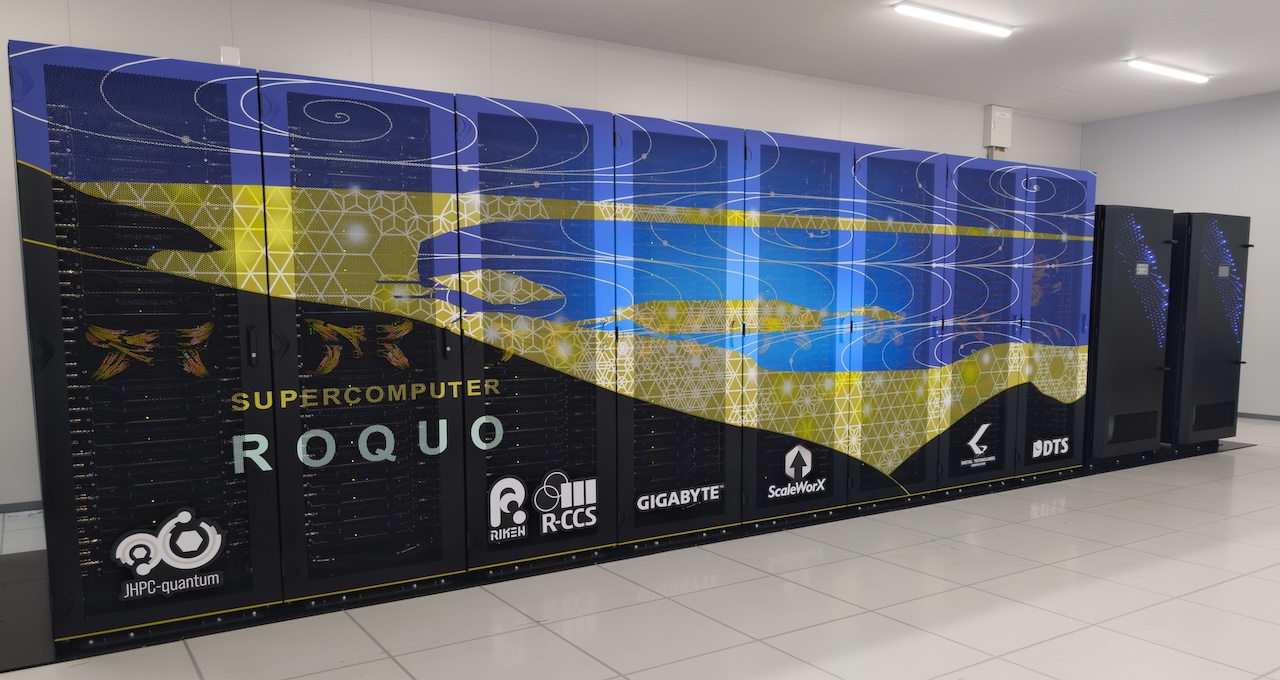
ROQUO is the more architecturally novel of the two — a JHPC-quantum GPU supercomputer that tightly integrates quantum processors with 540 Blackwell GPUs accessed through GB200 NVL4. It is wired to RIKEN's on-premises quantum computers in Wako and Kobe, including Quantinuum's trapped-ion Reimei system, and lets researchers run hybrid quantum-classical workloads through the NVIDIA CUDA-Q platform. Early runs are exploring an evolutionary AI framework, developed jointly with NVIDIA, that generates quantum circuits for Reimei.
The Genesis Mission Angle
The RIKEN pair is the visible edge of what NVIDIA is now calling Japan's role as its first international partner in the Genesis Mission — the U.S. initiative to harness AI for scientific discovery across national labs, industry, and allied governments. Around it, NVIDIA is also standing up ISAAC G-QuAT collaboration on NVQLink low-latency quantum-GPU interconnects, an AI-and-GPU-driven quantum chemistry workflow with Mitsubishi Chemical, Mizuho Bank, Keio, AIST and the University of Toronto that hit a 13.4x speedup over CPU-only nodes, and a Fujitsu track investigating CUDA-Q for large-scale hybrid quantum-chemistry simulation.
Where It Sits in NVIDIA's Japan Week
The RIKEN systems land inside a bigger NVIDIA-Japan announcement salvo — from a national Physical AI Initiative with METI to expanded memory partnerships, factory-floor commitments from Fujitsu, Kawasaki, FANUC and Yaskawa, and SoftBank's GB200-class AI-native RAN buildout. It's also the same infrastructure logic driving Wistron's new Texas AI server plant: Blackwell everywhere, delivered on Vera Rubin timelines, across allied economies.
Reporting based on coverage from NVIDIA Blog, NVIDIA Newsroom, Data Center Dynamics, GamesBeat and TheFastMode.