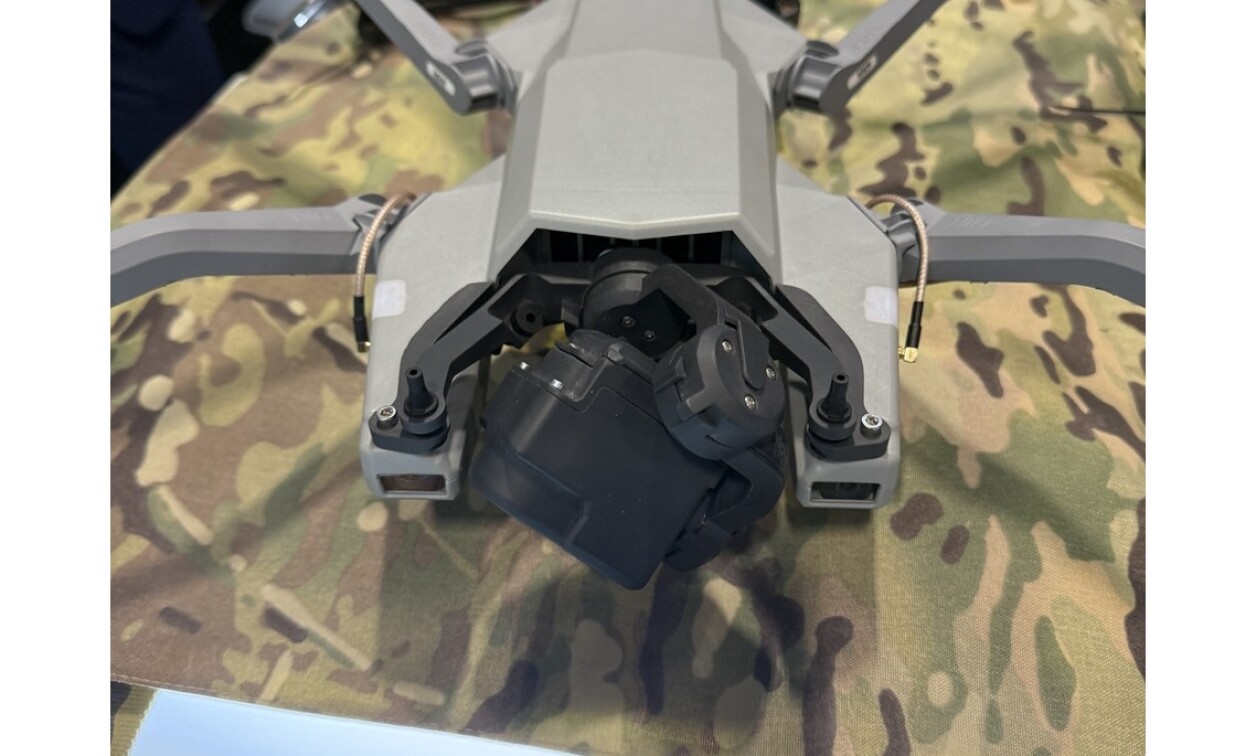
Red Cat Holdings (NASDAQ: RCAT) launched the Hellcat dual-use small unmanned aircraft system at Eurosatory 2026 in Paris on June 15, 2026, expanding its product family beyond the U.S. Army-selected Black Widow to address NATO and allied customer requirements.
An open-architecture pivot
Built on the Black Widow platform but redesigned around Modular Open Systems Architecture (MOSA) principles, Hellcat lets customers configure command-and-control links, payloads, software and integration paths to suit national procurement frameworks and coalition interoperability requirements. "The Black Widow was very directed towards requirements specific to the U.S. Army," said Stan Nowak, Vice President of Marketing for Red Cat Holdings. "Now we can make the architecture of the system open up to address really any of our coalition partners around the world."
Ukraine-driven design
The aircraft delivers more than 50 minutes of flight time, up to 6.8 miles (11 km) of range, GPS-denied operation from power-on, RTH azimuth recovery without GPS, WEB Standoff Radio support and a low-visibility tactical finish. A new Ocellus 3CP three-camera payload — replacing Black Widow's two-camera unit — and a redesigned gray motor-arm scheme came directly from Red Cat engineers embedded with Ukrainian operators.

A growing family of systems
Hellcat complements Red Cat's broader portfolio, which includes Black Widow, FlightWave Edge 130, FANG, the Blue Ops Variant 7 unmanned surface vessel and command-and-control autonomy stack. "Small UAS programs need to keep pace with how operators are using them in the field," said CEO Jeff Thompson. The launch lands inside an intense week of counter-drone and autonomous-fighter reveals at Eurosatory, where European procurement teams are scrambling to absorb Ukraine combat lessons. It also tracks closely with the U.S. Army's ground robotics push to build sovereign UAS supply chains outside Chinese platforms.
Reporting based on coverage from Military Embedded Systems and Red Cat Holdings investor disclosures.