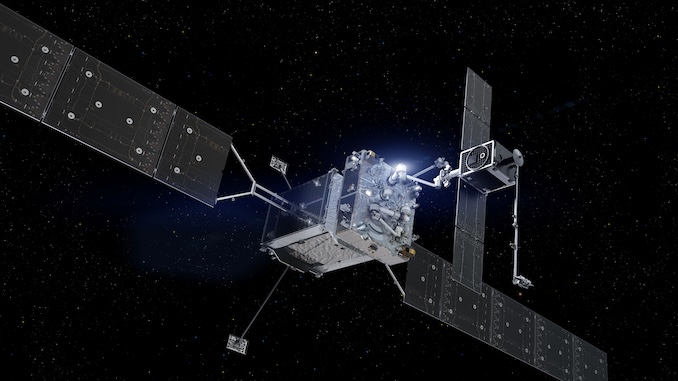
A SpaceX Falcon 9 lifted off from Space Launch Complex 40 at Cape Canaveral on Tuesday, July 21, carrying Northrop Grumman's Mission Robotic Vehicle (MRV) and three Mission Extension Pods (MEPs) toward geosynchronous orbit — the opening act of a decade-long robotic servicing campaign designed to extend the lives of aging communications satellites.
Two Decades In The Making
The MRV carries the Robotic Servicing of Geosynchronous Satellites (RSGS) payload — a pair of robotic arms with an array of tool attachments — developed at the U.S. Naval Research Laboratory with DARPA funding. The concept traces back to early-2000s NRL studies including RescueSat and the Spacecraft for the Universal Modification of Orbits (SUMO) programme. Engineers landed on grappling every spacecraft's rocket launch-vehicle interface plane, allowing safe docking with satellites that were never designed to be serviced.
How The Servicing Works
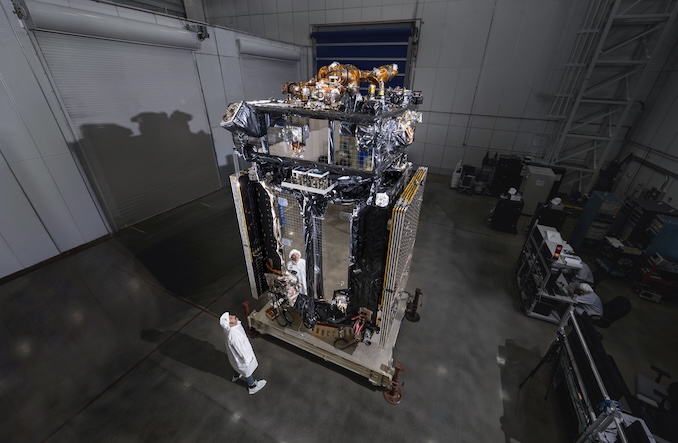
After a year of transit to GEO, the MRV will begin installing MEPs — small jetpacks loaded with fresh maneuvering propellant — onto client satellites, starting with spacecraft owned by Australia's Optus and Luxembourg's SES. Each MEP is designed to add up to eight years of operational life. Once initial checkouts finish, U.S. Space Force will take over the RSGS payload under its Servicing, Mobility and Logistics portfolio.
The Last Flight Of Booster B1069
SpaceX flew Falcon 9 first-stage booster B1069 for the 32nd and final time. The company said the extra performance required to send the RSGS stack to a geosynchronous transfer orbit ruled out recovery. B1069 has previously flown NASA's CRS-24 cargo mission, Eutelsat's Hotbird 13F, OneWeb Mission 15 and SES-18/19, alongside 27 Starlink flights.
The Broader Servicing Push
MRV marks the second robotic satellite-servicing spacecraft that SpaceLogistics — Northrop Grumman's servicing subsidiary — has flown to GEO, following its MEV-1 and MEV-2 missions that have kept two Intelsat satellites operational for years past their original design lives. The mission also arrives days after SpaceX's Vandenberg abort highlighted Falcon 9's operational tempo.
Reporting based on coverage from Spaceflight Now, Northrop Grumman and NRL.