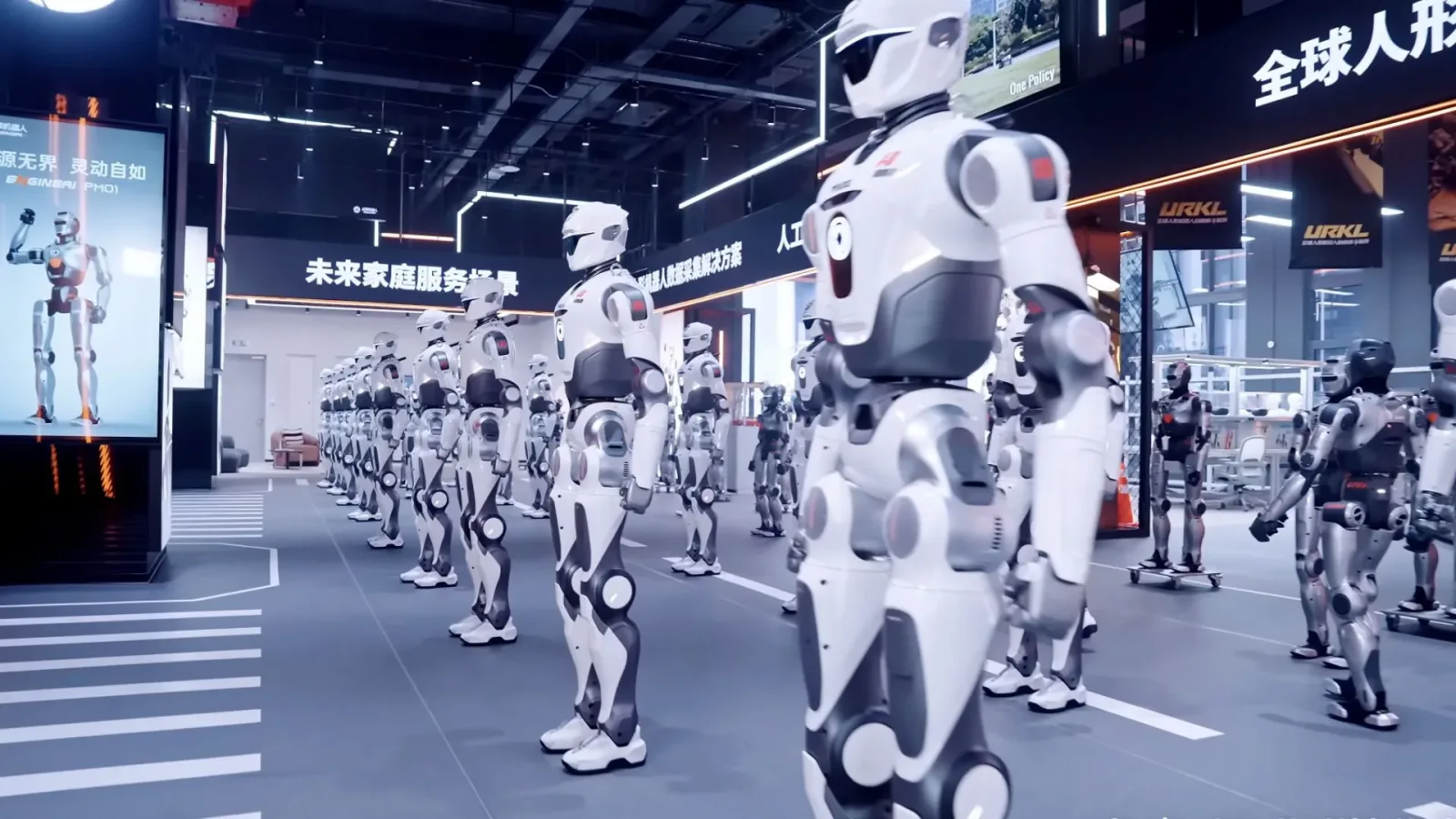
A total of 151 humanoid robots danced in synchronized routines in Shenzhen on November 17, setting a Guinness World Record for the most humanoid robots dancing simultaneously within one hour. The performance, staged ahead of the APEC Economic Leaders' Meeting on November 18-19, exceeded an initial target of 110 robots. Twenty EngineAI T800 units anchored the lineup alongside groups of Unitree G1 and AgiBot X2 humanoids.
Key takeaways
- 151 humanoid robots completed a synchronized dance routine in Shenzhen on November 17, 2026, beating an initial target of 110 machines.
- Guinness World Records adjudicator Xiong Wen confirmed the title for most humanoid robots dancing simultaneously within one hour.
- Twenty EngineAI T800 robots led the performance, standing 1.73 meters tall, weighing roughly 75 kilograms, and delivering 450 newton-meters of torque.
- Unitree G1 and AgiBot X2 units filled out the rest of the 151-robot lineup, sourced from multiple Chinese manufacturers.
- The Shenzhen Longgang District Artificial Intelligence (Robotics) Bureau organized the event with ENGINEAI Robotics Technology and other robotics firms.
The record attempt doubled as a showcase of China's swarm-control ambitions. The T800 platform demonstrated millisecond-level synchronization across dozens of units executing dynamic moves, including spinning kicks, rising uppercut-style punches, kip-ups and backflip landings. Those motions demand precise joint-torque coordination rather than pre-recorded playback, and pulling it off across more than 100 machines pooled from at least three manufacturers is harder than a single-vendor demo. Interoperable timing across different robot stacks is exactly the kind of orchestration problem China's robotics clusters are trying to prove out in public before foreign buyers.
Why the venue matters as much as the robot count
Staging the record two days before the APEC leaders' meeting was not incidental. Shenzhen has positioned itself as China's humanoid manufacturing hub, and local officials used the spectacle to signal manufacturing depth to visiting trade delegations. EngineAI, founded in 2023, has moved quickly from prototype demonstrations to fielding T800 units capable of sustained, high-torque dynamic movement, putting it in the same conversation as Unitree and AgiBot on raw mechanical performance.
What happens next
Large-scale choreographed demonstrations have become a recurring proof point for Chinese humanoid makers, echoing earlier mass-marathon and mass-boxing events staged in 2025 and 2026. The next test for EngineAI, Unitree and AgiBot is converting crowd-pleasing synchronization into paid industrial deployments, where the same torque and timing precision would need to hold up on a factory floor rather than a stage.