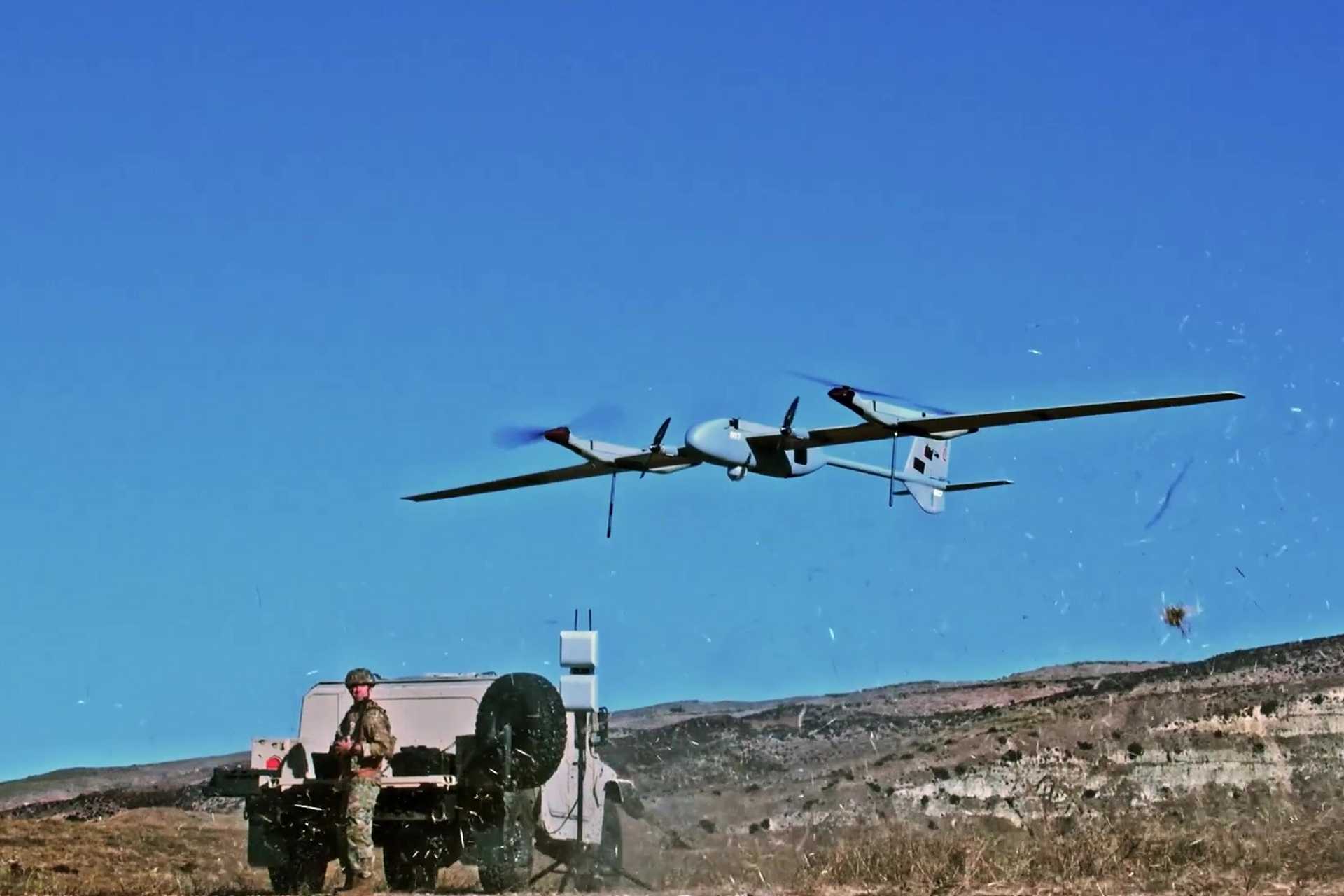
The U.S. Army has awarded AeroVironment a $117.3 million contract to procure 82 P550 unmanned aircraft, pushing organic long-range reconnaissance down to the battalion level for the first time at scale. The deal, announced on June 3, 2026 by Army Contracting Command at Redstone Arsenal, is the largest production order yet for the new Group 2 vertical-takeoff drone.
Battalion-level eyes in the sky
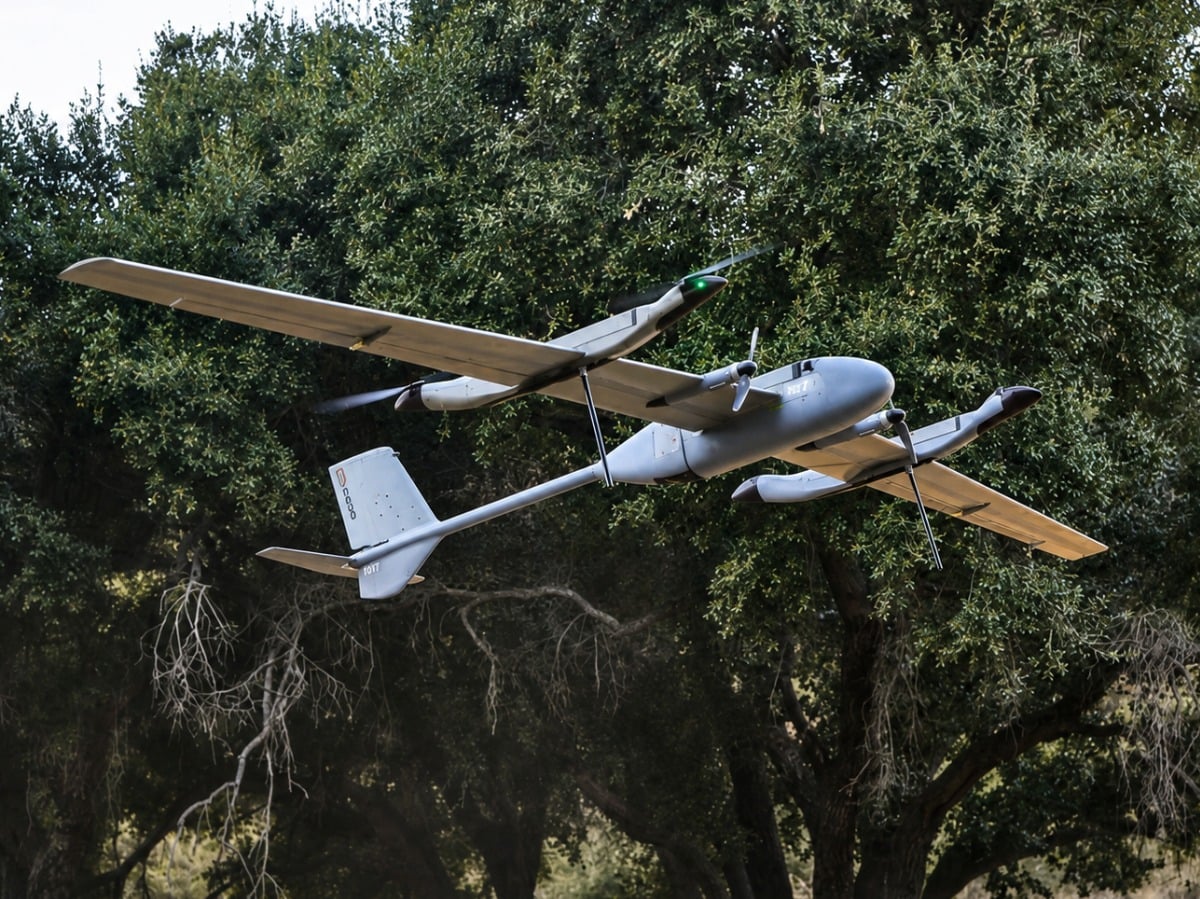
The P550 is built to give a single battalion its own persistent reconnaissance asset rather than waiting on brigade aviation. The aircraft uses electric vertical takeoff and landing, requires no runway or catapult, and breaks down into a transport package small enough to fit inside a HMMWV or JLTV. Soldiers can unpack and launch the drone in under ten minutes using a tool-free assembly process.
Once airborne, the P550 stays up for more than five hours on battery power, carries up to 6.8 kilograms of sensors, and can be reconfigured in less than five minutes between intelligence, surveillance and reconnaissance, communications relay, electronic warfare, and strike payloads. Maximum altitude is around 14,000 feet, with a 40-kilometer communications range that extends to 60 kilometers with a digital datalink.
One of two LRR winners, not the only one
The Army awarded the contract under the Long-Range Reconnaissance program, which received 10 bids. Rather than picking a single winner, planners decided in August 2025 to field both AeroVironment's P550 and Edge Autonomy's Stalker Block 35X in parallel so units could compare them under identical conditions while preserving industrial competition.
AI autonomy, GPS-denied navigation
The drone runs AeroVironment's Avacore onboard computing stack with SPOTR-Edge automatic target recognition, so it can classify personnel, vehicles, aircraft and small boats without sending raw video back for a human to scrub. A Visual Navigation System fuses electro-optical, infrared and lidar sensors to keep it flying when GPS is jammed or spoofed, a capability shaped by lessons from Ukraine. The Army has also kept the platform Military Occupational Specialty-agnostic so operators can come from multiple branches after a short training pipeline.
Linked to Pentagon's drone push
The award directly supports the July 2025 "Unleashing U.S. Military Drone Dominance" initiative, which called for faster acquisition of low-cost unmanned systems and wider distribution across combat formations. AeroVironment has publicly said it is scaling P550 production into the thousands of units annually, far above the current 82-unit order, suggesting the company expects this to be the opening tranche rather than a one-off buy. Contract completion is scheduled for July 23, 2026 - an unusually compressed delivery window for a Pentagon production contract.
The P550 contract follows a string of Army moves to put more autonomy into ground formations, including containerized drone hubs for persistent swarm warfare and the Spectre unmanned surface vessel, while industry players like Mach Industries raise billions in private capital to chase the same demand.
Reporting based on coverage from Army Recognition and The Defence Blog.