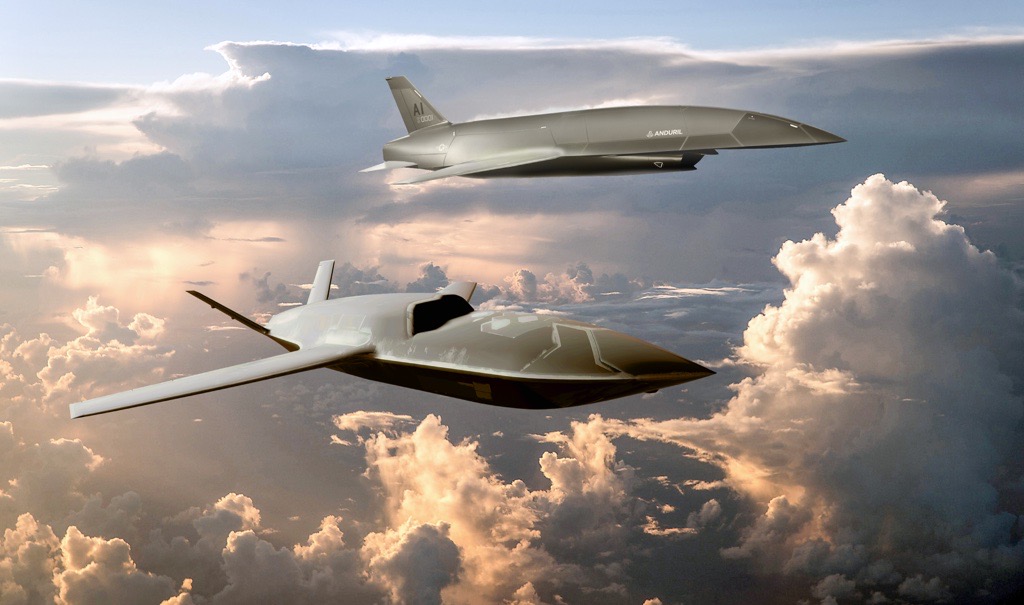
Air Force Secretary Troy Meink used his September 14, 2026 keynote at the Air Force Association's Air, Space & Cyber Conference to officially christen the service's first two Collaborative Combat Aircraft — General Atomics' FQ-42A as "Vengeance" and Anduril Industries' FQ-44A as "Fury" — and to commit to a roughly 1,000-drone autonomous combat fleet by 2032.
500 CCAs Plus 500 Massed Modular Aircraft By 2032
Meink said the Air Force plans to field at least 500 semi-autonomous CCAs by 2032 alongside 500 cheaper reconnaissance and strike drones known as Massed Modular Aircraft (MMA). CCAs are designed to fly with crewed F-35s, the sixth-generation F-47 and F-22 Raptors, executing strike, ISR, electronic warfare and jamming missions with a combat radius of at least 700 nautical miles at under $30 million per tail.
Production Contracts Locked, Names Now Official
The service awarded both Anduril and General Atomics engineering, manufacturing and production contracts on June 17, 2026 to build at least 150 CCAs combined by decade's end for the first increment. "Moving to production on FQ-42A is the result of an extraordinary partnership," said GA-ASI President David Alexander. Anduril's autonomous airpower VP Mark Shushnar noted the company had "already implemented our full rate production processes and tooling on prototype aircraft."
Software Sold Separately, Autonomy Vendors Down-Selected
The Air Force is also running a parallel autonomy competition between Anduril, Shield AI and Collins Aerospace — a six-month CLIN, then a down-select to two or one vendors for a further six months, with initial operational capability targeted for summer 2027. The push builds on Pentagon Groundbreaker UGV demonstration plans and last week's Office of Strategic Capital Fluidstack loan — evidence the DoD is stacking autonomy, compute and airpower deals in tandem.
Reporting based on coverage from Air & Space Forces Magazine, Aviation Week, TWZ, DefenseScoop and Military Times.