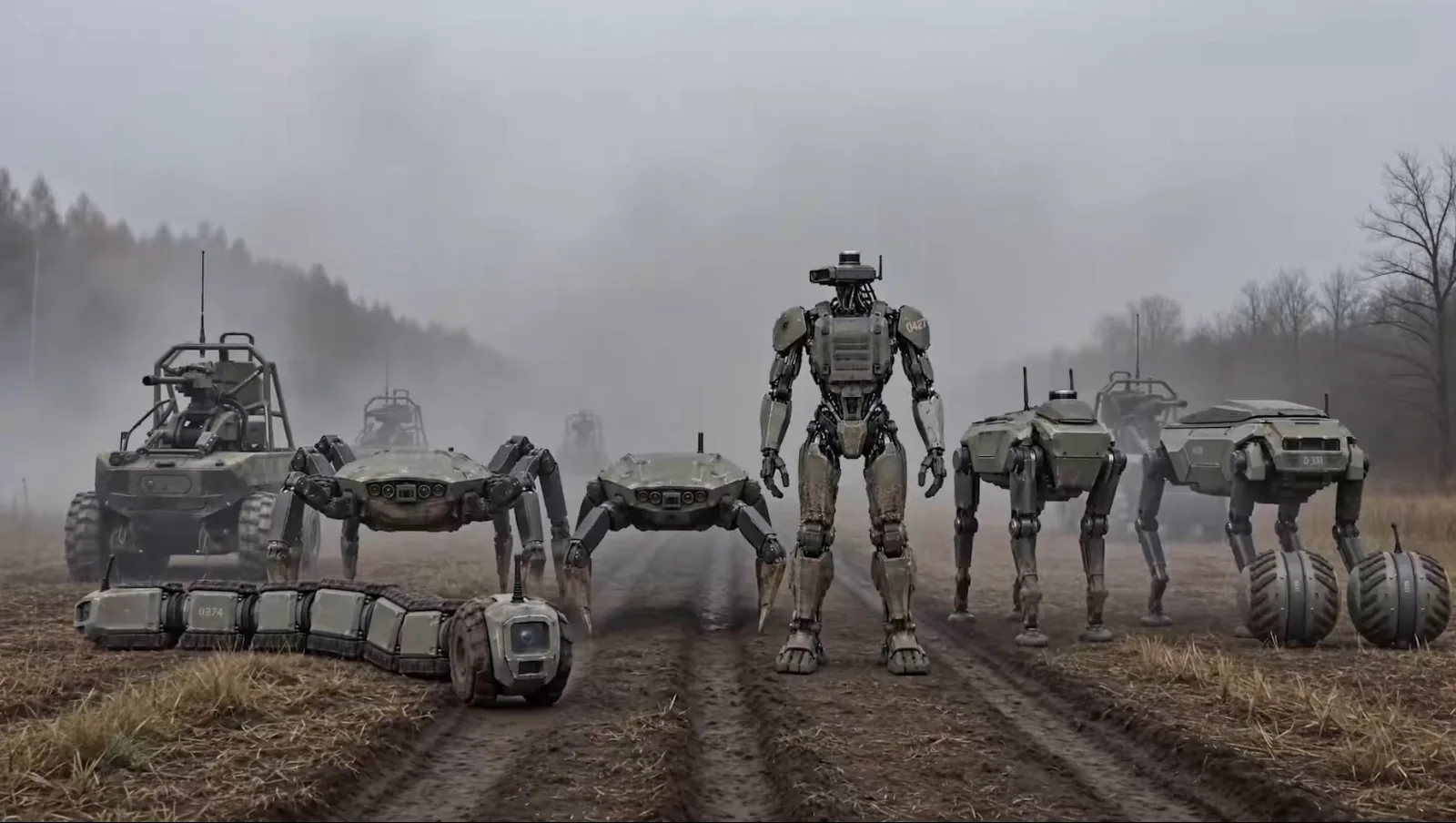
Mykhailo Fedorov, Ukraine's former defense minister and long-time digital transformation chief, has launched Army of Robots, a defense-tech initiative that says it will deliver a humanoid combat robot capable of killing Russian troops on the front line within six months. Palantir CEO Alex Karp is personally backing a related Fedorov-led defense company, cementing the closest link yet between Silicon Valley's most hawkish AI defense name and Kyiv's frontline robotics push.
The pitch
Army of Robots wants to compress Ukraine's already-rapid battlefield innovation cycle by pairing Ukrainian startups building humanoids, quadrupeds and armed unmanned ground vehicles with combat feedback from brigades that will actually deploy them. Its stated mission, taken straight from the group's website, is simple: "We are here to replace people with robots on the battlefield and save lives." Fedorov, who ran the drone-heavy Brave1 defense-tech cluster before rotating out of the cabinet, has publicly floated a six-month goal for a humanoid ground robot that can engage Russian infantry without a human trigger-puller in the loop.
Why humanoids, why now
Ukraine has already normalized the world's densest use of first-person-view attack drones and unmanned surface vessels; the next frontier is ground. Trenches, dugouts, urban rubble and stormings remain the domain of infantry, and Ukrainian brigades routinely take casualties clearing them. A humanoid or wheeled ground robot that can walk into a Russian trench line or basement, clear it and hand the position back to a small human team would rewrite the arithmetic of the fight — and Kyiv is racing to get there before Russia.

Karp, Palantir and the money
Karp's personal investment sits inside a separate defense-tech company Fedorov is building, alongside Army of Robots. The size is undisclosed, but Palantir's public alignment with Ukraine and Karp's willingness to write personal checks into frontline autonomy shift the political optics: this is no longer a European aid project, it is a US-backed venture bet. That opens the door for further Western capital and clearer commercial exits for the Ukrainian startups that supply Army of Robots.
Six months is a tight window
Humanoids that walk in a demo hall are miles from humanoids that fight in a Donbas treeline. Even Tesla's Optimus, industry's flagship humanoid, is only ramping to hundreds of units per week, and its hands and generalization remain the bottleneck. Yet Ukraine has form: it now deploys drones from ideas to trenches in weeks. If Army of Robots holds the six-month line — even for a rough, expendable ground-robot chassis rather than a full humanoid — it will reset expectations for the entire Western defense-tech pipeline.
What to watch next
The company has not disclosed the specific Ukrainian humanoid platform it will field first, whether it will be armed with rifles, grenade launchers or explosive charges, and how tightly a human operator will remain in the loop. Those are the answers that will decide how the West, and international humanitarian law, respond.
Reporting based on coverage from DroneXL and Army of Robots' public statements.