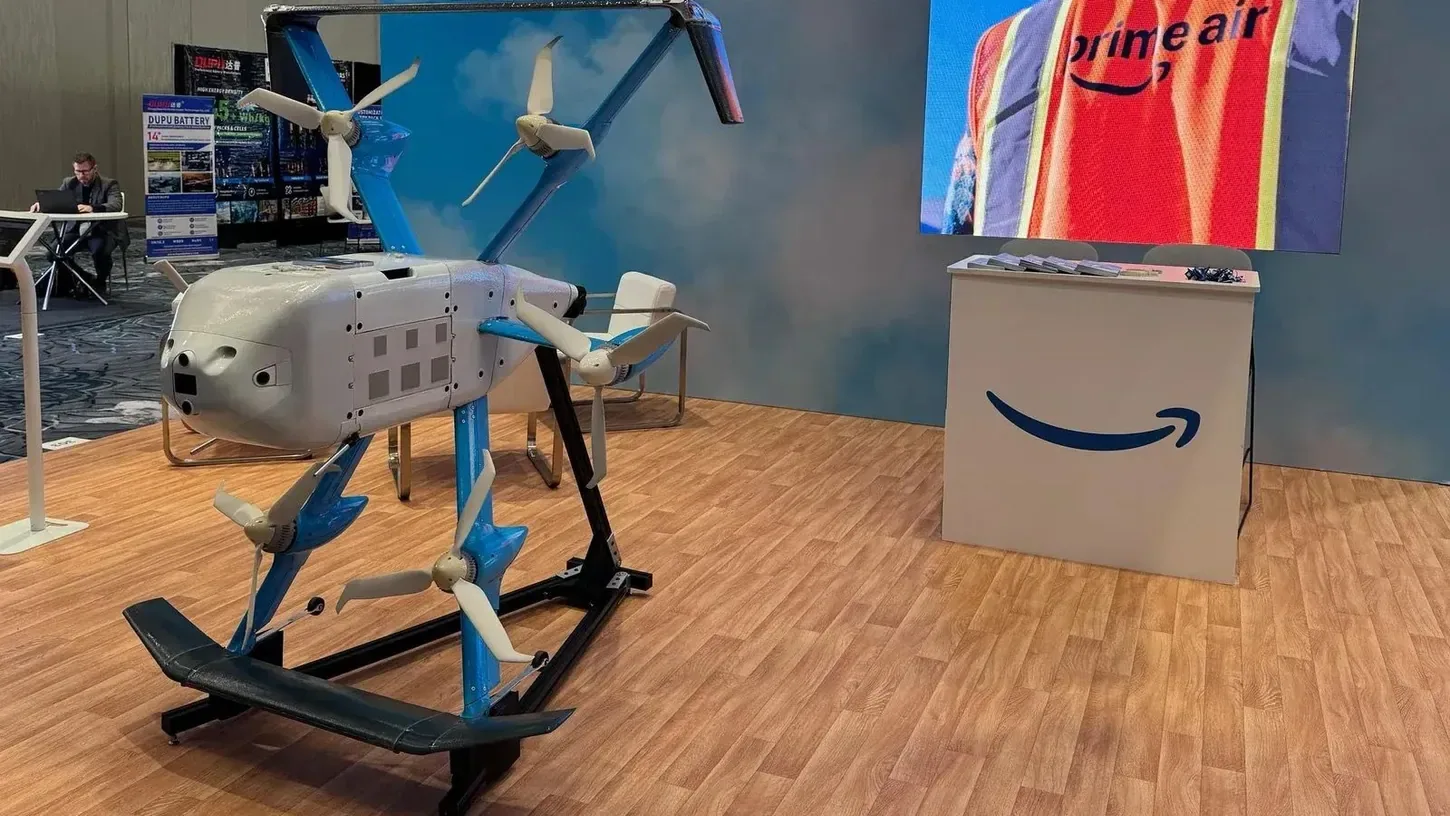
Amazon's Planning Commission approval to launch Prime Air drone deliveries in Jacksonville, Florida came through on November 19, 2026, after the city agreed to shrink a zoning setback requirement from 500 feet to just 29 feet at Amazon's fulfillment center at 7489 Commonwealth Avenue, according to DroneXL. Customers within roughly 7.5 miles of the site will be eligible once the service goes live.
The approval lands days after Amazon turned on Prime Air in the Atlanta metro area on November 15 and in Columbus, Ohio on November 17, pushing the program to 20 sites across 11 states.
Zoning as the Real Bottleneck
Amazon's drone hardware and FAA authorizations get most of the attention, but the Jacksonville case shows the more mundane obstacle: local setback rules written for ordinary industrial buildings, not repeated drone launches. A 500-foot buffer from the property line is a significant ask for Amazon's facility footprint, and the company's requested exception, to 29 feet, is roughly a 94% reduction. Getting a city planning commission to grant that kind of variance sets a template other Prime Air markets will likely need to follow, since few fulfillment centers sit on parcels large enough to satisfy a 500-foot setback without one.
Jacksonville's quick turnaround, with approval arriving before any environmental review document was made public, mirrors how Amazon handled its Atlanta launch, where deliveries began without a public environmental review being filed. Pattern repetition across markets suggests Amazon has settled on a playbook: secure local zoning relief first, let FAA authorization and environmental review follow or run in parallel.
Scale Versus Scrutiny
Three new markets in a week is a faster cadence than Prime Air kept through most of 2025 and early 2026, when the program was still proving out hardware reliability after earlier redesigns. The company's MK30 drone has been the backbone of this expansion; Jacksonville will be among the newer sites to run it.
The flight-volume question that dogged Amazon in Phoenix and Tucson, where the company is separately asking the FAA for up to 130,000 drone deliveries a day, will likely resurface here. Jacksonville's 7.5-mile radius covers a meaningfully dense residential footprint, and the same community pushback that slowed Amazon's rollout in Idaho over noise complaints is a plausible outcome once flight volumes climb. For now, the zoning win gives Amazon a launch pad; whether residents accept the resulting air traffic is the next test.