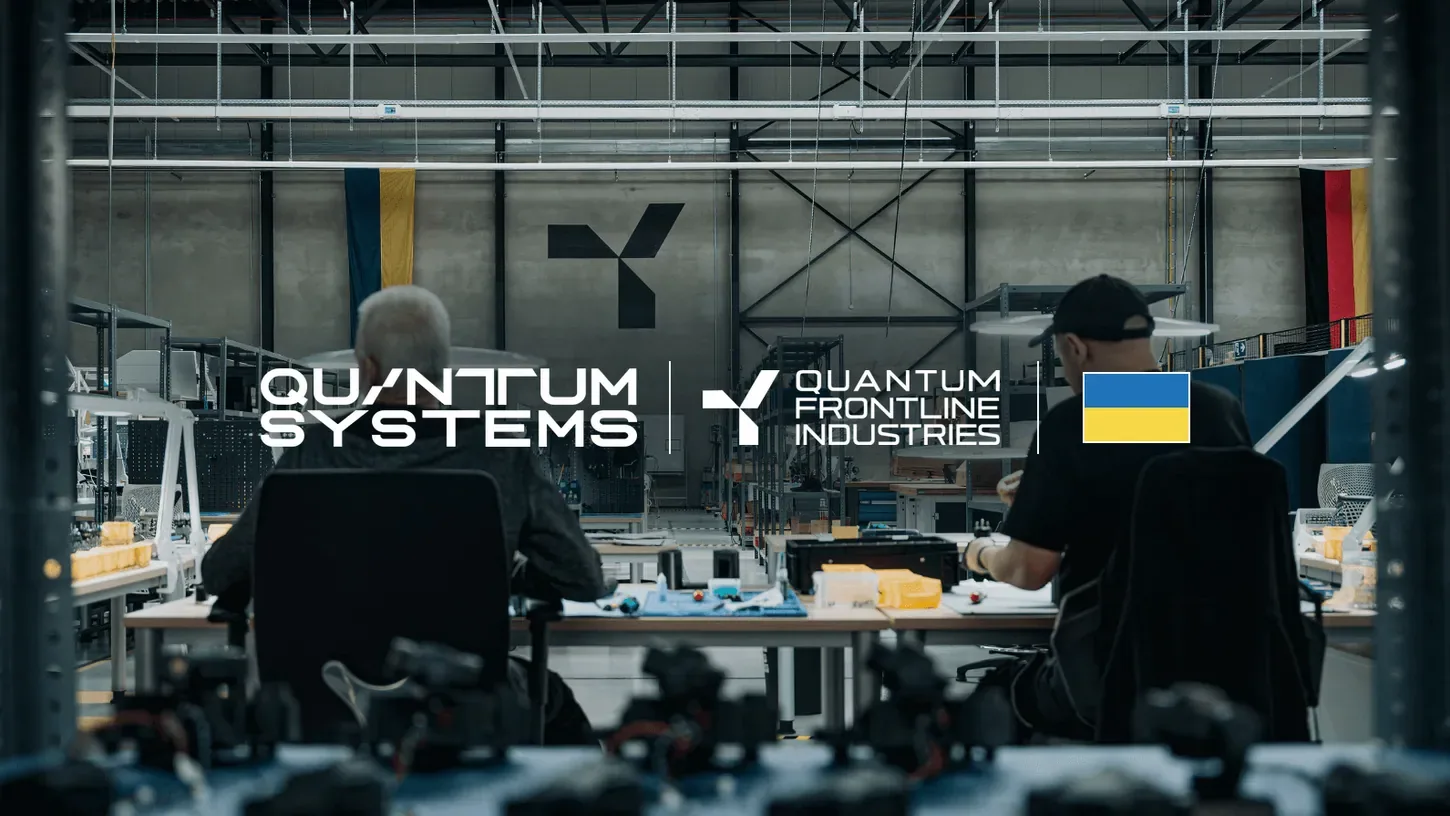
Quantum Systems and Frontline Robotics announced on November 19, 2026, a joint commitment of more than €10 million to expand drone support operations in Ukraine, covering operator training, a dedicated support line and local maintenance services. The announcement, reported by DroneXL, comes as the companies' joint venture, Quantum Frontline Industries (QFI), nears completion of a first contract for 10,000 Linza systems and prepares a larger follow-on order from Ukraine's National Guard covering both the Linza and Zoom drones.
QFI began manufacturing the Linza 3.0 multi-purpose drone in Germany in February 2026, pairing Ukrainian engineering from Frontline Robotics with German industrial production. The companies plan to expand production fivefold in 2027 to meet the new orders. "The additional commitment represents a further step to strengthen Ukraine's domestic defence-industrial base and build long-term capacity," said Matthias Lehna, VP at Quantum Systems and managing director of QFI.
Support Infrastructure as the New Battleground
The announcement is notable less for the hardware than for what it funds: training, maintenance and support rather than additional drone units. As European and Ukrainian drone makers scale production into the tens of thousands of units, the bottleneck is shifting from manufacturing capacity to keeping fielded systems flying. A fleet of 10,000 Linza drones is only useful if operators are trained fast enough and damaged units can be repaired locally rather than shipped back to Germany. QFI's bet is that sustaining a drone war requires industrial-scale logistics as much as industrial-scale production.
A Crowded Field of German-Ukrainian Drone Ventures
Quantum Systems and Frontline Robotics are not alone in building German-Ukrainian manufacturing bridges. Helsing's HX-2 and Stark's Virtus loitering munitions recently passed German live-fire tests ahead of year-end delivery, and Auterion has partnered with SkyFall on a planned German factory to supply both Ukraine and the Bundeswehr after delivering 50,000 drones. What differentiates QFI's approach is its explicit split between a hardware joint venture and a separate support-funding commitment, signaling that hardware orders alone no longer satisfy Ukrainian military buyers, who increasingly demand sustainment guarantees as part of procurement deals.
The fivefold production increase planned for 2027 would put QFI's output in the same range as other mass-production drone efforts emerging across the European defense-tech sector this year, as governments move away from one-off batches toward sustained annual contracts. For Quantum Systems, a company better known in Europe for reconnaissance drones than mass-produced attritable systems, the Linza program marks a shift toward the high-volume, lower-cost segment that Ukraine's front line has shown it needs most.