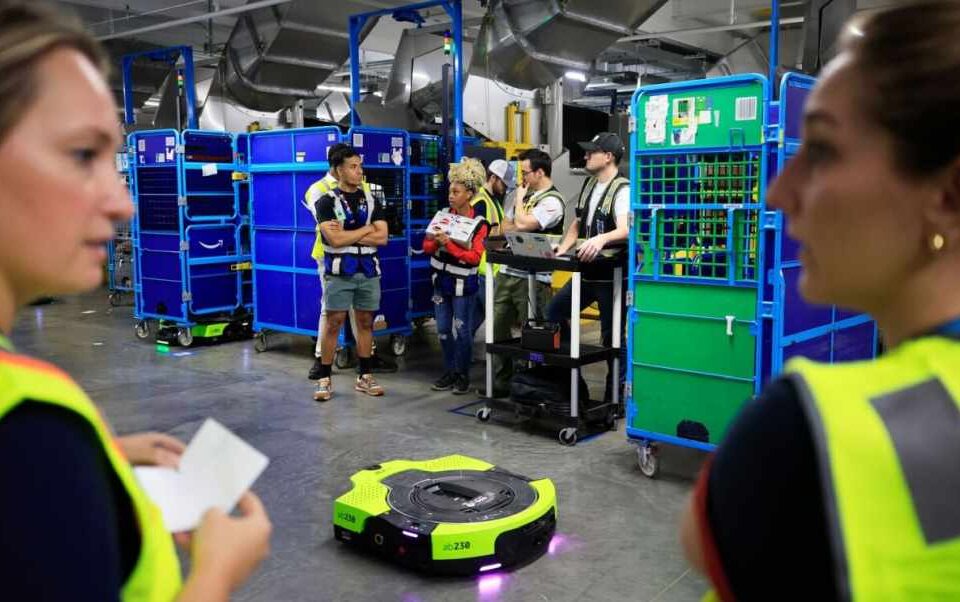
Amazon used its Delivering the Future event at the Dartford fulfillment center east of London on June 4, 2026 to unveil a next-generation Proteus warehouse robot that can take conversational instructions from workers instead of scripted commands. The launch headlines the company's €10 billion ($11.6 billion) push to modernize its European logistics network, with same-day delivery, grocery and AI infrastructure all wrapped into the same announcement.
From Pre-Programmed Tasks To Natural-Language Commands
The original Proteus has been hauling roughly 400-kilogram (882-pound) carts in dock areas of 25 Amazon facilities across the United States. The new version, expected to arrive in European sites in the first half of 2027, can move freely across warehouse floors rather than being penned into a specific zone. "You tell it what needs to be done. It figures out the priority, the route, the timing," said Scott Dresser, vice president of Amazon Robotics. The model brings warehouse automation closer to the kind of natural-language interactions popularized by Alexa, ChatGPT and Claude.

STARK And Vulcan Round Out The Fleet
Amazon also showcased STARK, a robotic tote-handling system first tested in Barcelona, which it plans to roll out across 15 European facilities by 2027. Vulcan, a touch-equipped robot that can grasp items more precisely than conventional manipulators, was also demonstrated. The expanded robotics fleet supports more than 25 new same-day delivery sites Amazon plans to open across Europe this year, including new Amazon Now ultra-fast delivery launches in Manchester and Birmingham.
$200B AI Capex In Context
The Proteus upgrade lands in the middle of Amazon's record AI infrastructure spend. In February the company projected more than $200 billion in 2026 capital expenditures, a 50% jump from the prior year. Amazon Now grocery delivery is already live in more than 2,300 U.S. cities and parts of Tokyo, and Alexa+, the company's next-generation AI assistant, is set to expand into 10 additional countries in 2027. The Dartford demonstrations sit alongside earlier reports including the Foxconn-Intel AI infrastructure pact at Computex and Anyscale's Azure-native AI platform.
Where Warehouse Robotics Goes Next
By moving from rigid command sets to interpretable natural-language inputs, Amazon is signalling that the next era of warehouse automation will be defined less by the strength of any single robot and more by how comfortably it collaborates with people. The shift mirrors broader industry moves we covered with the Diligent Robotics Moxi 2.0 hospital rollout and Inbolt's CAD-to-floor robot programming.
Reporting based on coverage from Tech Startups, Reuters and the official Amazon press release.