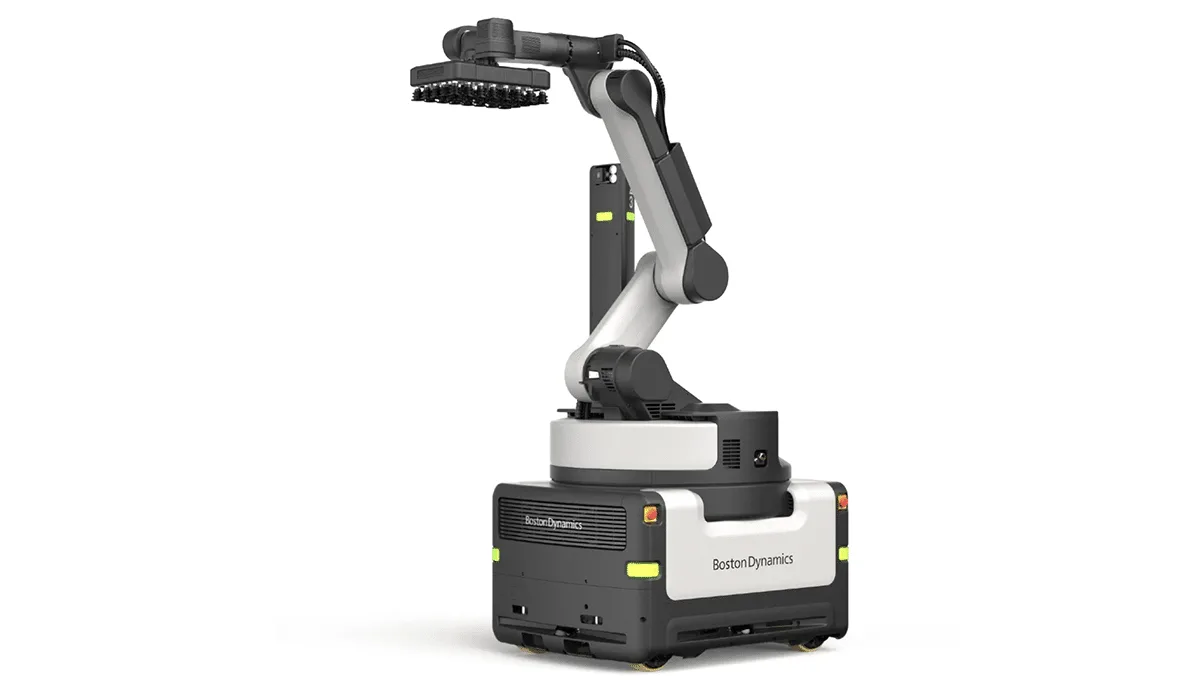
Boston Dynamics unveiled Stretch Gen 2 on November 3, a rebuilt version of its trailer-unloading robot aimed squarely at one problem: downtime. The company says the redesign draws on more than 100,000 hours of real-world operation and tens of millions of boxes moved by the first-generation machine, and the headline change is that swapping a full swerve-drive assembly now takes about an hour instead of a full day.
What actually changed in Gen 2?
The biggest shift is internal: Boston Dynamics says it stripped out 81% of the robot's internal cabling, removing roughly half a mile of wiring and replacing it with modular components that technicians can swap without disassembling the whole unit. The gripper also got new valves and sharper sensing, which the company says improves precision when grasping and placing irregular boxes. Throughput tops out at 1,000 cases per hour, and the battery now covers two full shifts, with a fast charge to 90% in about 75 minutes.
Why does repair time matter more than speed here?
In trailer unloading, an idle robot is a bottleneck for an entire dock, not just a maintenance line item. Brian Donnelly, Boston Dynamics' VP and GM of Logistics Robotics, framed the redesign around that cost directly, saying every hour a robot sits idle is an hour of work that piles up on the dock. Chasing a marginally faster unload rate matters less to warehouse operators than guaranteeing the machine is running during peak hours, which is why the company built Gen 2 around serviceability rather than raw speed gains over the original model.
How does this compare with the rest of the warehouse robotics market?
Trailer and container unloading has become one of the more contested niches in logistics automation, with rivals pitching their own unloading arms and mobile manipulators to the same pool of 3PLs and retailers facing driver and warehouse-labor shortages. Boston Dynamics' advantage is scale of deployment data: the 100,000-hour, tens-of-millions-of-boxes figure gives it a feedback loop that newer entrants don't yet have. Reliability engineering, rather than a new capability, is becoming the differentiator as the category matures past early pilots into multi-shift production use.
What happens next for Stretch customers?
Boston Dynamics has not disclosed pricing or a specific rollout date for Gen 2, and it's unclear whether the upgrade will be offered to existing Stretch Gen 1 customers as a retrofit or only as new hardware. Given the company's emphasis on uptime, expect the pitch to lean heavily on service contracts and fleet-level reliability guarantees rather than a one-time hardware sale, particularly as warehouse operators weigh robot purchases against ongoing maintenance costs.