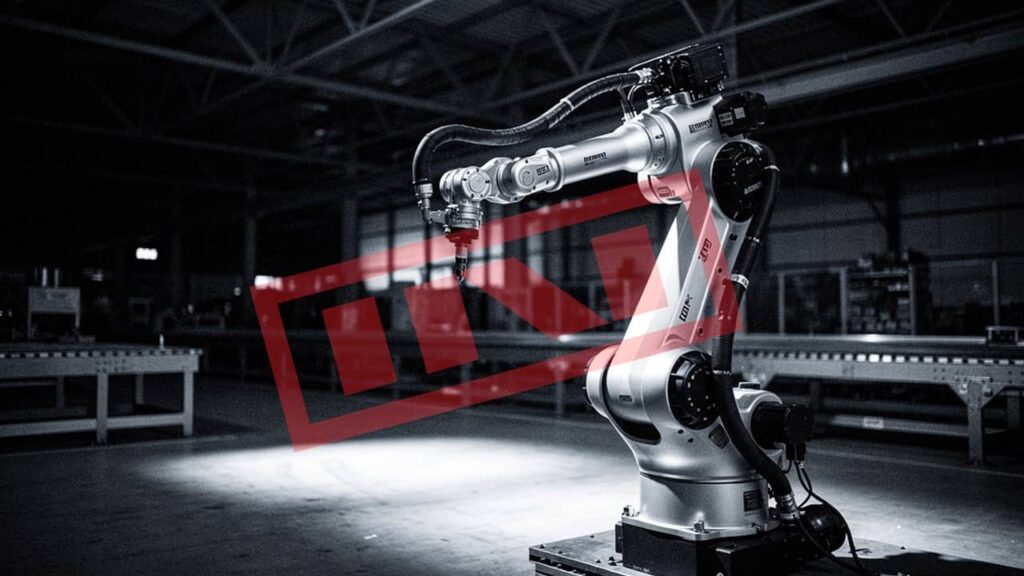
A deal signed thirteen months ago to reshape the industrial robotics market has collapsed in Beijing. China's National Development and Reform Commission told SoftBank it will not approve the Japanese conglomerate's $5.4 billion acquisition of ABB's robotics division, according to a Financial Times report confirmed by multiple outlets on November 5, 2026.
SoftBank agreed in October 2025 to buy the Swiss engineering group's robotics arm for roughly $5.375 billion. The unit generated about $2.3 billion in revenue in 2024, roughly 7% of ABB's group total, and employs around 7,000 people with an installed base of nearly 500,000 robots worldwide, including customers such as BMW. The European Commission cleared the deal unconditionally in March, and US antitrust approval had been pending.
Why China's No Carries Weight
China is ABB's largest robotics market, which gives Beijing's rejection outsized consequences compared with a blocked deal elsewhere. The NDRC gave no public grounds for the decision, but the timing lines up with Beijing's broader push to keep robotics and industrial-automation data inside the country rather than let it flow to foreign AI labs. SoftBank is a major investor in OpenAI, and regulators have reportedly worried that ABB's robotics data could end up training models outside Chinese control.
The rejection also reflects a shifting balance of power on ABB's own turf. Domestic Chinese robot makers grew from 47% to 58% market share in 2024, eroding ABB's historical dominance, which once exceeded 70%. Beijing has less incentive to hand a marquee domestic market to a foreign buyer when local manufacturers such as Siasun, Estun and Unitree are already taking share. ABB still runs a manufacturing hub in China staffed by more than 2,000 robotics employees, giving regulators direct leverage over the unit regardless of who owns it on paper.
What It Means for SoftBank and the Robotics M&A Market
The collapse is a setback for CEO Masayoshi Son's stated strategy of pairing SoftBank's AI investments, including Arm and OpenAI, with physical robotics manufacturing. Son had positioned the ABB deal as the hardware backbone of a 'physical AI' portfolio. SoftBank shares fell roughly 5% in Tokyo trading on the news, compounding separate weakness in Arm Holdings amid a broader AI stock selloff following the US midterm elections.
SoftBank is now assessing whether a restructured version of the deal, perhaps carving out Chinese operations or finding a local partner, could pass a second review. ABB, for its part, must decide whether to keep operating the robotics division itself or seek an alternative buyer. The episode adds to a pattern of Chinese regulators scrutinizing cross-border technology deals on national-security grounds, following similar moves restricting state data centers from buying Nvidia chips. For the robotics industry, it signals that large industrial-automation M&A will increasingly run through Beijing's veto as much as Washington's or Brussels's.