Databricks has acquired Seattle-based Row Zero, folding the enterprise spreadsheet startup into its Data + AI Platform so analysts can pivot, model and chart live governed data alongside the Genie AI assistant, the companies announced on September 24, 2026.
A spreadsheet that speaks Databricks
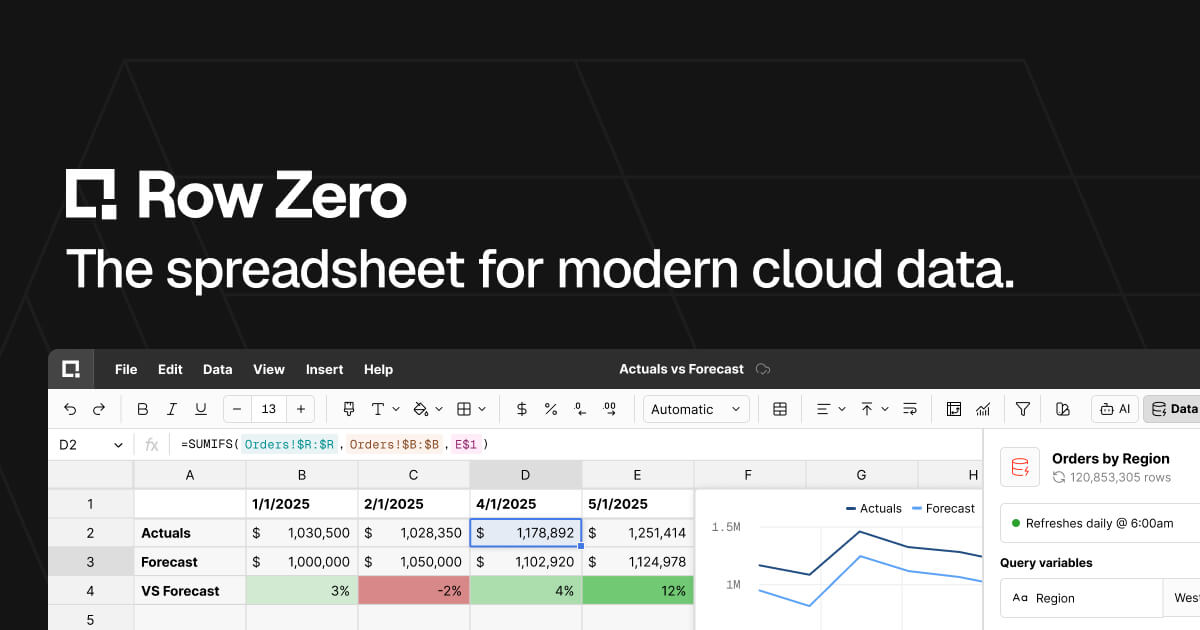
Terms were not disclosed. Row Zero, founded in 2021 by ex-AWS and Tableau engineers Breck Fresen and Nick End, ships a browser-based spreadsheet that handles hundreds of millions of rows and connects natively to warehouses like Databricks, Snowflake, BigQuery and Redshift. As part of the acquisition, Row Zero is rebuilt to sit on Unity Catalog and Unity Gateway, meaning every cell in the sheet enforces the same row-level, column-level and lineage controls as Databricks SQL and Genie.
From chat to hands-on pivots
Databricks co-founder and VP of engineering Patrick Wendell said the deal closes a gap in Genie's workflow: "Genie is helping make every knowledge worker dramatically more productive and impactful," but analysts still export to Excel for the last mile. With Row Zero embedded on web, desktop and mobile, users will "move from chat to hands-on pivoting, modeling and visualization" without the data ever leaving governance.
Databricks' acquisition sprint continues
The Row Zero deal is Databricks' latest bolt-on as it presses toward what CNBC pegged at a $190B valuation, joining a run that includes Tabular for open-table formats and MosaicML for model training. CEO Ali Ghodsi has told investors the company is actively scouting more startups whose products can drop into the Data + AI Platform without ripping out customer catalogs. Enterprise data-stack rivals that are also chasing agentic workloads now face a Databricks that owns the spreadsheet layer, not just the warehouse.
Row Zero's product lives on
Existing Row Zero customers keep their accounts, and the standalone product continues to run while the team ports the sheet onto Unity Gateway. New customers will pick it up as part of Databricks bundles. Fresen said the mission — replacing Excel for teams working with cloud-scale data — stays the same, "we just get to do it inside the platform where the data already lives."
Reporting based on coverage from Databricks, TechCrunch, GeekWire and SiliconAngle.