
China's Ministry of Industry and Information Technology (MIIT) on September 8 published a five-year plan targeting 9,800 exaflops (eflops) of intelligent computing capacity by 2030, up from 2,185 eflops at the end of June, and backed by a headline 3.8 trillion yuan ($532 billion) in cumulative information-infrastructure investment across 2026-2030.
A Fourfold Compute Build-Out
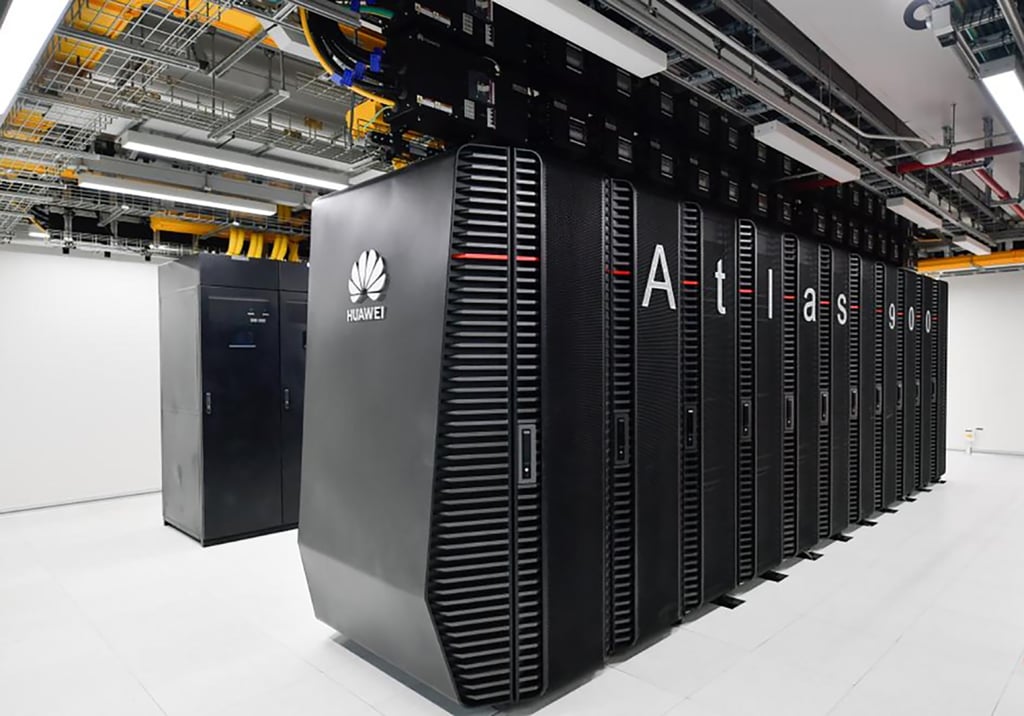
The plan calls for the "orderly deployment" of intelligent computing clusters with 10,000 or more graphics-processing cards, and single sites housing 100,000-plus accelerators. It pairs that with a push for inference facilities tailored to different applications, and asks operators to adapt their infrastructure to domestic chips — a nod to Huawei's Ascend line, Cambricon's MLU family and other homegrown alternatives that Beijing is leaning on while U.S. export controls limit access to leading-edge NVIDIA parts.
The Baseline Is Already Growing Fast
China's intelligent computing capacity had reached 2,185 eflops by end-June, up 177 percent year on year, with 52 facilities operating more than 10,000 accelerator cards, MIIT said. By the end of July, capacity had climbed to about 2,450 eflops, according to the National Data Administration. To meet the 2030 headline, China would still need to more than quadruple that base — a target that keeps the country roughly on pace with the compute buildouts underwritten by U.S. hyperscalers now nearing $1.5 trillion in AI purchase commitments.
East Data, West Computing Extended
The plan extends the country's 2022 "East Data, West Computing" program, which pushes power-intensive workloads west toward cheaper land and cheaper energy. Eight national computing hubs, 10 data-centre clusters and three coordination regions already anchor that layout, and the new five-year document pushes for even tighter alignment between computing sites and provincial power supplies. The direction dovetails with MIIT's parallel move to pause new battery-storage cell factories: intelligent-computing power is now central enough that Beijing wants energy and grid decisions to line up behind it.
Why It Matters
China's 15th five-year plan for the information and communications industry converts what has been rapid but ad hoc infrastructure spending into a codified national target. If the country hits 9,800 eflops, its 2030 AI compute base would rival any single Western jurisdiction's — even without access to the most advanced foreign accelerators. That has knock-on consequences for robotics developers such as Vbot and Unitree, whose training pipelines rely heavily on Chinese cloud capacity, and for chip suppliers racing to certify their parts against a national build-out that now has an explicit five-year runway.
Reporting based on coverage from the South China Morning Post and MIIT's five-year plan.