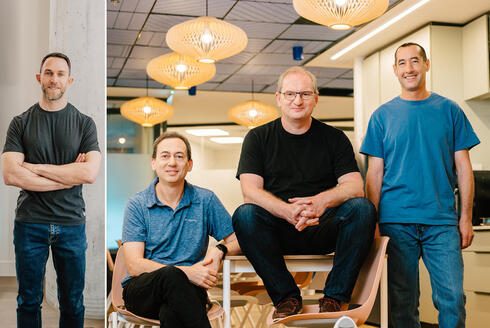
Four engineers who spent roughly two decades building Microsoft's Kusto query engine decided the AI boom needed a faster backend. Edelbyte, the Tel Aviv-based data infrastructure startup they founded, announced on November 11, 2026 that it closed a $45 million Series A led by Quiet Capital at a $500 million post-money valuation. The round brings Edelbyte's total funding to $70 million, including a previously closed $25 million seed led by Sequoia Capital.
One Engine for Analytics, Search and AI Workloads
Edelbyte sells a unified data platform designed to handle the kind of queries AI agents generate: analytics, text search, and spatial lookups running against petabyte-scale datasets, often simultaneously. The pitch is that AI-era workloads no longer fit neatly into the separate analytics, search and vector databases most enterprises have stitched together, and that consolidating them cuts both latency and cost.
The company already runs production systems for Fortune 500 customers in information security, automotive manufacturing and financial services, according to Calcalist. Edelbyte employs around 40 people across Israel, Europe and the US. Its founding team — CEO Avner Aharoni, CTO Evgeney Ryzhyk, VP Engineering Alexander Sloutsky and VP Platform Engineering Yoni Leibowitz — previously spent close to 20 years each building Kusto, the query engine underpinning Microsoft's Azure Data Explorer.
Backers Old and New, in a Market Snowflake and Databricks Already Own
The Series A drew Quiet Capital as lead, alongside new investors Gil Ofer's QP Ventures, Startpoint Capital and Cerca Partners, plus Edelbyte's existing backers. The earlier seed round brought in Sequoia Capital as lead, with Greenoaks and Swish Ventures participating. That two-step structure, with both rounds surfacing in the same news cycle, suggests Edelbyte moved quickly from seed to growth-stage validation.
Edelbyte is entering a data infrastructure market already dominated by Snowflake, Databricks and ClickHouse, each of which has added its own AI and vector-search layers over the past two years. Edelbyte's argument is that those platforms were built for human analysts running scheduled queries, not for AI agents issuing constant, unpredictable ones, and that retrofitting old architecture is slower than building for agent workloads from scratch. Whether that distinction holds up against incumbents with far larger sales forces and existing enterprise footholds will determine how far a $500 million valuation can stretch.
What to watch next: whether Edelbyte converts its Fortune 500 pilots into renewed multi-year contracts, how quickly it expands beyond infosec, auto manufacturing and financial services into other verticals, and whether the AI-agent framing holds up as a durable wedge or gets absorbed by the incumbents it's positioning against.