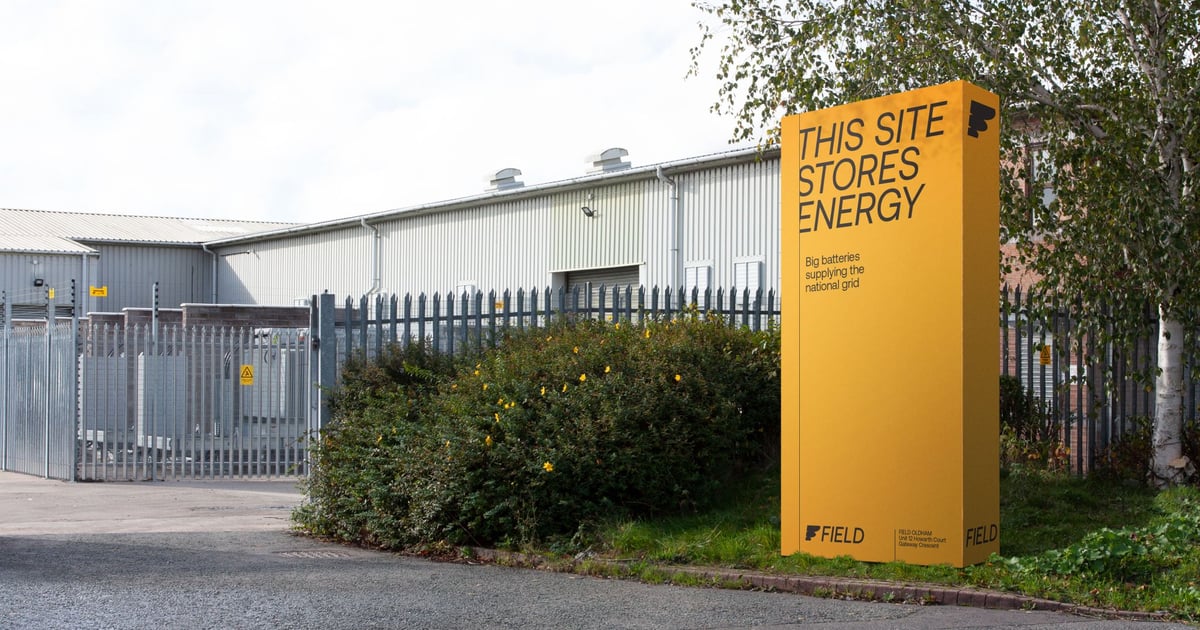
Field Energy has just secured the largest single-day consent haul in the UK’s long-duration energy storage push. Scotland’s Energy Consents Unit granted development consent orders (DCOs) on Wednesday for two Field-developed battery projects totalling about 10 GWh of storage — the 200 MW / 3.3 GWh Fyrish BESS near Alness in the Scottish Highlands, and the 400 MW / 7.2 GWh New Deer BESS in Aberdeenshire.
16-hour and 18-hour lithium-ion, both under cap-and-floor
Fyrish is rated for a 16.5-hour duration, while New Deer is designed to a headline-grabbing 18.03-hour duration — among the longest lithium-ion projects to reach consent globally. Both sites were previously shortlisted by Ofgem for the first "window" of the UK long-duration energy storage (LDES) cap-and-floor scheme announced in June, which selects 16 projects totalling 7.6 GW to receive revenue support underwritten by consumers. The scheme guarantees a minimum income floor and claws back earnings above an agreed cap, cutting financing costs for long-duration storage that competes with pumped hydro.

Aberdeenshire becomes a UK BESS heartland
The Aberdeenshire consents follow a series of large-scale approvals north of the constrained B4 boundary, including a 500 MW BESS from Island Green Power and Field’s own Rigifa project. Field now has 490 MW / 1.5 GWh operational or under construction and roughly 1.6 GW / 26.8 GWh across five sites in the LDES pipeline.
Chasing 2030 grid constraints
Field’s technical director has argued that 18-hour durations line up with the National Energy System Operator’s 2030 constraint profiles, so the sites will earn most of their revenue smoothing the daily and weekly patterns caused by growing offshore wind output. The consents follow CATL’s first sodium-ion BESS deliveries and Chinese hyperscale battery buildouts, and reinforce Britain’s position as one of the fastest-moving grid-storage markets in Europe.
Reporting based on coverage from Energy Storage News, Solar Power Portal and Field Energy.