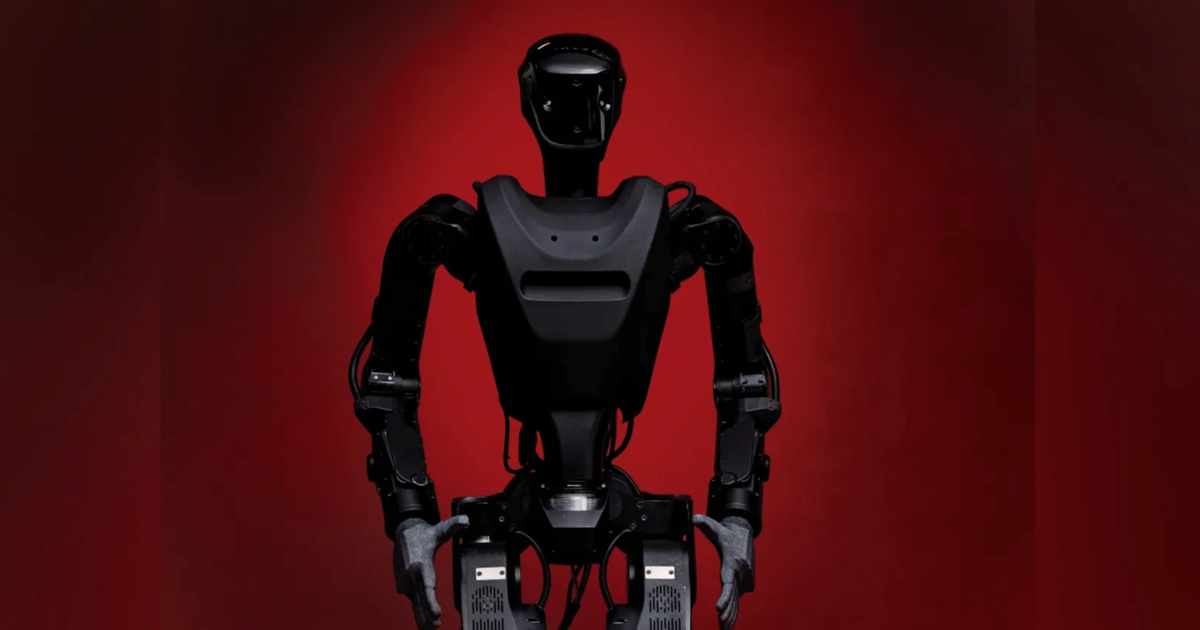
Inside a converted office in San Francisco's SoMa district, a 200-pound aluminum humanoid called Phantom MK-2 sits under what the company describes as "sedation" protocols, waiting for its public debut. Its older sibling, the human-piloted Phantom MK-1, once performed a 30-minute DJ set at a nightclub. Now the company behind both, Foundation Future Industries, is pitching them as combat machines for the US military and allies abroad, according to a report published November 14 by the San Francisco Standard.
Foundation leases MK-1 at roughly $100,000 per unit annually with a 100-unit minimum, and is targeting $75,000 a year for MK-2, with founder Sankaet Pathak saying he eventually wants the price down to $10,000. The company was started in 2024 by Pathak, venture capitalist and Kraken co-CEO Arjun Sethi, and former Marine and Cobalt Robotics cofounder Mike LeBlanc, and later acquired Florida-based Boardwalk Robotics, which brought roughly $3.2 million in government research contracts along with it.
A Pivot From Factories to Firefights
Foundation launched in 2024 targeting warehouse and manufacturing work before shifting in 2025 toward combat applications, a move LeBlanc has defended by arguing it would be "an absolute dereliction of duty" not to build robots willing to fight for the US. Pathak has framed the pivot around casualty reduction, telling the Standard that "even if humanoids went really crazy, they would still have less casualties than you would have with a bomb," and that cheap, disposable machines make more sense on a battlefield than expensive ones. The company says MK-2 can lift roughly a human's body weight and is built to be dustproof and waterproof.
The pitch has run into resistance on several fronts. Multiple employees quit after the military pivot was announced, with one former staffer telling the Standard "nobody was comfortable with it." General Motors publicly called Foundation's 2024 fundraising claims about a potential $300 million order "fabricated," and LeBlanc acknowledged the episode was embarrassing. A Foundation pitch deck claiming $73 million in Department of War contracts was later clarified by Pathak as referring to grants rather than signed contracts.
Contracts, Ukraine Claims and Skeptics
Federal contracting records reviewed by the Standard show no publicly listed Pentagon contracts awarded directly to Foundation in 2026, despite a $24 million figure cited on Fox Business in April alongside adviser Eric Trump. Boardwalk Robotics' own contracts total about $3.22 million; a separate $24.8 million Navy award went to Boardwalk's research partner IHMC, which Pathak later acknowledged may have caused the confusion. Pathak told NBC "none of the contracts are new."
A claimed February 2026 deployment of two robots in Ukraine also unraveled under scrutiny: journalist Craig Smith, who accompanied the team, said the robots never crossed the border, and Ukrainian defense-tech group Brave1 confirmed no demonstration occurred. LeBlanc later walked back the claim. Foundation has since said it sent an MK-1 into tunnels in Gaza and held talks with the Israeli military. Outside experts remain doubtful of the near-term battlefield case: UC Berkeley robotics researcher Giuseppe Loianno estimates combat-ready humanoid autonomy is more than a decade away given the lack of real-world combat training data, while Tumble founder and former Marine Scott Patterson argued a turret would solve Foundation's stated problems more simply than a humanoid. Foundation says it has outgrown its 20,000-square-foot SoMa office and is scouting a second site to grow annual output from 1,000 to 5,000 units.