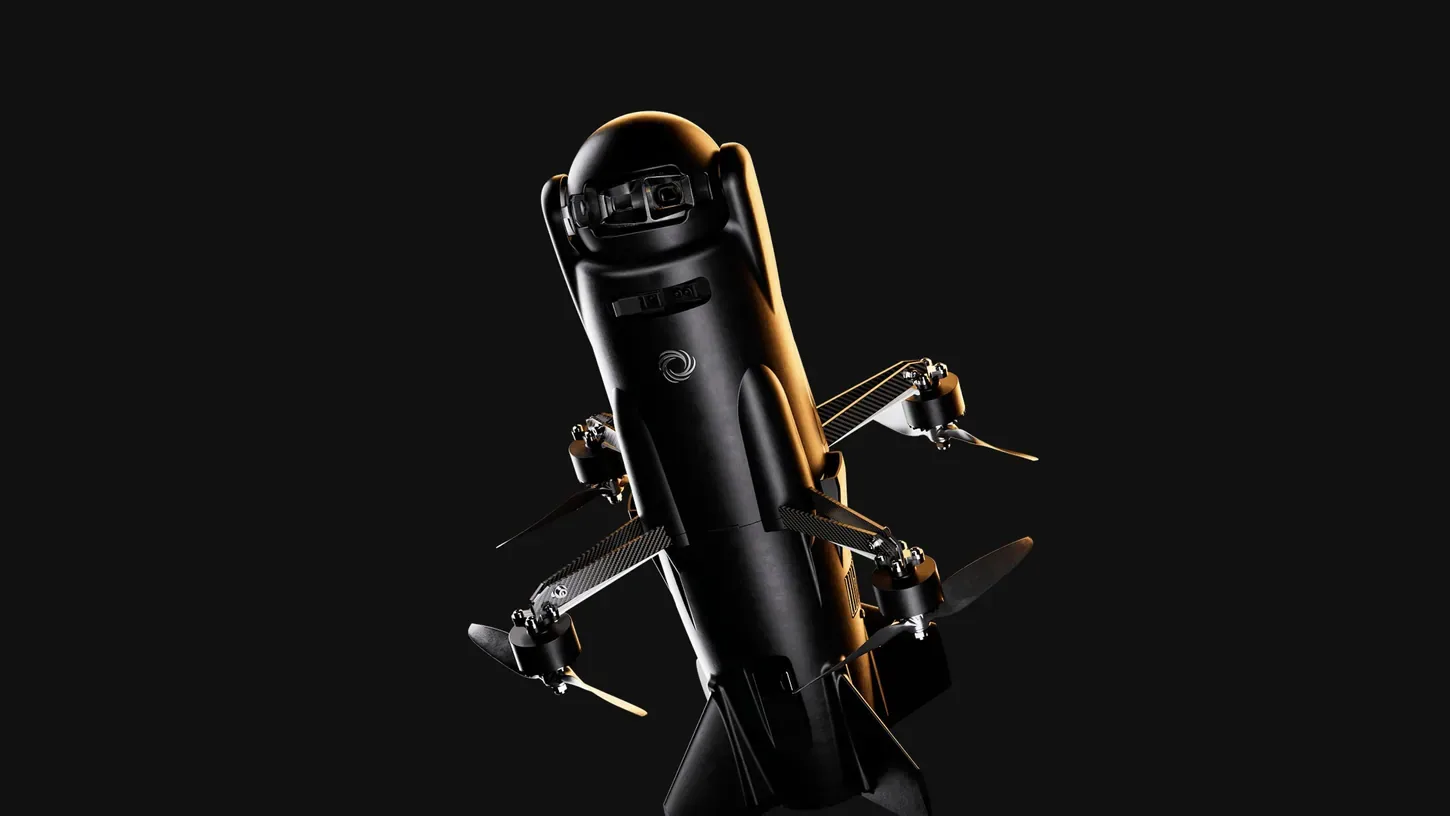
France's Directorate General for Armament (DGA) confirmed on November 26 that the French Armed Forces have received their first domestically produced interceptor drones, the Gobi Zephyr, built by Paris-based startup Harmattan AI. The order was placed roughly two months earlier, a turnaround procurement officials flagged as part of the story in its own right.
The Gobi Zephyr is a quadcopter interceptor designed to destroy hostile drones through direct impact, carrying no explosive charge. It reaches speeds of 217 mph (350 km/h) and operates within a 6.2-mile (10 km) radius, by day or night. A human authorizes the mission, after which the system guides itself to the target and completes the intercept autonomously.
The contract moved through Cerlad, a DGA unit created specifically to speed procurement of counter-drone equipment as threats evolve faster than conventional acquisition cycles. Junior armed forces minister Alice Rufo tied the delivery to a broader message, saying "the sword and the shield must advance together," according to DroneXL. The framing signals Paris wants counter-drone capability to scale alongside its offensive drone programs rather than trail behind them.
A Two-Month Order-to-Delivery Window Is the Real Story
Most European counter-drone programs still measure procurement in years. A two-month gap between order and delivery suggests Harmattan AI, founded in Paris in 2024, has built a production pipeline that can respond to shifting threat profiles almost as fast as adversaries change tactics. That matters because the drones Gobi Zephyr is built to stop are themselves cheap, fast to iterate, and increasingly used in swarms designed to overwhelm traditional air defenses.
Harmattan AI is not new to rapid delivery. The company supplied 1,000 low-cost drones to the French Army in January 2026 under an earlier contract, giving it a track record the DGA could point to when fast-tracking the interceptor order through Cerlad.
How It Fits the Wider Counter-Drone Market
Kinetic interceptors that destroy targets on impact, rather than with a warhead, are gaining traction because they are cheaper per engagement than missile-based systems and avoid the cost and risk of explosive payloads near friendly troops or civilian infrastructure. Rivals such as Anduril's Anvil and various Ukrainian-built interceptors use a similar collision-based approach, but France's version is now the first homegrown system fielded by its own armed forces at this speed.
The delivery also arrives as France expands its broader drone pact with industry group Gicat to formally include counter-drone work, a sign that Paris is treating interception as a standing military requirement rather than a one-off purchase. With European militaries facing near-daily incursions by unidentified drones over bases and critical infrastructure, the ability to order, build and field a system within ten weeks could become as important a competitive metric as the interceptor's top speed.