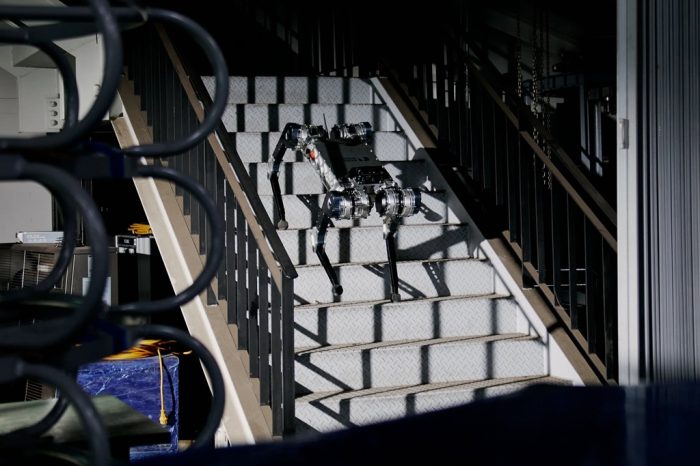
A 70 billion won ($52.3 million) investment that would have given Hanwha Group a foothold in South Korea's military robot-dog race has collapsed. According to KED Global, Hanwha Systems walked away from the deal with startup Raion Robotics after the two sides could not agree on defense-sector exclusivity for Raion's Raibo 2 quadruped robot.
Why did the deal fall apart?
Hanwha wanted exclusive rights to deploy the Raibo 2 in defense applications as a condition of its investment. Raion Robotics, a startup spun out of KAIST professor Hwangbo Je-min's Robot Intelligence Lab in October 2023, rejected the condition. The company's leadership reportedly chose to protect its commercial independence and keep the door open to selling into logistics, disaster relief and other non-defense markets rather than lock itself into one conglomerate's weapons programs.
How big was the round, and what does Raibo 2 do?
Hanwha Systems had been expected to anchor a 100 billion won Series B for Raion Robotics with a 70 billion won commitment, a stake that would have given Hanwha Group roughly 10% ownership at a 600 billion won pre-money valuation. The Raibo 2 uses AI-based reinforcement learning to keep its footing across uneven terrain and runs for about eight hours per charge, specs the company has pitched for defense, disaster response and logistics work.
Why does this matter for Korea's robot-dog race?
The collapse leaves Hanwha without a disclosed quadruped-robot partner just as rivals pull ahead. Samsung and Hyundai are preparing to deliver their jointly developed RB-01K combat robot dog to the South Korean Army before the end of 2026. Separately, LIG Nex1 has already bought a 60% stake in Philadelphia-based Ghost Robotics for $240 million, giving it a US-built platform to adapt for Korean defense contracts.
That competitive gap matters because South Korea's defense ministry has been pushing conglomerates to field uncrewed ground systems quickly, partly in response to North Korean drone and robot programs. A conglomerate the size of Hanwha sitting on the sidelines of quadruped robotics, even temporarily, is a notable shift after months of speculation that it was closing in on a domestic robot-dog supplier.
What happens next for Raion Robotics?
Raion Robotics still needs to close its Series B, and the company will now have to find backers willing to invest without demanding defense exclusivity, or decide the trade-off is worth it with a different investor. Given the valuation Hanwha had been willing to accept, roughly a 600 billion won pre-money mark for a three-year-old startup, Raion may have leverage to find alternative capital from investors less focused on locking down military rights. The broader question is whether South Korea's defense industry consolidates around two or three quadruped platforms or stays fragmented while Hanwha regroups.