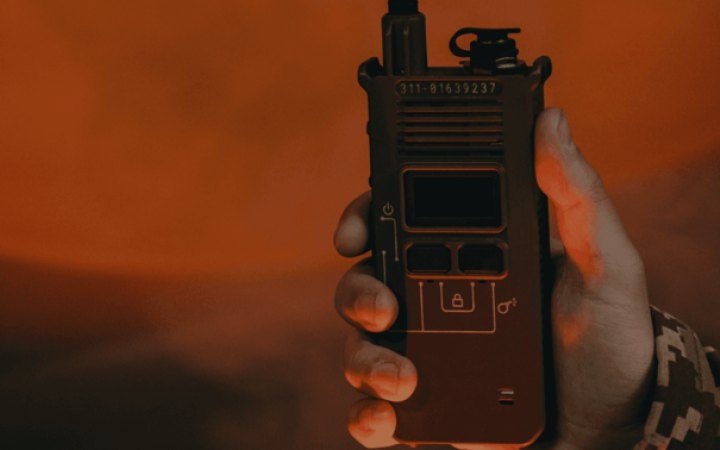
Himera, a Ukrainian maker of battlefield radios, has raised $5 million in a strategic funding round led by Norwegian defense fund Gardar, the company said on November 25, 2026. Existing investors Varangians, Bulava and Green Flag VC returned for the round, joined by new backers Superangel and Next Front Ventures. Valuation and cumulative funding to date were not disclosed. Founded in 2022, shortly after Russia's full-scale invasion of Ukraine, Himera builds tactical communications systems designed to keep working under electronic warfare, or EW — the deliberate jamming and spoofing of radio signals that both sides use to cut off units from each other, according to LB.ua.
What makes a radio jamming-resistant?
Himera's product line includes the G1 PRO handheld radio, the R1 IP repeater, and the B1 autonomous repeater, a relay unit that extends a unit's communication range without a soldier needing to operate or reposition it manually. Jamming-resistant designs typically rely on frequency hopping — rapidly switching transmission frequencies so a jammer can't lock onto a single channel — combined with encryption and mesh-style relaying, where multiple repeaters pass a signal along rather than depending on one fixed tower. On Ukraine's front line, Russian EW units actively hunt for radio and drone-control signals, making resilience to jamming as important as range or voice clarity.
Why does this matter for a war increasingly fought through drones?
Battlefield communications underpin drone operations as much as infantry coordination. FPV drone pilots, reconnaissance teams and artillery spotters all depend on a radio link back to command that survives jamming attempts; if that link drops, a drone strike or an artillery correction can simply fail to happen. Radios that automatically hop frequencies and relay through autonomous repeaters like Himera's B1 are built specifically to keep that chain intact even as EW conditions shift within minutes, which the company frames as a constantly moving target rather than a problem solved once.
Who's backing Ukraine's defense-tech sector, and what comes next?
Gardar, the lead investor, is a Norwegian fund focused on security and defense technology — its involvement, alongside new entrants Superangel and Next Front Ventures, points to growing interest from investors outside Ukraine's immediate region in hardening the country's domestic defense manufacturing base. That mirrors a broader pattern across European defense tech this year, as governments increase procurement budgets and private capital follows.
Himera says the new capital will go toward strengthening its position in both the Ukrainian and international markets, speeding development of new products, and scaling existing solutions to meet demand from Ukraine's Defence Forces. The company has not named specific unit deployments or disclosed revenue figures. What's worth watching is whether battlefield use inside Ukraine translates into export orders from NATO members now rearming their own forces, and whether Himera discloses firmer production or deployment numbers in future rounds.