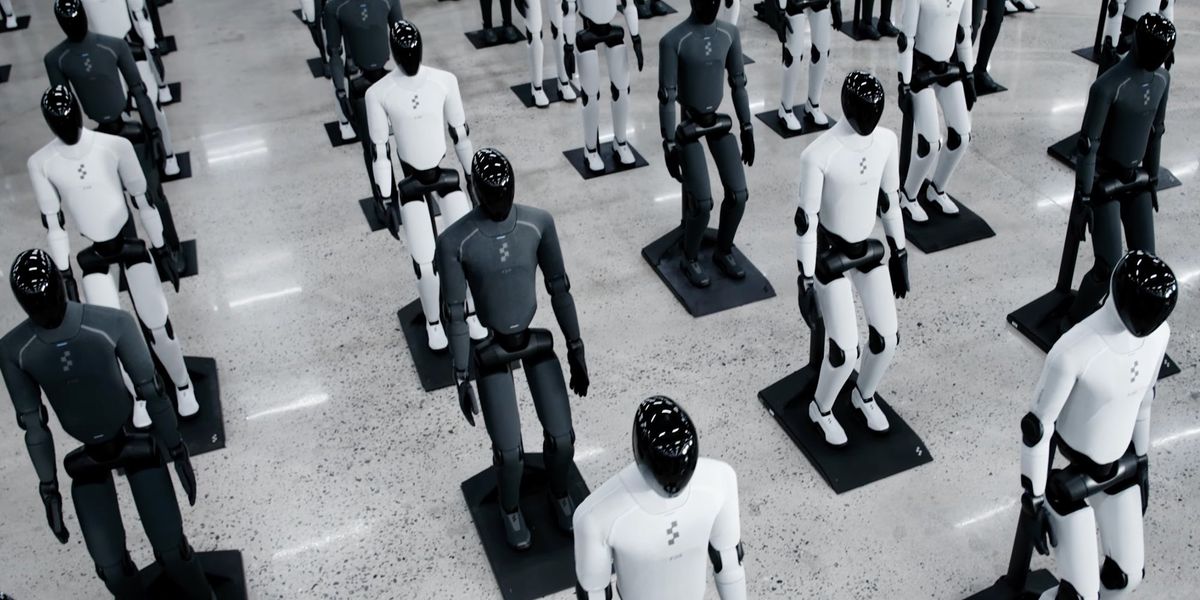
Humanoid robots are transitioning from laboratory prototypes to mass production lines, with recent images showing dozens of standardized units arranged in precise formation. The deployment demonstrates advanced coordination capabilities and dual-variant designs targeting different industrial applications.
Production Scale Reaches Industrial Levels
The standardized humanoid design enables consistent manufacturing at scale, marking a departure from custom-built research units. Dual-tone color variants suggest manufacturers are developing specialized models for distinct workplace functions, from assembly line operations to service sector deployment.
This production capability represents a $12.9 billion global humanoid robotics market projected to reach $66.9 billion by 2030, according to recent industry analysis.
Workplace Integration Accelerates
Manufacturing floors and service industries are preparing infrastructure modifications to accommodate humanoid workers. The precise formation coordination shown indicates robots can operate in synchronized teams without human oversight.
Companies across automotive, logistics, and healthcare sectors are conducting pilot programs with humanoid units. Tesla's Optimus program and similar initiatives from other manufacturers are driving competition in this emerging market segment.
The shift from novelty demonstrations to practical deployment suggests 2024 will mark the beginning of widespread humanoid robot integration in commercial environments.